US Court Strikes Down Trump Administration’s $100,000 H-1B Visa Fee

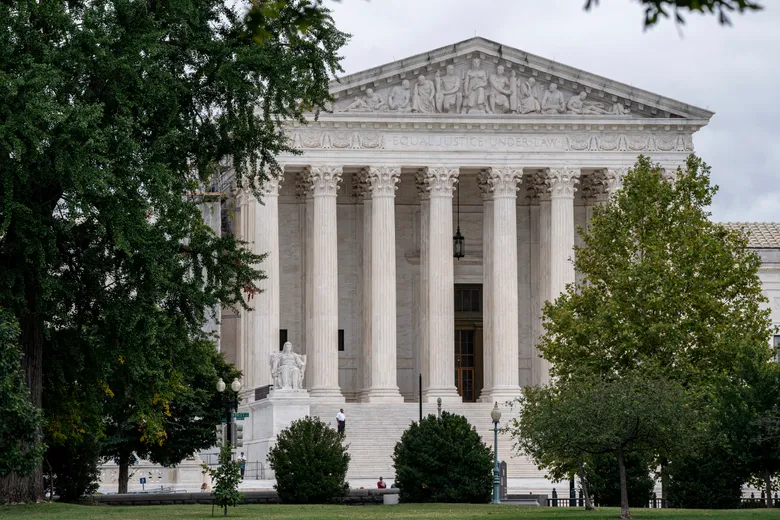
Washington, June 2026 : In a significant legal setback for President Donald Trump’s immigration agenda, a federal judge has struck down the administration’s controversial policy imposing a $100,000 fee on new H-1B visa petitions, ruling that the measure amounted to an unlawful tax enacted without congressional approval.
US District Judge Leo T. Sorokin of Massachusetts ruled in favour of a coalition of 20 states that challenged the policy, concluding that the administration had exceeded its legal authority. The court ordered that the fee requirement be vacated nationwide, effectively nullifying the policy.
The disputed measure originated from a presidential proclamation issued in September 2025 that required employers seeking to hire foreign professionals under the H-1B programme to pay an additional $100,000 for each new petition. The administration had defended the move as a way to discourage misuse of the visa programme and protect American workers from wage suppression and job displacement, particularly in science, technology, engineering and mathematics (STEM) sectors.
However, Judge Sorokin determined that the administration lacked the statutory authority to impose such a charge.
“The Court finds that the Policy imposes a tax on H-1B petitions without the requisite delegation by Congress,” the judge wrote in his ruling. He added that no immigration statute grants the executive branch the power to levy a tax of this nature on visa applications.
The lawsuit was brought by a coalition of states that argued the fee would significantly hinder the recruitment of highly skilled foreign professionals by public institutions, including schools, universities, research organisations and healthcare systems. The states maintained that the additional financial burden would worsen staffing shortages in critical sectors already struggling to attract qualified workers.
The court agreed with those concerns, noting that the policy could negatively affect educational institutions, medical facilities and research organisations that rely on international talent.
A key issue before the court was whether the $100,000 charge could be considered a legitimate immigration restriction under existing federal law or whether it constituted a tax. Judge Sorokin firmly rejected the administration’s argument that broad presidential powers under the Immigration and Nationality Act justified the fee.
While acknowledging that the executive branch possesses substantial authority over immigration matters, the judge stressed that such powers are not unlimited and cannot override constitutional constraints or exceed authority specifically granted by Congress.
In his ruling, Sorokin emphasised that Congress alone holds the constitutional power to impose taxes and that immigration statutes cited by the administration did not delegate that authority to the President.
The court also found procedural violations in the implementation of the policy. According to the ruling, federal agencies failed to comply with the Administrative Procedure Act by introducing the measure without conducting the required notice-and-comment rulemaking process.
Judge Sorokin further criticised the administration for failing to provide a sufficient explanation for the unprecedented increase in costs imposed on employers seeking H-1B workers. He described the policy as arbitrary and capricious, stating that the administrative record lacked adequate justification for the fee.
As a result, the court declared the policy unlawful and vacated all actions taken to enforce the payment requirement.
The H-1B visa programme remains one of the primary pathways for US employers to recruit foreign professionals in specialised occupations requiring advanced knowledge and at least a bachelor’s degree or its equivalent. Current federal law limits most new H-1B visas to 65,000 annually, with an additional 20,000 visas reserved for individuals holding advanced degrees from US institutions. Certain universities, non-profit organisations and research institutions are exempt from these annual caps.
The ruling is expected to have significant implications for employers, educational institutions and healthcare providers that depend on the H-1B programme to fill critical positions and address workforce shortages across the United States.



Trump Says Iran Open to Nuclear Deal, Claims U.S. Pressure Has Weakened Tehran
Washington, June 2026 : U.S. President Donald Trump has claimed that Iran is prepared to a…
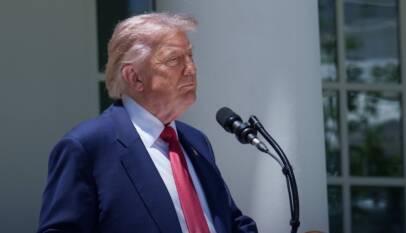
Trump Says Iran Open to Nuclear Deal, Claims U.S. Pressure Has Weakened Tehran
Washington, June 2026 : U.S. President Donald Trump has claimed that Iran is prepared …