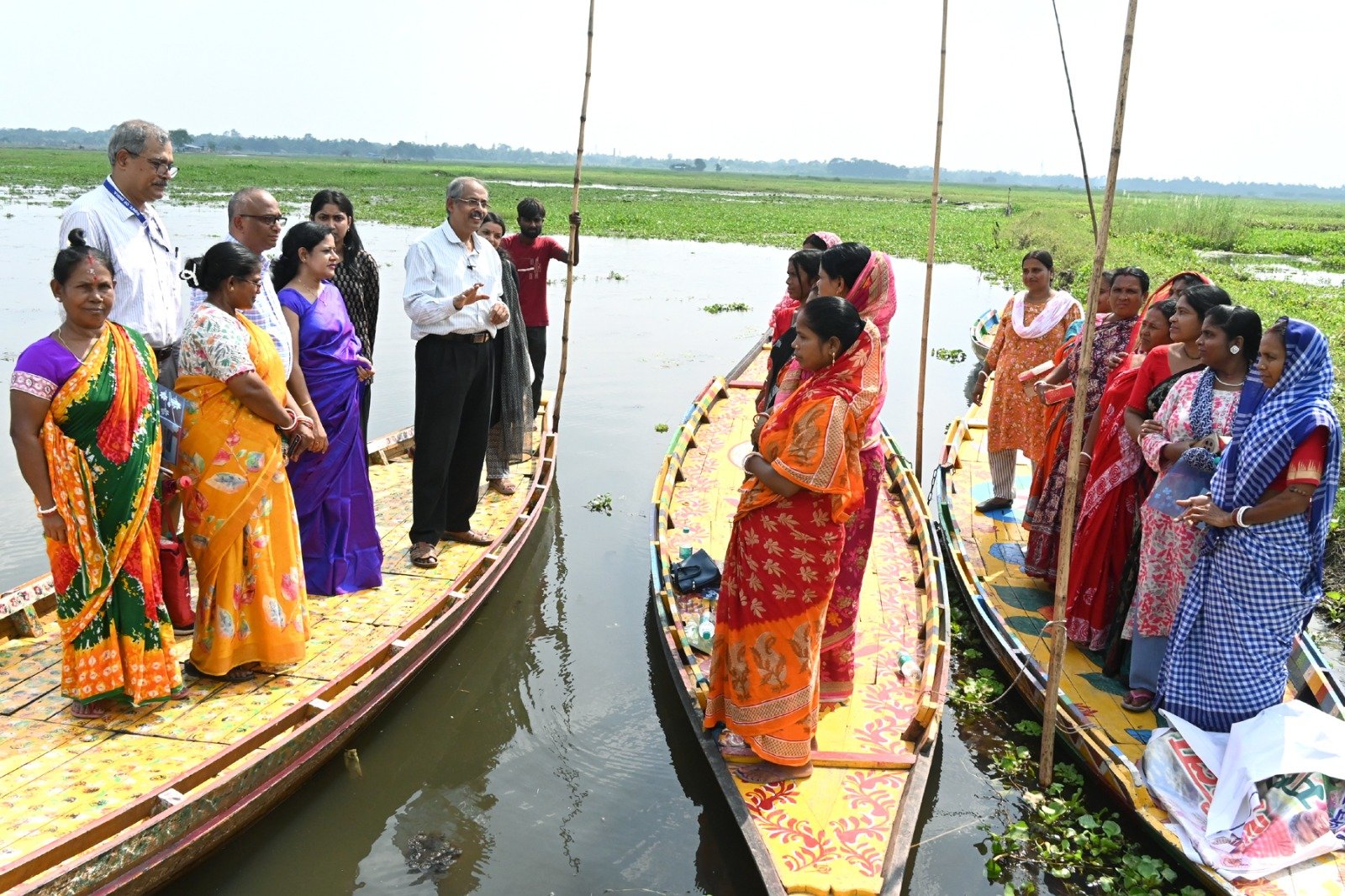
October 2026, Barrackpore : Celebrating the invaluable contributions of rural women to agriculture, fisheries and wetland-based livelihoods, ICAR-Central Inland Fisheries Research Institute (ICAR-CIFRI), Barrackpore, observed Mahila Kisan Diwas at Bartir Beel, North 24 Parganas, West Bengal, on 15 October, coinciding with the International Day of Rural Women. The programme highlighted women’s empowerment, gender equality and the potential of sustainable fisheries and responsible eco-aqua tourism to create new livelihood opportunities.
Known locally as the “Dal Lake of Bengal,”BartirBeel is a seasonal floodplain wetland rich in aquatic biodiversity. Supporting indigenous fish, snails, crabs and diverse birdlife, the wetland also sustains seasonal agriculture as floodwaters recede. Its ecological richness and livelihood potential make it a promising landscape for integrating sustainable fisheries, wetland conservation and community-based tourism.
The programme brought together 30 women farmers and rural resource users, recognising their significant contributions to agriculture, fisheries and local economic activities. Women play an important role in Rabi-season onion cultivation, undertaking nursery management, weeding, harvesting, sorting and marketing-related activities. They also contribute to jute processing, including fibre stripping, washing, sorting and drying, while participating in wetland-based livelihoods and local trade.
Despite their substantial contributions, social barriers and taboos often limit women’s participation in emerging opportunities, particularly eco-aqua tourism. The interactions underscored the need for targeted capacity building, access to scientific knowledge and improved technologies, institutional support, and greater representation of women in community-level planning and decision-making.
Dr. B.K. Behere, Chief Executive Officer, National Fisheries Development Board (NFDB),graced the occasion as Chief Guest and emphasised the critical role of rural women in fisheries, aquaculture and livelihood development. Highlighting the principle that “Empowering women is empowering entire humanity,” he stressed that women’s empowerment is central to enhancing fish production, household nutritional security and rural well-being.
Dr.PradipDey, Director, ICAR-CIFRI, envisioned transforming Bartir Beel into a model of women-led, science-based and ecologically sustainable rural development, recognising rural women as key stakeholders, knowledge holders and entrepreneurs.He emphasised integrating scientific fisheries management, biodiversity conservation, value addition and eco-aqua tourism to diversify livelihoods, strengthen nutritional security and generate dignified employment for women and rural youth. Dr. Dey highlighted that blending traditional ecological knowledge with modern science, institutional convergence and community participation can foster inclusive economic growth while preserving wetland ecosystems for future generations..
Dr.S.Samanta, Head, FRAI Division, ICAR-CIFRI, Dr.Aparna Roy and Dr.Gunjan Karnatak, senior scientist, interacted with the women farmers, interacted with the women farmers, encouraging their participation in livelihood development initiatives and emphasising the importance of integrating traditional knowledge with scientific approaches to fisheries extension and wetland management.
A key highlight of the programme was the Mahila Kisan Samman, during which two fisherwomen, Smt. JayantiDutta and Smt. Dulali Roy, were felicitated in recognition of their valuable contributions to agriculture, fisheries and rural livelihood development.
The programme highlighted the potential of Bartir Beel as a model for women-led, community-based development that harmonises fisheries-based livelihoods, biodiversity conservation and responsible tourism. ICAR-CIFRI’s expertise in inland fisheries research and management can support scientific assessment of fisheries resources, ecological conditions and livelihood opportunities to facilitate sustainable, community-driven initiatives.
The celebration reaffirmed ICAR-CIFRI’s commitment to inclusive rural development by empowering women through scientific interventions, improved technologies and diversified livelihood opportunities. The initiative also contributes to the United Nations Sustainable Development Goals, particularly SDG 2 (Zero Hunger) and SDG 5 (Gender Equality), while advancing the vision of sustainable wetlands and resilient rural communities.