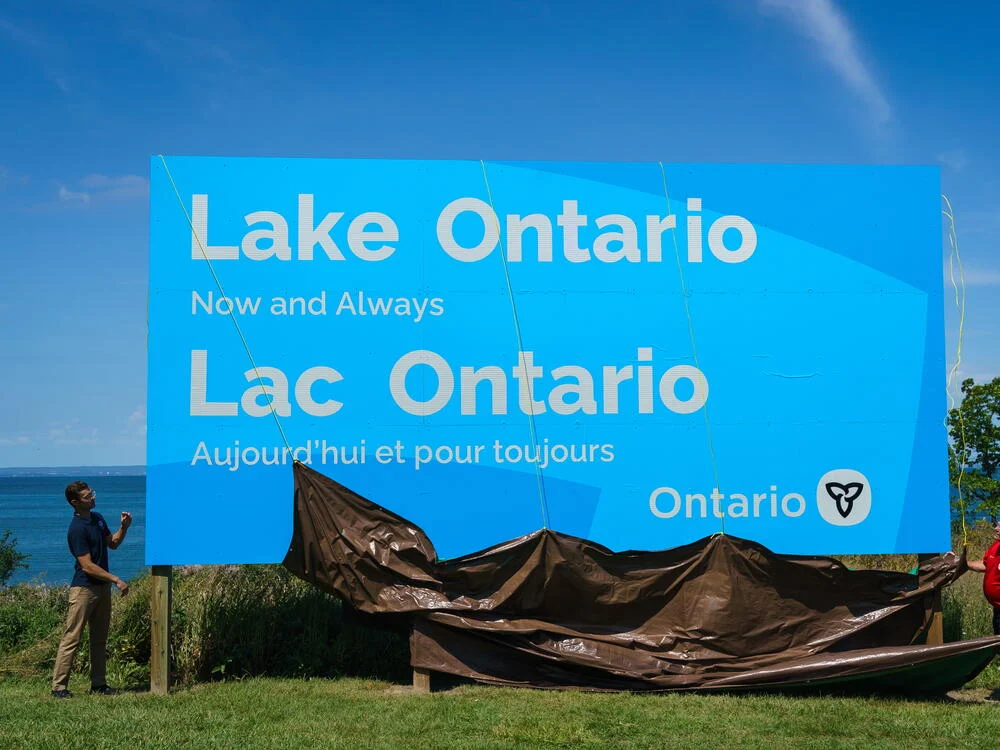
Washington, Aug 2026 : Google Maps has begun displaying “Lake America” instead of Lake Ontario for users in the United States, following President Donald Trump’s decision to rename the iconic Great Lake in an extension of his “America First” agenda.
The change has added a new and highly symbolic dimension to growing tensions between the United States and Canada, which are already locked in a widening trade dispute involving tariffs on automobiles, auto parts and other goods.
Google said the name displayed on its Maps platform depends on the country from which the service is being accessed. While users in the United States will see Lake America, people in Canada will continue to see Lake Ontario, the traditional name that has been used for centuries. Users elsewhere in the world will reportedly see both names.
The technology giant explained that the change follows the US government's official geographic naming database, the Geographic Names Information System (GNIS).
“Since we update Google Maps to reflect name changes in official government sources, which is GNIS for the US, people using Maps in the US will see ‘Lake America,’ those in Canada will continue to see ‘Lake Ontario,’ and those outside of the US and Canada will see both names,” Google said.
The decision has not been matched by Apple. As of Sunday, Apple Maps continued to display Lake Ontario for users in the United States.
The dispute over the lake's name comes amid increasingly strained relations between Washington and Ottawa. The United States and Canada have imposed retaliatory tariffs on each other's products, with the automobile sector emerging as one of the biggest flashpoints.
Ontario Premier Doug Ford sharply criticised both the renaming and the broader trade confrontation, describing the move as “absolutely backwards.”
Speaking to ABC's This Week, Ford dismissed the new name and said that people in Canada were unlikely to adopt it.
“No one's going to call it Lake of America,” Ford said, while warning that the continuing trade conflict could cause significant economic damage on both sides of the border.
Lake Ontario is the smallest of North America's five Great Lakes by surface area. It lies between Ontario province in Canada and New York state in the United States and forms an important part of the region's transportation, industrial and economic network.
The naming controversy echoes Trump's earlier decision to rename the Gulf of Mexico as the “Gulf of America” in January 2025. Mexico rejected that change, while the US administration incorporated the new terminology into its official geographic references.
The latest dispute has unfolded alongside Trump's renewed criticism of Canada's automobile industry. In a post on Truth Social, Trump said he did not want Canadian vehicles or parts entering the US market.
The two countries' auto industries, however, are deeply integrated. Canadian factories supply major components for vehicles assembled in the United States, while American manufacturers depend heavily on the cross-border supply chain.
Ford warned that substantially higher tariffs on Canadian products would ultimately hurt American consumers and manufacturers. Canada has already imposed counter-tariffs ranging from 15 to 50 per cent on selected US products.
Trump, meanwhile, has defended his trade policy, arguing that Canada has benefited unfairly from the bilateral economic relationship.
With the lake's name now becoming another point of disagreement, a dispute that began with tariffs and trade has increasingly taken on a cultural and symbolic dimension—highlighting just how strained relations between the traditionally close North American allies have become.