₹53,428-Crore Social Assistance Programme Approved; 3.20 Crore Beneficiaries Across India to Benefit
New Delhi, October 2026: The Central Government has introduced a significant change in the eligibility criteria for disability pensions to make social security schemes more accessible to persons with disabilities. The minimum disability threshold required to qualify for the pension has been reduced from 80 per cent to 40 per cent.
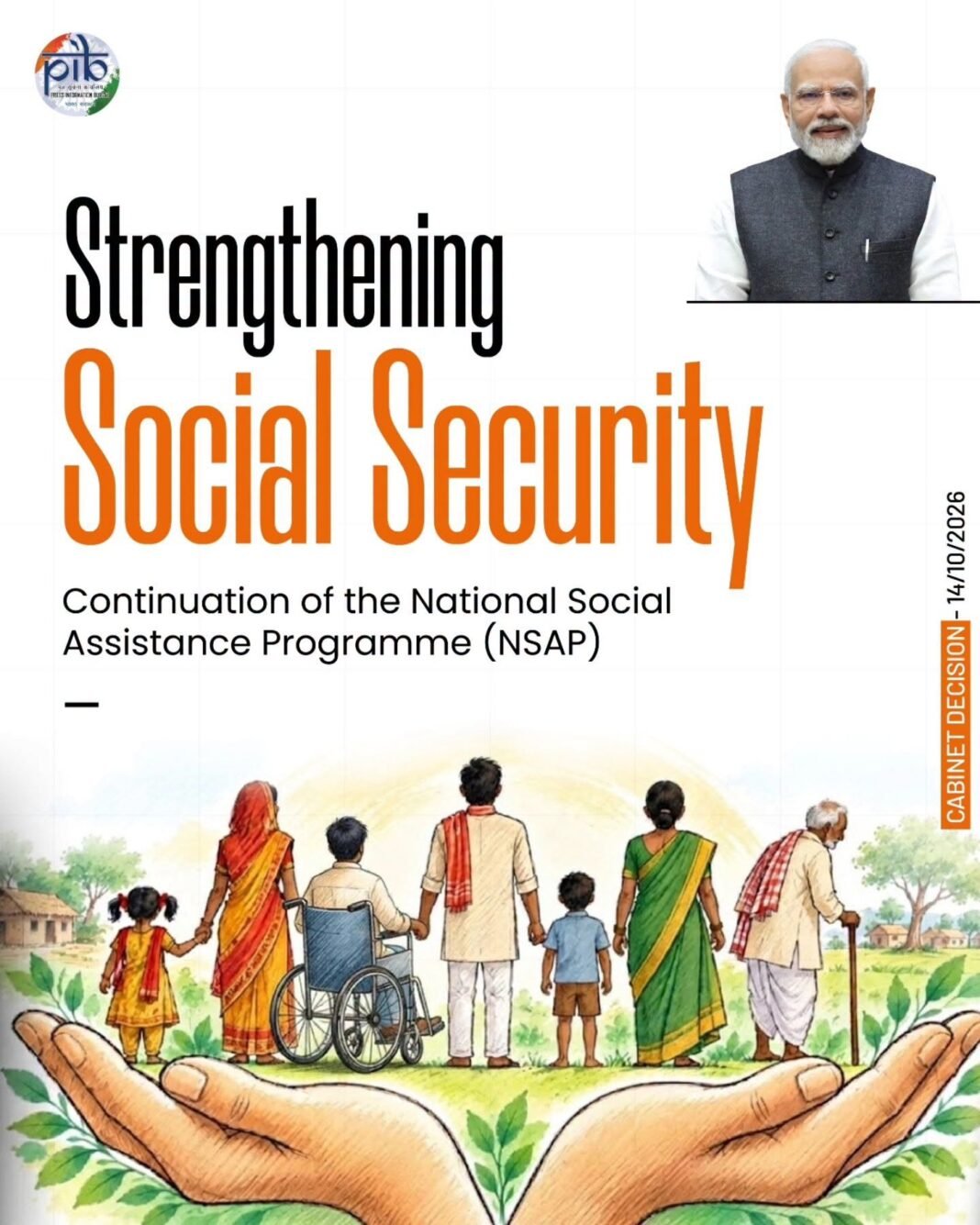
The Union Cabinet, chaired by Prime Minister Narendra Modi, has also approved the continuation of the National Social Assistance Programme (NSAP) for five years, from 2026-27 to 2030-31. An allocation of ₹53,428 crore has been earmarked for the programme, which is expected to benefit approximately 3.20 crore people across 36 states and Union Territories.
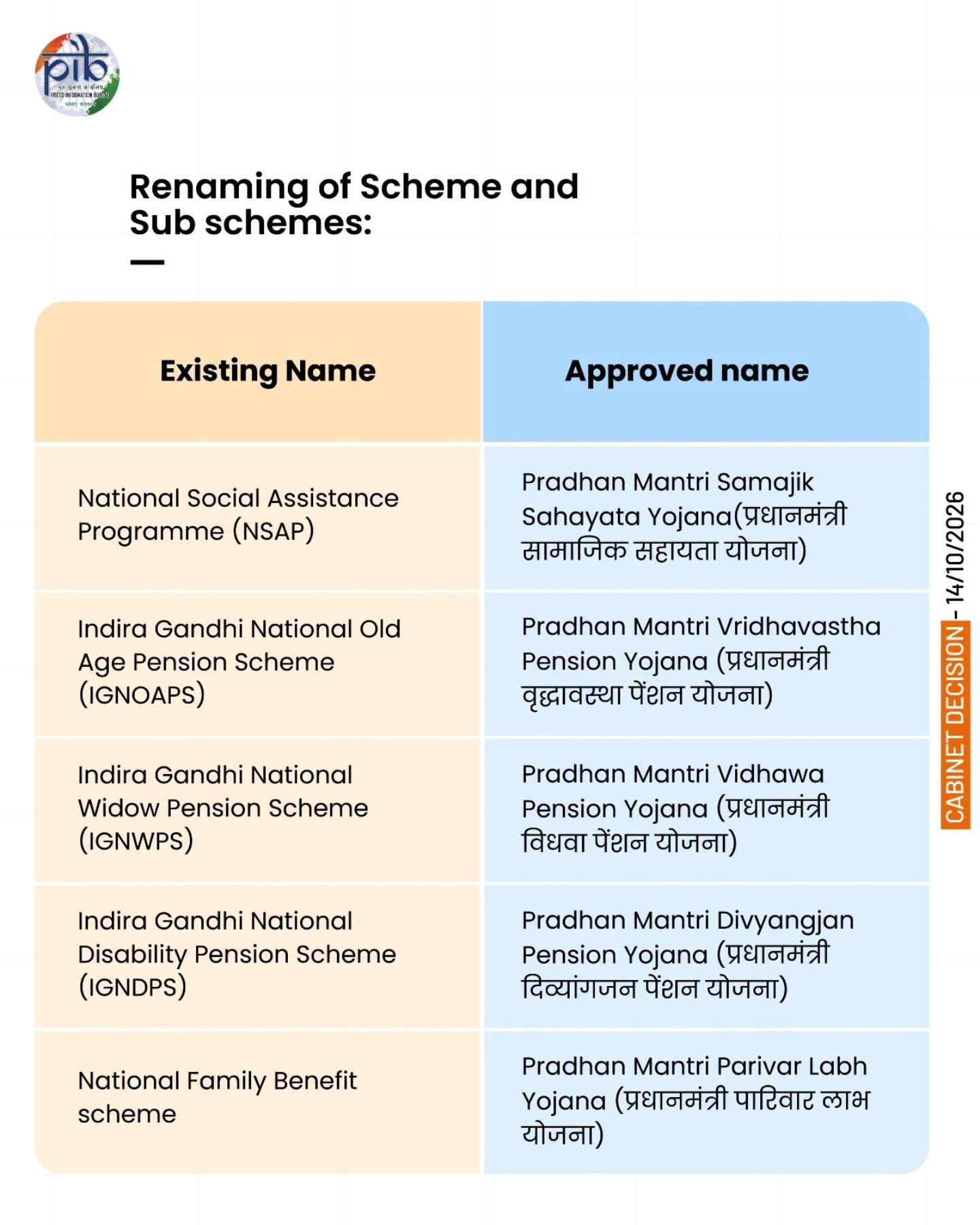
The National Social Assistance Programme will be renamed the Pradhan Mantri Samajik Sahayata Yojana. Several pension and social assistance schemes under the programme will also be renamed.
The Indira Gandhi National Old Age Pension Scheme, Indira Gandhi National Widow Pension Scheme and Indira Gandhi National Disability Pension Scheme will be renamed the Pradhan Mantri Vridhavastha Pension Yojana, Pradhan Mantri Vidhwa Pension Yojana and Pradhan Mantri Divyangjan Pension Yojana, respectively.
Similarly, the National Family Benefit Scheme will be renamed the Pradhan Mantri Parivar Labh Yojana.
Disability Pension Eligibility Made More Inclusive
Under the Pradhan Mantri Divyangjan Pension Yojana, eligible beneficiaries aged between birth and 79 years will receive financial assistance of ₹375 per month, while those aged 80 years and above will receive ₹625 per month.
The minimum disability requirement for eligibility has been reduced from 80 per cent to 40 per cent. The minimum age criterion for receiving the pension will also begin from birth, allowing eligible persons with disabilities, including children, to be covered under the social security framework.
The revised eligibility criteria are intended to expand the scheme’s reach and enable more persons with disabilities to access financial assistance.
Revised guidelines covering eligibility conditions, the number of beneficiaries and the amount of financial assistance under the disability pension scheme will be issued within the next three months. Implementation of the changes will begin after the guidelines are released.
The old-age pension scheme, widow pension scheme and National Family Benefit Scheme will continue in their existing forms, the announcement stated.
Social Security for Poor Families
The National Social Assistance Programme was launched on August 15, 1995, with the primary objective of providing social assistance to poor households.
The programme fulfils the Central Government’s responsibilities under the Directive Principles of State Policy enshrined in the Constitution, particularly Article 41, which addresses public assistance in cases of unemployment, old age, sickness and disability, within the limits of the state’s economic capacity and development.
The programme is funded entirely by the Central Government.
Alignment with Rights of Persons with Disabilities Act
The revised disability pension eligibility criteria are also significant in the context of the Rights of Persons with Disabilities Act, 2016.
Under the Act, the benchmark for disability is set at 40 per cent. The legislation also provides for disability-related assistance to be at least 25 per cent higher than comparable benefits under similar schemes.
Against this backdrop, reducing the minimum disability threshold from 80 per cent to 40 per cent is expected to make social security benefits more accessible to a wider section of the population.
The changes mark an effort to strengthen the social protection framework for persons with disabilities and improve access to financial support for vulnerable sections of society.