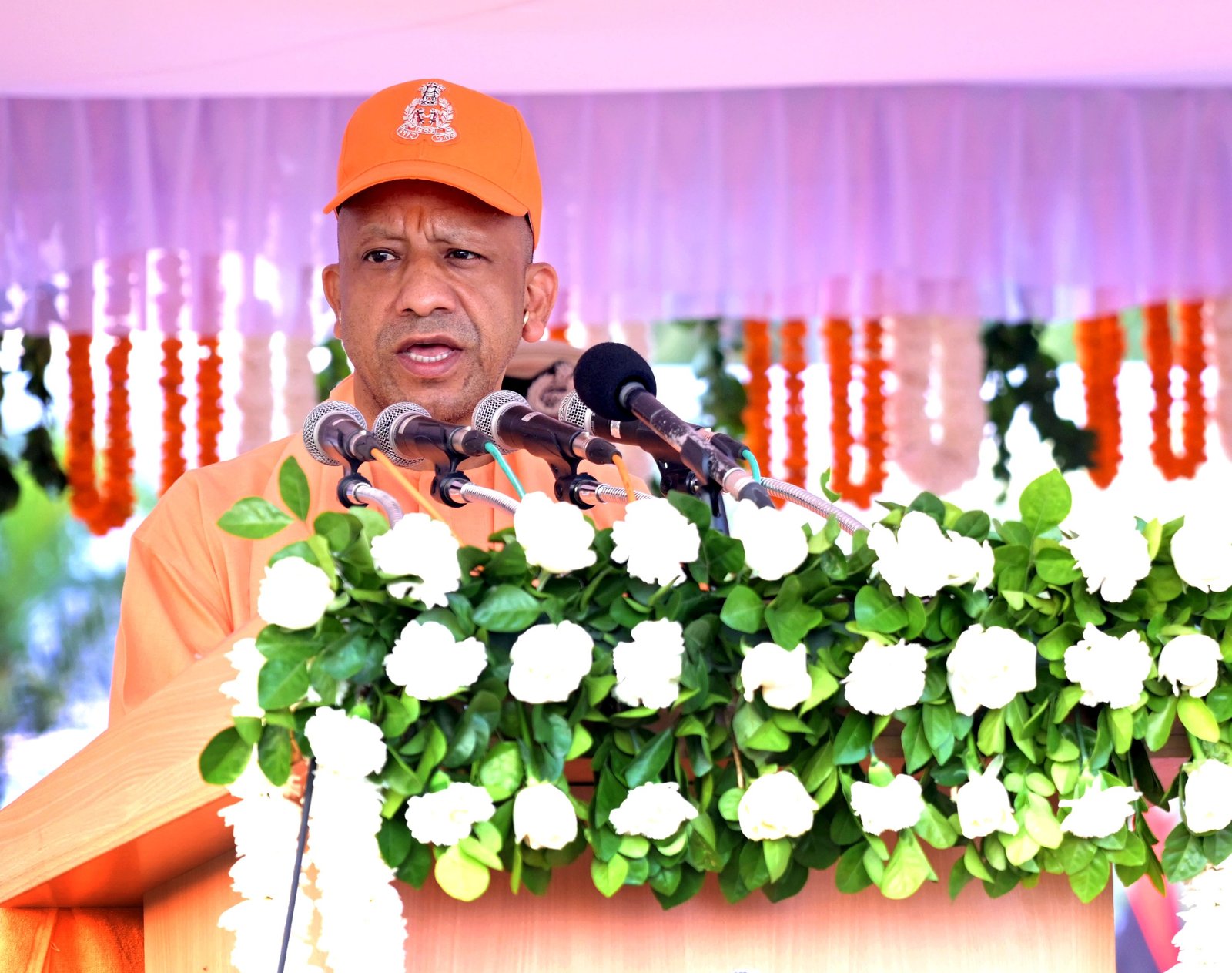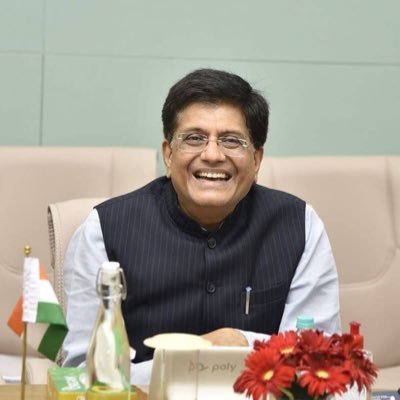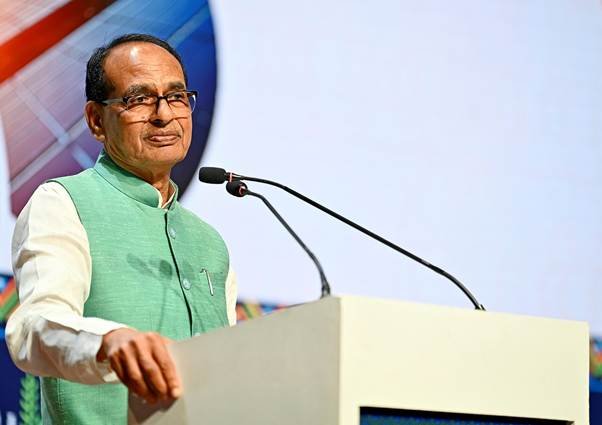
Union Minister of Agriculture and Farmers Welfare of India Shri Shivraj Singh Chouhan and Union Minister for New and Renewable Energy, Education and Consumer Affairs, Food and Public Distribution, Shri Pralhad Joshi jointly inaugurated the three days AgriVoltaics World Conference 2026 here today.
The Agriculture Minister while addressing the inaugural session, emphasised that under the leadership of Hon’ble Prime Minister Shri Narendra Modi, farmers could become both Annadatas and Urjadatas by adopting solar energy alongside farming. Shri Chouhan highlighted that the integration of agriculture and solar power could promote global welfare and enhance farmers’ economic prosperity. He stressed that agrivoltaics policies must be designed to meet the practical requirements of India’s small and marginal farmers, who constitute more than 85 per cent of the farming community.
Shri Chouhan explained that agrivoltaics enables solar power generation through panels installed above agricultural land while allowing crops to grow. He noted that electricity had become indispensable to modern life and agriculture, making the integration of energy generation with farming an important step towards farmers’ welfare.
Highlighting India’s agricultural progress, the Minister recalled that the country was earlier dependent on foodgrain imports to meet its food security requirements. He stated that India’s foodgrain stocks were now well supplied with wheat and rice, reflecting the contribution of farmers. He further noted that the agricultural sector had sustained a growth rate of 4.5 per cent and that agricultural exports had reached a record USD 52.55 billion.
The Union Agriculture Minister drew attention to the structural challenges faced by agriculture sector, noting that the average landholding in the country was only 0.96 hectares. He emphasised that agrivoltaics models must allow farmers to continue cultivation instead of replacing farming with solar power generation.
He called for practical system designs that accounted for panel height, spacing between support structures and the movement of agricultural machinery, enabling farmers to undertake ploughing and change crops and cropping patterns according to their needs.
Shri Chouhan also underscored the need for effective rainwater drainage and harvesting arrangements to prevent soil erosion and ensure the optimal use of water. He further advocated the active involvement of Farmer Producer Organisations (FPOs) and training for rural youth and women in equipment operation, repair and maintenance to create employment opportunities in villages.
Union Minister for New and Renewable Energy Shri Pralhad Joshi while delivering the address highlighted India’s progress in expanding clean energy capacity alongside economic growth. He stated that India’s non-fossil fuel-based installed electricity capacity had reached 308.03 GW, accounting for more than 55 per cent of the country’s total installed electricity capacity of approximately 560 GW.
The New & Renewable Energy Minister highlighted India’s broader economic and technological transformation under the visionary leadership of Hon’ble Prime Minister.
Emphasising the importance of balancing food security, energy requirements and land availability, the Minister described agrivoltaics as an approach that could enable farmers to earn from both cultivation and electricity generation on the same land. He reiterated the principle of “One land, two harvests”.
He quoted a study by The Energy and Resources Institute (TERI) that estimated 47.5 million hectares, or approximately 30 per cent of India’s 160 million hectares of cropland, were technically suitable for agrivoltaics. One deployment scenario covering 16 million hectares estimated annual electricity generation of 12,775 TWh, potentially comparable to or exceeding India’s projected electricity demand of 5,250–10,020 TWh by 2050. The Minister noted that these were technical estimates and that actual deployment would depend on local conditions and feasibility. Maharashtra, Rajasthan, Andhra Pradesh, Madhya Pradesh, Karnataka and Uttar Pradesh together accounted for nearly 50 per cent of India’s estimated agrivoltaic potential.
Shri Joshi highlighted that agrivoltaics could be adapted to different agricultural activities, including fruit and plantation crops, vegetables, spices, horticulture, floriculture and fodder, as well as livestock rearing in suitable settings. He noted that field studies had indicated potential yield improvements of 10–20 per cent for certain crops and reductions of around 30 per cent in water consumption under suitable systems.
The Minister also highlighted the potential to integrate agricultural infrastructure with electricity-grid planning. He noted that more than 7.70 lakh geo-tagged rural facilities had been mapped under the PM Gram Sadak Yojana and that over 400 integrated cold-chain projects had been approved under the PM Kisan SAMPADA Yojana. He suggested that agricultural facility maps could be integrated with grid infrastructure to identify suitable project locations near mandis, warehouses and cold chains, thereby improving logistics and project viability.
Highlighting existing efforts to expand solar energy in agriculture, Shri Joshi noted that PM-KUSUM had supported decentralised solar power plants, standalone solar pumps and the solarisation of existing grid-connected pumps, including feeder-level solarisation. He also highlighted the contribution of decentralised solar capacity, which had reached 16.3 GW during the previous year, comprising 7.6 GW under PM-KUSUM and 8.7 GW under rooftop solar, largely through the PM Surya Ghar Muft Bijli Yojana, which had crossed 63 lakh beneficiaries.
The Minister announced that one of the world’s most ambitious agrivoltaic programmes would be launched under the next phase of PM-KUSUM. He stated that the initiative would provide an opportunity to further expand solar energy in agriculture by aligning the scheme with existing agricultural programmes. He noted that elevated and tilted structures could make agrivoltaic plants 25–30 per cent more expensive than conventional ground-mounted solar installations, and that the government aimed to bridge this cost gap by supporting AgriPV capacity creation.
Shri Joshi observed that the average cost of electricity supply had been around ₹7 per unit in 2025–26, while some agrivoltaic assessments indicated potential generation costs of ₹3.20–₹3.30 per unit under specific assumptions. He highlighted that competitive project designs and financing models could help make agrivoltaics commercially viable.
Referring to international experience, the Minister noted that the global agrivoltaics market had surpassed 18.4 GW of installed capacity in 2025. He highlighted Italy’s €1.7 billion funding programme for farmers, solar developers and research institutions; Japan’s opening of all categories of farmland to agrivoltaics and support for small-scale systems through preferential tariffs; and Germany’s linkage of support to continued agricultural use and minimum crop-yield requirements.
He further highlighted the employment potential of the sector. According to the AgriPV Manual of the Center for Study of Science, Technology and Policy, agrivoltaics could generate between 1.10 lakh and 3.32 lakh full-time-equivalent jobs, contributing to agricultural productivity, skills development, entrepreneurship and rural employment.
The Minister emphasised the importance of international partnerships in developing agrivoltaic solutions suited to the needs of the Global South. He acknowledged the contributions of German partners, the Indo-German Cooperation on Agrivoltaics, the International Solar Alliance and other institutions working to advance the sector. He noted that countries across Africa, Asia and Latin America faced common challenges relating to smallholder farmers, water stress, reliable clean energy and affordable technologies, and called for cooperation based on mutual learning and locally adapted solutions.
Shri Joshi highlighted the launch of the Global Agrivoltaics Climate-Zone Technical Framework as an important step towards wider adoption of the technology. The framework was intended to support governments, farmers, developers, researchers and financiers in making informed decisions, establishing technical standards and moving from isolated pilot projects towards broader implementation.
Secretary, Ministry of New and Renewable Energy, Shri Santosh Kumar Sarangi highlighted the contribution of PM-KUSUM in promoting solar energy in agriculture. He stated that approximately 25 lakh pump sets had been solarised under the programme, benefiting around 25 lakh farmers by enabling them to replace diesel-powered pumps with solar-powered alternatives. He also highlighted the programme’s contribution to reducing diesel consumption and foreign exchange expenditure on crude oil imports.
Shri Sarangi noted that the Ministry was working with the Ministry of Agriculture and Farmers Welfare to develop the next phase of PM-KUSUM with a broader focus on farmers’ progress, income generation and improved livelihoods. He emphasised the importance of partnerships with international and national institutions and highlighted ongoing efforts to develop appropriate electricity procurement models involving power distribution companies and state energy departments to support agrivoltaics at scale.
Present during the opening ceremony were Shri Shripad Yesso Naik, Minister of State for New & Renewable Energy and Power and Secretary Agriculture and Farmers Welfare of India, Shri Atish Chandra and others. The three days world conference will conclude on 23rd October, 2026.