2,320 Graduands Honoured at 17th Convocation in Wardha; University Plans to Strengthen Super-Specialty Services and Establish Centres of Excellence
Wardha, Maharashtra, October 2026: Adani Institute of Higher Education and Research (AIHER), a Deemed to be University, has outlined an ambitious plan to strengthen healthcare infrastructure, expand clinical research and improve access to affordable medical services, with a particular focus on its Wardha and Nagpur campuses.
Addressing the institution’s 17th ceremonial convocation, Dr Priti Adani, Chancellor of AIHER, announced that the university would prioritise modern medical equipment, advanced clinical research facilities and enhanced super-specialty services over the next two years. The proposed expansion will be accompanied by a stronger focus on applied research, disease prevention, early diagnosis and maternal and child health.
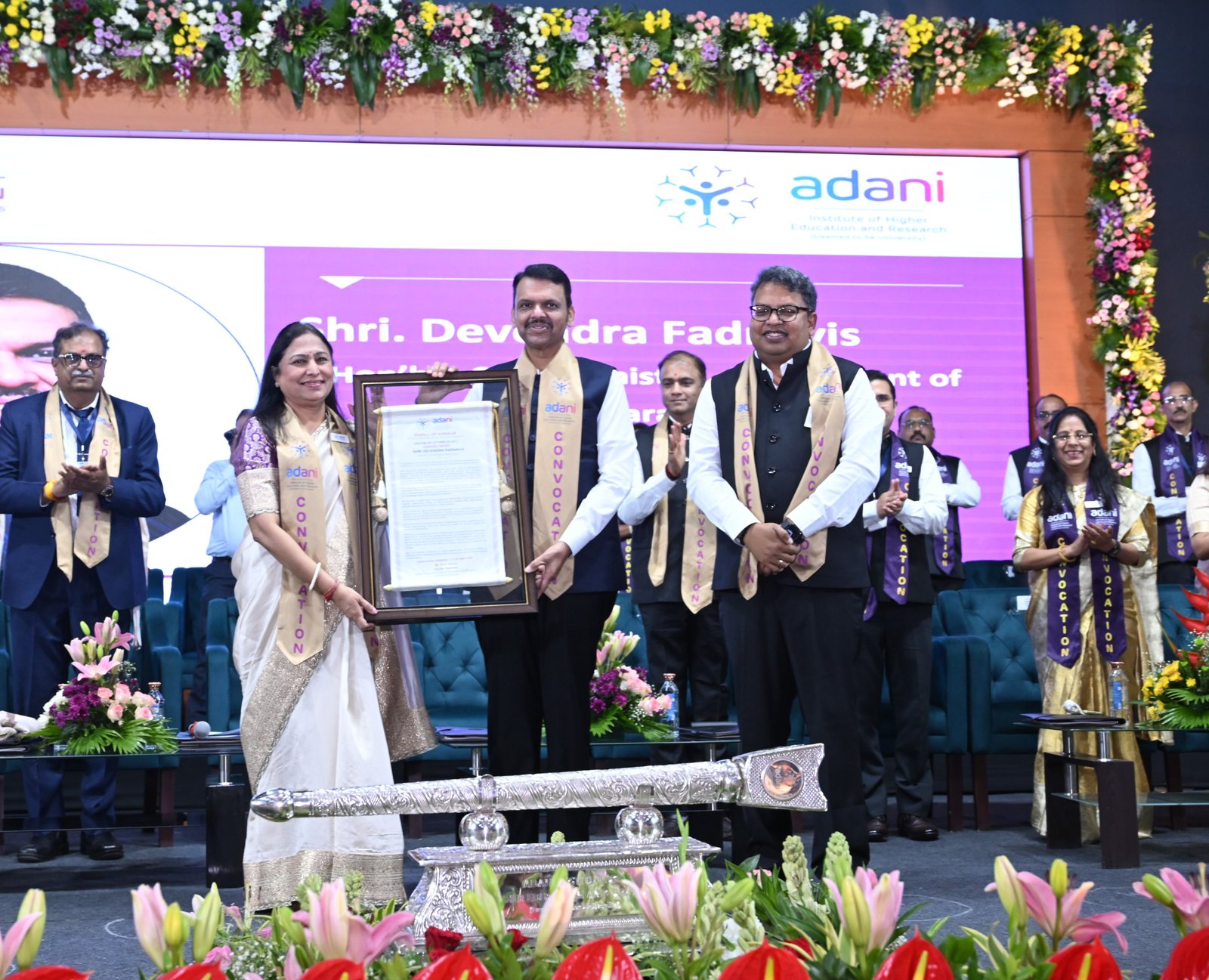
The convocation celebrated the achievements of 2,320 graduands, including 123 PhD scholars and 83 medal winners. Maharashtra Chief Minister Devendra Fadnavis attended the ceremony as Chief Guest, alongside Dr Abhijat Sheth, Chairperson of the National Medical Commission, and Dr Pankaj Bhoyar, Minister of State in the Maharashtra government and Guardian Minister of Wardha and Bhandara districts.
The event marked an important milestone for the institution as it held its first convocation under its new name, Adani Institute of Higher Education and Research.
Honorary Degrees Mark a Historic Milestone
The ceremony witnessed the conferral of the institution’s first honorary Doctor of Letters (D.Litt.) degree under the AIHER name on Chief Minister Devendra Fadnavis. Dr Abhijat Sheth was awarded an honorary Doctor of Science (D.Sc.) degree in recognition of his contributions to healthcare and medical education.
In her address, Dr Adani paid tribute to the late Shri Dattaji Meghe, the university’s Founder Chancellor, acknowledging his vision and sustained efforts to expand educational opportunities and make healthcare more accessible, particularly in rural and underserved areas.
She also recognised the contributions of Shri Sagar Meghe, Shri Sameer Meghe and the university team in carrying forward the institution’s legacy.
The convocation, she said, represented both an academic milestone and an opportunity to reaffirm the university’s responsibility towards society. The institution’s next phase of development would focus on combining quality education with meaningful advances in healthcare delivery and research.
Two-Year Plan to Strengthen Healthcare and Research
A central announcement in Dr Adani’s address was the proposed strengthening of hospital infrastructure at the Wardha and Nagpur campuses over the next two years. The planned improvements will focus on upgrading medical equipment, developing advanced clinical research facilities and expanding super-specialty services.
The university also intends to formulate a roadmap for applied research and establish centres of excellence to address practical healthcare challenges. Priority areas will include disease prevention, early diagnosis, affordable treatment and better maternal and child health outcomes.
The proposed approach seeks to connect academic research with the needs of patients and local communities, ensuring that scientific work contributes to improvements in healthcare access and delivery.
Dr Adani also outlined a broader vision of developing campuses across India to extend access to education, research and affordable healthcare. While individual campuses would respond to the requirements of their respective regions, Wardha and Nagpur are expected to remain central to the institution’s development strategy.
The planned initiatives reflect an effort to strengthen the relationship between medical education, research and healthcare services, with the objective of making institutional capabilities more relevant to community needs.
‘Seva Hi Sadhana Hai’: Service as the Core Philosophy
Emphasising the principle of “Seva hi sadhana hai”, or service as a path of devotion, Dr Adani said education and healthcare must be guided by compassion and a commitment to improving human lives.
She highlighted the responsibility of teachers to support students facing difficulties, nurses to safeguard patients’ dignity, researchers to pursue solutions to human suffering and healthcare teams to reach communities in need.
According to Dr Adani, the coming together of the university and the Adani Foundation reflects a shared commitment to service. The Foundation’s work across education, healthcare, nutrition, livelihoods and community development is expected to support the institution’s broader growth objectives.
The emphasis on service also formed a key part of her message to graduating students, who were urged to view their qualifications not merely as personal achievements but as an opportunity to make a positive contribution to society.
Sustainable Development and Inclusive Growth
Dr Adani said the United Nations Sustainable Development Goals would guide the university’s priorities in healthcare, education, gender equality and inclusion.
Preventive healthcare, community outreach, support for disadvantaged students and responsible use of resources were identified as important areas for ensuring that institutional progress benefits those who need it most.
She stressed that expanding infrastructure and research capabilities must go hand in hand with a commitment to accessibility and social responsibility. The institution’s future development, she indicated, should be measured not only by its academic and clinical achievements but also by its contribution to communities.
Addressing the graduands, Dr Adani urged them to uphold professional integrity, empathy and a commitment to lifelong learning. She encouraged them to respect every individual’s dignity, listen carefully, assess evidence critically and use artificial intelligence and emerging technologies responsibly.
Highlighting the human dimension of healthcare, she reminded the students that patients may not always remember technical explanations, but they will remember whether they were heard, respected and treated with compassion.
Her message underscored the importance of balancing technological progress and professional expertise with sensitivity towards patients and their families.
Building an Institution That Earns Public Trust
Concluding her address, Dr Adani called on faculty members, students, alumni and institutional partners to share responsibility for AIHER’s future. She expressed the aspiration to build an institution that India could be proud of, that would earn international respect and that people could trust for knowledge and care.
The 17th convocation thus combined the recognition of academic achievement with a renewed commitment to healthcare infrastructure, applied research, inclusive education and community service.
For the 2,320 graduands beginning the next phase of their professional journeys, the ceremony carried a clear message: education brings with it a responsibility to serve society. As AIHER pursues its plans for stronger clinical facilities and research capabilities, its stated vision places compassion, accessibility and public trust alongside academic excellence.
The institution’s proposed expansion across Wardha and Nagpur, together with its plans for centres of excellence and broader educational access, will shape its next phase of development. At the heart of that vision is the belief that knowledge achieves its greatest purpose when it translates into better care and improved lives.