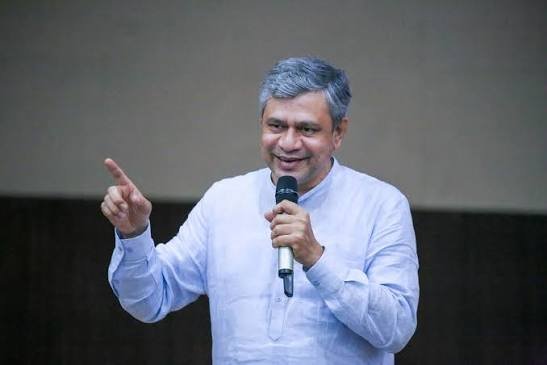
New Delhi, Sep 2026 : India’s first indigenously developed bullet train is expected to begin trial runs by May or June next year, with commercial operations likely to commence within two to four months of testing, Union Railway Minister Ashwini Vaishnaw said on Tuesday.
Addressing the ‘NaMo for Viksit Bharat’ programme in Vadodara, Vaishnaw said the first body frame of the high-speed train had recently been completed and sent for squeeze testing, marking a significant step in the development of the country’s indigenous high-speed rail technology.
“By May or June of next year, India's own bullet train will be on the tracks for testing. After a testing period of 2-4 months, the bullet train will be inaugurated by Prime Minister Narendra Modi,” the minister said.
Vaishnaw said the project was being developed in accordance with the vision of an ‘Atmanirbhar Bharat’ and would substantially reduce travel time between major cities along the Mumbai-Ahmedabad high-speed rail corridor.
Highlighting the potential benefits for passengers in Gujarat, he said travelling from Vadodara to Mumbai by bullet train would take around one-and-a-half hours.
“When you ride the bullet train from Vadodara, you will reach Mumbai in just an hour and a half,” Vaishnaw said.
The minister also said construction work on the Mumbai-Ahmedabad bullet train corridor was progressing rapidly. According to him, the Surat-Vapi section of the corridor is expected to be completed by December this year, paving the way for further progress on high-speed rail connectivity in the region.
Vaishnaw also highlighted broader efforts to modernise the Indian Railways, saying the government was undertaking reforms across railway operations, passenger reservation systems and construction practices.
“We are reforming and modernising everything, from operating systems and reservation systems to old construction protocols,” he said.
The minister cited several infrastructure projects that had been completed in recent years, including the Chenab Bridge and the railway connectivity project linking Mizoram with the national railway network. These projects, he said, reflected the government’s focus on completing long-pending infrastructure initiatives.
According to Vaishnaw, around 280 railway stations have been redeveloped, while approximately 36,000 km of new railway tracks have been laid. He also said the Railways was working on cargo trains incorporating Vande Bharat technology to improve freight transportation.
The minister said the pace of railway infrastructure development had increased significantly despite the disruption caused by the COVID-19 pandemic. He noted that after the first section of the bullet train project was completed in 2020, construction activity on subsequent sections gathered momentum.
The indigenous bullet train project is being positioned as an important milestone in India’s efforts to develop domestic capabilities in high-speed rail technology. Its planned testing next year is expected to provide an opportunity to evaluate the train’s performance before commercial operations begin.
Vaishnaw said the transformation underway in the railway sector would have long-term benefits for the country and future generations.
“The modern face of Indian Railways that is emerging will benefit many future generations,” he said.