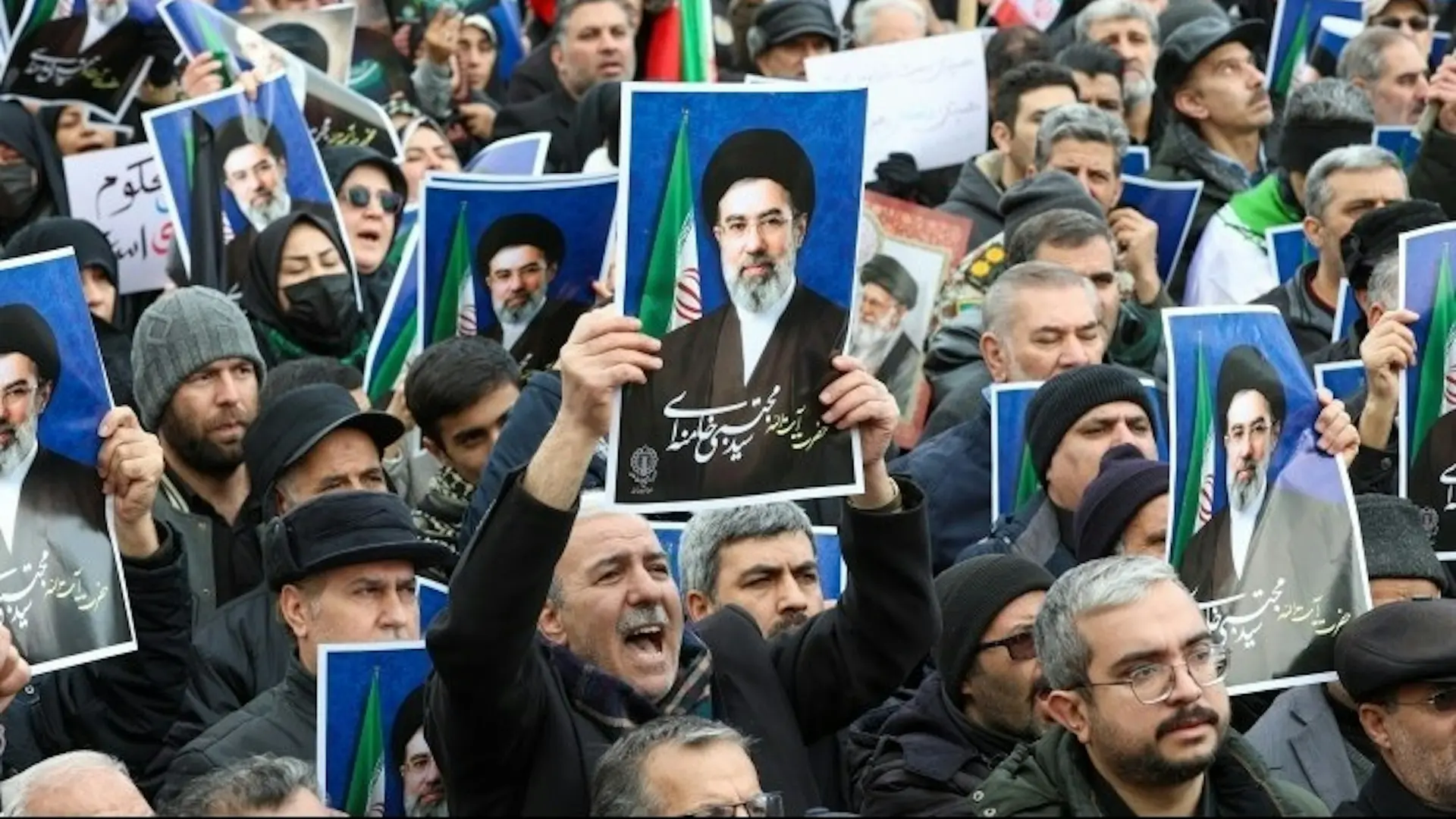
Tehran, Aug 2026 : Iran’s Supreme Leader Ayatollah Mojtaba Khamenei has called on Muslim-majority countries to overcome their differences and unite against what he described as the “real enemy” — the United States and Israel — as tensions continue to simmer across the Middle East.
Khamenei made the appeal in a written message issued on August 30, six months after the outbreak of the latest Middle East conflict. His remarks came as Shia Muslims marked the birth anniversary of Prophet Mohammed and were addressed to religious leaders attending a conference in Tehran.
“The solution to the problems of the Islamic nations is unity of words, friendship, and cooperation on the path of goodness,” Khamenei said, according to his official website.
He warned that actions contributing to divisions among Muslims could ultimately serve the interests of their adversaries. “Anyone, in any position, who does anything that leads to division among Muslims and creates conflict in the Muslim community,” he said, had effectively served the objectives of Islam’s enemies.
The Iranian leader specifically urged governments across the region to identify and confront what he called their principal adversaries.
“Know your real enemy, understand its plan, and confront it,” Khamenei said, referring to the United States and Israel.
His comments come against the backdrop of deteriorating relations between Tehran and several Arab countries in the Gulf following the conflict. During the war, Iran targeted US military facilities in countries including Saudi Arabia, the United Arab Emirates, Jordan, Kuwait, Qatar and Bahrain, creating additional strains between Tehran and its neighbours.
Khamenei also appealed for unity within Iran itself, urging political leaders and citizens to set aside internal disagreements. He reiterated that maintaining social cohesion was essential at a time when the country faced external military and political pressure.
“I firmly declare that doing anything detrimental to social cohesion is prohibited,” he had said in a separate message on August 28.
The latest appeal came as military tensions escalated once again around the Strait of Hormuz, one of the world's most important energy shipping routes. US forces said they had struck two Iranian launchers on Larak Island after observing Iranian forces preparing to launch rockets carrying sea mines into the strategic waterway. The action marked the first known US strike against an Iranian target in more than a month.
Iran subsequently vowed retaliation and said it had launched missiles toward US positions in Jordan.
The renewed confrontation has raised concerns over the security of commercial shipping and energy supplies through the Strait of Hormuz, through which a significant share of global oil and gas shipments normally passes.
Khamenei's position is particularly significant because the supreme leader has the final say on major Iranian state policies. However, unlike his father, Ali Khamenei, who was killed at the beginning of the conflict on February 28, Mojtaba Khamenei has remained largely out of public view since assuming the position. Iranian authorities have not released verified video or audio footage of him since his appointment.
The conflict has also exposed deep divisions within the broader Muslim world. Iran's military actions against US-linked targets in neighbouring Gulf states and its confrontation with Washington have complicated Tehran's relationships with several Arab governments.
At the same time, Israel's military operations in Gaza and continued confrontation with Iran have kept the region on a heightened security footing.
Khamenei's latest message therefore seeks to frame the regional crisis as a broader struggle requiring solidarity among Muslim nations. His appeal for cooperation, however, comes at a time when political differences between Iran and several Arab states remain substantial.
With US-Iran tensions again rising around the Strait of Hormuz, Tehran's call for Muslim unity signals that Iran intends to combine diplomatic outreach with a continued hard-line stance against Washington and Israel.
(Disclaimer :The content of this article is sourced from a news agency and has not been edited by the Mavericknews30 team.)