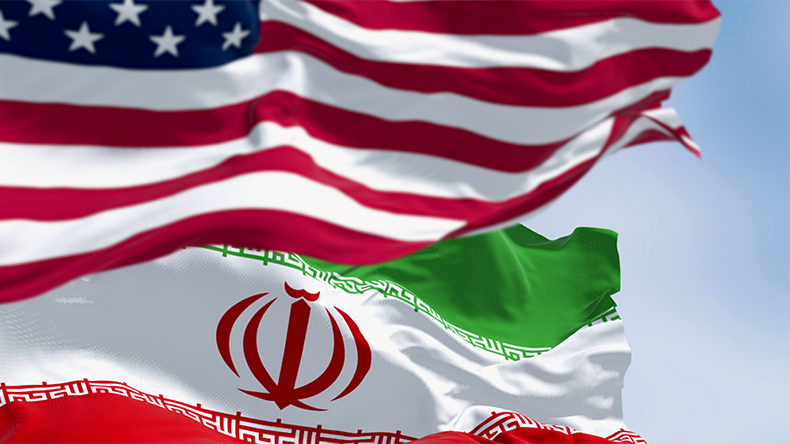
Washington, Aug 2026 : Iran is preparing to shift to a “fully offensive” military posture after diplomatic efforts to secure a permanent end to the conflict with the United States stalled, a senior Iranian official told Reuters, as US President Donald Trump ruled out extending an interim ceasefire agreement.
The development raises the prospect of renewed military escalation around the strategically vital Strait of Hormuz, through which a significant share of global oil and liquefied natural gas supplies passed before the conflict. Efforts to revive peace negotiations and restore normal oil tanker traffic through the waterway have reportedly reached an impasse.
The Iranian official said Tehran was prepared to take difficult decisions if diplomacy failed, including military action to break what Iran described as a US naval blockade. Iranian entities, the official warned, must be prepared for a possible escalation in the Strait of Hormuz and the wider region.
According to the official, Iran would seek to respond through a “timely and precise” military operation if negotiations failed to produce an acceptable outcome.
The latest developments came as a 60-day deadline established under a memorandum of understanding signed between Washington and Tehran on June 17 expired. The memorandum was intended to provide a framework for ending military operations and opening the way for negotiations on Iran’s nuclear programme and US sanctions.
The agreement called for the “immediate and permanent termination of military operations on all fronts.” However, the understanding quickly came under strain over competing interpretations of arrangements governing the Strait of Hormuz.
Iran maintains that a provision in the memorandum gives it authority to manage the waterway, which it shares with US ally Oman. Washington has rejected that interpretation, leading to a growing dispute over access and control of the strategically important maritime corridor.
Asked on Monday whether the United States was seeking to extend the temporary agreement, Trump said it was not.
Backchannel Talks With Iran’s Revolutionary Guard
Despite the collapse of visible diplomatic progress, reports have pointed to possible backchannel contacts between Washington and Iran's Islamic Revolutionary Guard Corps (IRGC), an influential force that has gained greater prominence during the conflict and plays a major role in Iran's military and economic affairs.
Axios, citing two sources familiar with the matter, reported that former US Director of National Intelligence Tulsi Gabbard had spoken with an Iraqi Kurdish leader who maintains close ties with the IRGC. Through the intermediary, Washington was reportedly able to communicate a message to IRGC commander General Ahmad Vahidi.
Fox News subsequently reported that Trump had confirmed the existence of such a channel.
The reports highlight concerns within the Trump administration over whether Iranian negotiators formally engaged in diplomacy have sufficient authority to make commitments on behalf of the IRGC.
However, Jared Kushner, Trump's son-in-law and special envoy, suggested that communication between Washington and different parts of the Iranian government was more extensive than publicly known.
“I can't go into the details of it,” Kushner said in an interview with Fox News, adding that conversations between the US government and various sections of the Iranian government were “probably more robust than it's maybe ever been.”
Iranian officials, however, have publicly denied that meaningful negotiations are taking place through such channels.
Trump Threatens Oman
The dispute over the Strait of Hormuz has also drawn Oman directly into the confrontation. Iran has separately been negotiating with Oman on arrangements for managing the waterway and has indicated that the two countries are close to reaching an agreement.
Trump responded sharply to the reported negotiations, warning Oman against obstructing US objectives.
“If Oman gets in the way, we'll bomb the s*** out of them,” Trump told Fox News, according to the report.
The threat marked an escalation in Washington's rhetoric towards Oman, a longstanding US security partner that has historically played an important role in facilitating diplomatic contacts between Iran and Western countries.
The Iranian official said Tehran expects the United States to fulfil all provisions of the June memorandum before any further negotiations can make progress.
Iran Faces Growing Economic Pressure
While Iranian officials have sought to project military resilience, the conflict has placed significant additional pressure on an economy already struggling with high inflation, a weakened currency, energy shortages and longstanding international sanctions.
Three Iranian officials told Reuters that Tehran's leadership was concerned that further economic punishment could intensify hardship, fuel renewed domestic unrest and further weaken public confidence in the Islamic Republic.
The conflict has also caused extensive damage to infrastructure, disrupted trade and reduced production, while creating enormous financial requirements for reconstruction.
Thousands of people have reportedly been killed since the fighting began, with Iran and Lebanon bearing much of the human cost. Iran has also launched attacks against US military bases and infrastructure in several countries in the region, including Oman, Jordan, Kuwait, Israel, the United Arab Emirates and Saudi Arabia.
The escalating conflict has meanwhile had a direct impact on global energy markets. Brent crude futures surged sharply during the fighting, reaching a peak of around $126 a barrel, approximately 75 per cent above pre-war levels.
Brent crude settled at $90.87 a barrel on Monday, gaining more than $2 as investors assessed the growing risk of prolonged disruption in the Strait of Hormuz.
Higher energy costs are also affecting American consumers. Gasoline prices have climbed above $4 per gallon, compared with less than $3 before the conflict, according to the American Automobile Association.
Trump warned Americans at a rally on Friday to prepare for continued high fuel prices as the conflict persists.
With the June memorandum now effectively stalled, Washington and Tehran face a critical period in which diplomatic efforts, economic pressure and military calculations could determine whether the conflict moves towards negotiations or enters another phase of escalation. The Strait of Hormuz remains at the centre of the dispute, making any further deterioration potentially consequential not only for the two countries but also for global energy supplies and international markets.
(Disclaimer :The content of this article is sourced from a news agency and has not been edited by the Mavericknews30 team.)