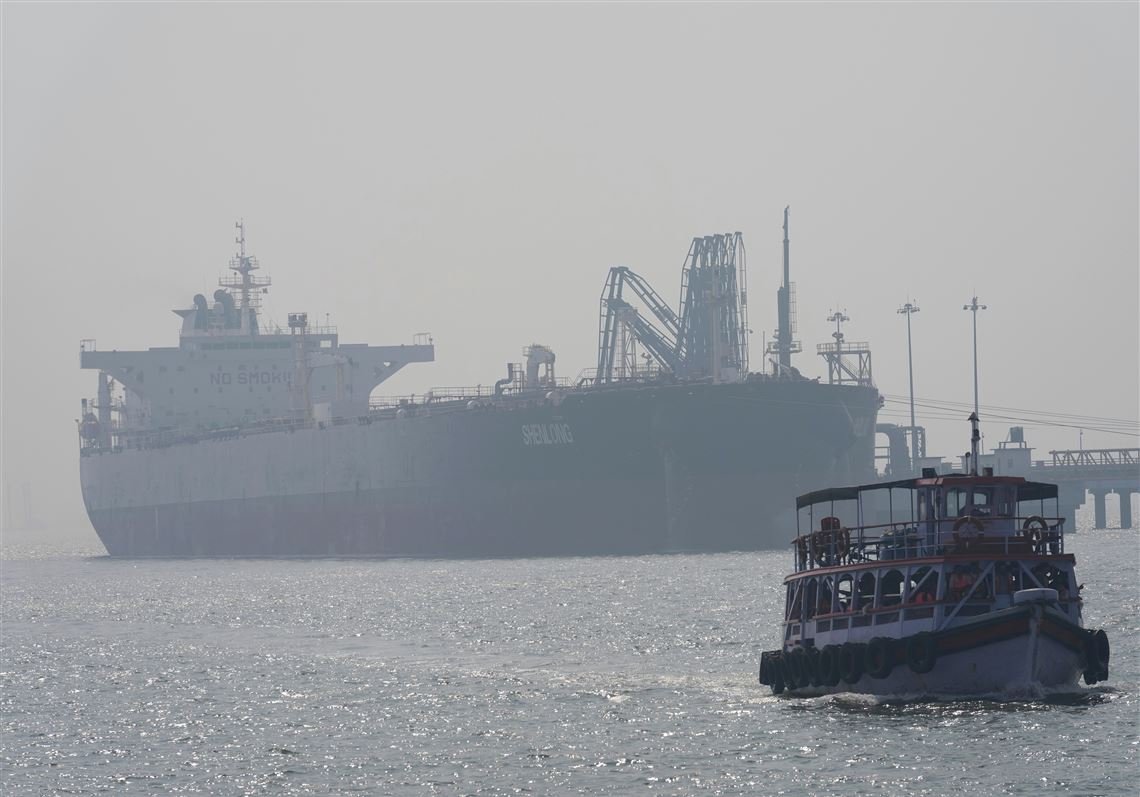
Tehran, September 2026 : Iran’s Islamic Revolutionary Guard Corps (IRGC) Navy said it targeted six vessels in and around the Gulf region on Saturday, including three oil tankers in the Strait of Hormuz and three US-affiliated vessels elsewhere, in retaliation for earlier US attacks on Iranian tankers.
According to a statement issued by the IRGC Navy and published by the force’s official news outlet, Sepah News, the three oil tankers targeted in the Strait of Hormuz were allegedly attempting to cross the strategically important waterway through what Iranian authorities described as an “unauthorized” route.
The IRGC said the other three vessels were targeted in separate areas, but did not immediately provide detailed information about their locations, ownership or the extent of damage caused. The statement also warned commercial shipping operators in the Gulf and areas surrounding the Strait of Hormuz against following what Tehran called suspicious or unauthorised transit routes.
The IRGC Navy urged vessels operating in the region not to be “deceived” by the US military and cautioned that ships making suspicious movements through routes considered unauthorised by Iran could come under attack.
The announcement followed a report by Iran’s state-run IRIB news agency that three Iranian oil tankers had been attacked by US forces off the country’s southern coast. Tehran described the reported strikes as a serious escalation and warned Washington against further attacks on Iranian shipping.
Ebrahim Zolfaghari, spokesman for Iran’s main military command, the Khatam al-Anbiya Central Headquarters, said continued attacks on Iranian vessels or an American naval blockade would trigger a stronger response from Iranian forces.
“If the malice and insecurity against and harassment of Iranian ships, as well as the anti-Iran naval blockade continue,” Zolfaghari said in a statement carried by Iranian media, Iranian attacks against US military vessels in the region would become more severe and could potentially expand.
The exchange of threats comes amid heightened tensions between Tehran and Washington over military operations and the security of maritime routes in the Gulf. The Strait of Hormuz is a crucial global energy corridor through which substantial quantities of oil and liquefied natural gas pass each day.
Meanwhile, US President Donald Trump said Friday that American forces could soon strike Iran’s Pickaxe Mountain, a heavily fortified site near the country’s Natanz nuclear enrichment facility. Trump claimed the underground location was being used to store part of Iran’s stockpile of highly enriched uranium.
“We may hit Pickaxe very soon,” Trump told reporters at the White House.
At the same time, Trump sought to portray the confrontation with Iran as limited in scope, describing it as a “military conflict” rather than a conventional war. He said the fighting had been intermittent and described the conflict as “small potatoes” for the United States.
The latest developments follow restrictions imposed by Tehran on maritime traffic through the Strait of Hormuz after US-Israeli strikes on Iran on February 28. Iran barred vessels linked to the US or Israel, while Washington subsequently imposed a naval blockade targeting ships travelling to and from Iranian ports and coastal areas.
The escalating confrontation has raised fresh concerns over the safety of commercial shipping and the potential impact on global energy markets.
Disclaimer: This review is based on the reviewer’s individual perspective. Audience opinions may vary.