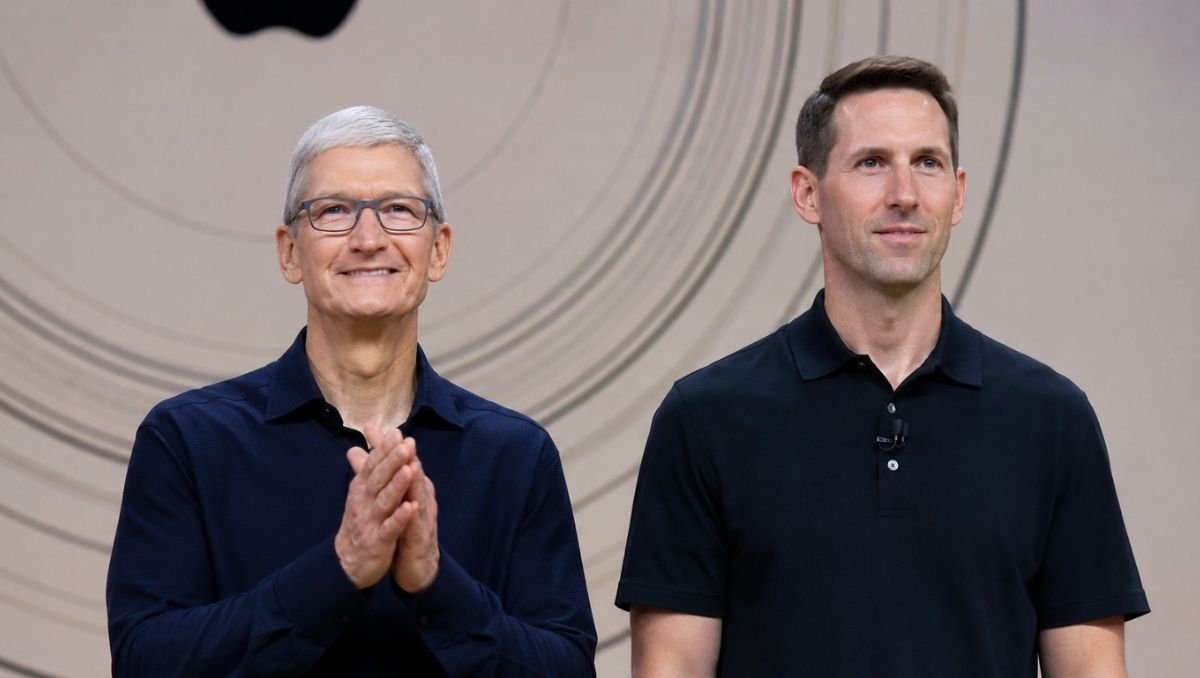
New Delhi, Sep 2026 : US technology giant Apple has formally entered a new leadership era, with John Ternus taking charge as Chief Executive Officer (CEO) on Tuesday, succeeding Tim Cook, who led the company for 15 years and oversaw one of the most significant periods of growth in its history.
Ternus assumed the CEO position effective September 1, marking the end of Cook’s tenure, which began in August 2011 after the departure of Apple co-founder Steve Jobs. Cook has now moved into a newly created role as Executive Chairman, where he is expected to focus on engaging with policymakers around the world and assisting with select company matters.
As part of the leadership transition, Ternus has also joined Apple’s board of directors, giving him a formal role in the company’s broader strategic decision-making.
Ternus has been a key figure at Apple for more than two decades. He joined the company’s product design team in 2001 and was appointed Senior Vice President of Hardware Engineering in 2021. During his career at Apple, he has overseen hardware engineering across the company’s wide product portfolio.
He has played an important role in the development and evolution of several major Apple products, including the iPad, AirPods, iPhone and Mac. His team most recently contributed to the launch of the ultrathin iPhone Air and the new MacBook Neo.
Cook had announced the leadership transition in April and expressed strong confidence in Ternus’ ability to guide Apple into its next phase.
“It has been the greatest privilege of my life to be the CEO of Apple,” Cook said while announcing the change, describing Ternus as possessing “the mind of an engineer, the soul of an innovator and the heart to lead with integrity.”
Cook leaves the CEO position after overseeing an extraordinary expansion in Apple’s financial and global footprint. The company’s market capitalisation has increased from around $350 billion when he became CEO to approximately $4 trillion today.
Apple’s annual revenue has also grown dramatically during the same period, rising from about $108 billion in 2011 to more than $400 billion.
Another major development under Cook has been the rapid expansion of Apple’s services business. Offerings such as the App Store, Apple Music and Apple Pay have transformed services into one of the company’s most important growth engines, generating more than $100 billion in annual revenue.
Ternus, however, takes over at a critical moment for the technology giant. Artificial intelligence has emerged as one of the biggest strategic challenges facing Apple, with competitors rapidly integrating advanced AI capabilities into devices, software and digital services.
The new CEO will therefore face pressure to accelerate Apple’s AI strategy while preserving the company’s tightly integrated ecosystem and maintaining the loyalty of its enormous global customer base.
His experience in hardware development is expected to be a major asset as Apple continues to integrate AI into its products. At the same time, Ternus will have to navigate intensifying competition in smartphones, personal computing and emerging AI technologies.
The leadership transition marks the beginning of a new chapter for Apple, with Ternus tasked with building on Cook’s legacy while defining the company’s next phase of innovation and growth.