
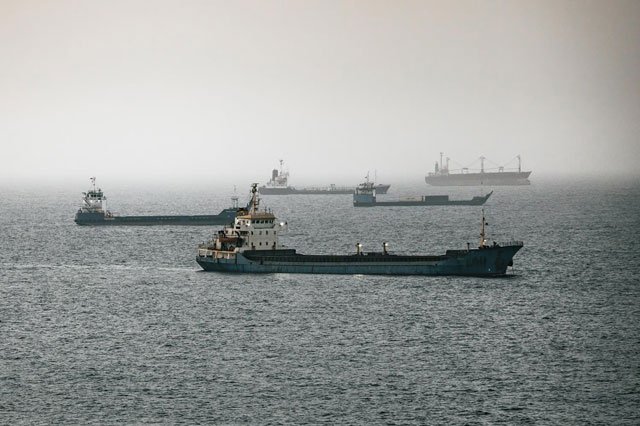
Dubai, Aug 2026 : Shipping activity through the strategically vital Strait of Hormuz declined to its lowest level in a week on Tuesday as vessel operators continued to avoid the key maritime corridor amid ongoing hostilities in the Middle East and growing uncertainty over the course of the Iran war.
Data from Kpler showed that only eight vessels were tracked transiting the strait on Tuesday, below the 10-day average of about 12 vessels and the lowest daily traffic level recorded since August 5. Of the eight vessels, only one, a coal carrier, was reported to have exited the waterway, while the other seven remained in transit.
All seven vessels entering the Strait of Hormuz on Tuesday used the Iranian side of the waterway, highlighting the increasingly cautious approach being adopted by shipping operators as security concerns continue to affect commercial navigation in the region.
Separate shipping data from LSEG also pointed to a decline in traffic. It recorded 11 vessel transits through the strait on Tuesday, compared with 14 a day earlier.
The latest figures underline the dramatic reduction in maritime traffic through the waterway since the outbreak of the latest conflict. Before the Strait of Hormuz was closed following the US-Israeli attacks that began on February 28, an estimated 130 to 140 vessels typically passed through the strategically important waterway every day.
The Strait of Hormuz is a crucial international shipping route and a major artery for global energy supplies. Any prolonged disruption to traffic through the waterway can have wider implications for energy markets, shipping costs and international trade.
The decline in shipping activity came amid fresh reports of military incidents in the wider region. The United States and Yemen's Iran-aligned Houthi forces reported separate attacks, while hopes for an early end to the Iran war appeared to weaken.
Tehran has maintained that the Strait of Hormuz will remain closed unless Washington accepts its conditions for ending the conflict. The position has further increased uncertainty for shipping companies and vessel operators assessing whether it is safe to use the waterway.
Meanwhile, the US Central Command said American forces operating in the Gulf of Oman had disabled the steering capability of a Panama-flagged cargo vessel that was sailing towards Iran.
According to CENTCOM, the vessel had violated the US blockade against Iran. A US Navy helicopter fired two missiles at the ship, following which the vessel stopped its movement towards Iran. CENTCOM said US forces would continue enforcing the blockade.
The incident added to concerns among shipping companies about the risks associated with navigating waters surrounding Iran and the Strait of Hormuz.
In another development, the United Kingdom Maritime Trade Operations reported an incident involving a container ship in the Gulf of Oman. According to the maritime security agency, the vessel came under attack, prompting its crew to issue an emergency request for assistance and prepare to abandon the ship.
A message broadcast on a public maritime radio channel said 17 people were aboard the vessel and located the incident near the eastern edge of the Gulf of Oman.
UKMTO also reported a separate incident involving a cargo ship in the southern Red Sea on the same day. The vessel was struck by an unidentified projectile, resulting in casualties.
The incidents in the Gulf of Oman and the Red Sea demonstrate the broader security challenges facing commercial shipping across the region, with vessels potentially exposed to threats well beyond the immediate vicinity of the Strait of Hormuz.
However, shipping activity through the Bab el-Mandeb Strait, another major maritime chokepoint connecting the Red Sea with the Gulf of Aden, remained comparatively stronger.
Kpler data showed that 30 vessels crossed the Bab el-Mandeb on Tuesday, above its 10-day average of 25. The contrast suggests that while operators are continuing to use alternative maritime routes, the security situation around Iran and the Strait of Hormuz is exerting a particularly strong influence on shipping decisions.
With military tensions continuing and no clear resolution to the Iran conflict in sight, shipping companies are likely to remain cautious about sending vessels through the Strait of Hormuz. The sustained reduction in traffic could add further pressure to regional supply chains and underline the strategic importance of restoring secure and predictable passage through one of the world's most important maritime corridors.
(The content of this article is sourced from a news agency and has not been edited by the Mavericknews30 team.)