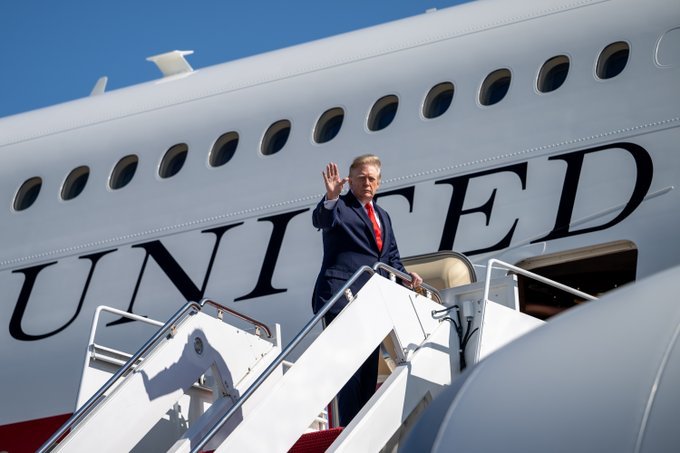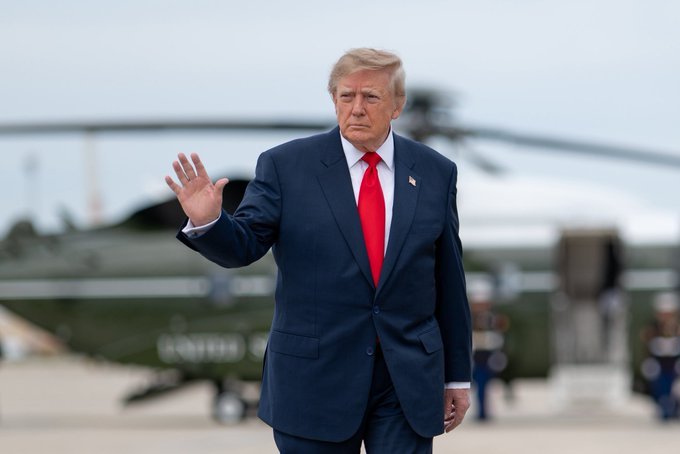
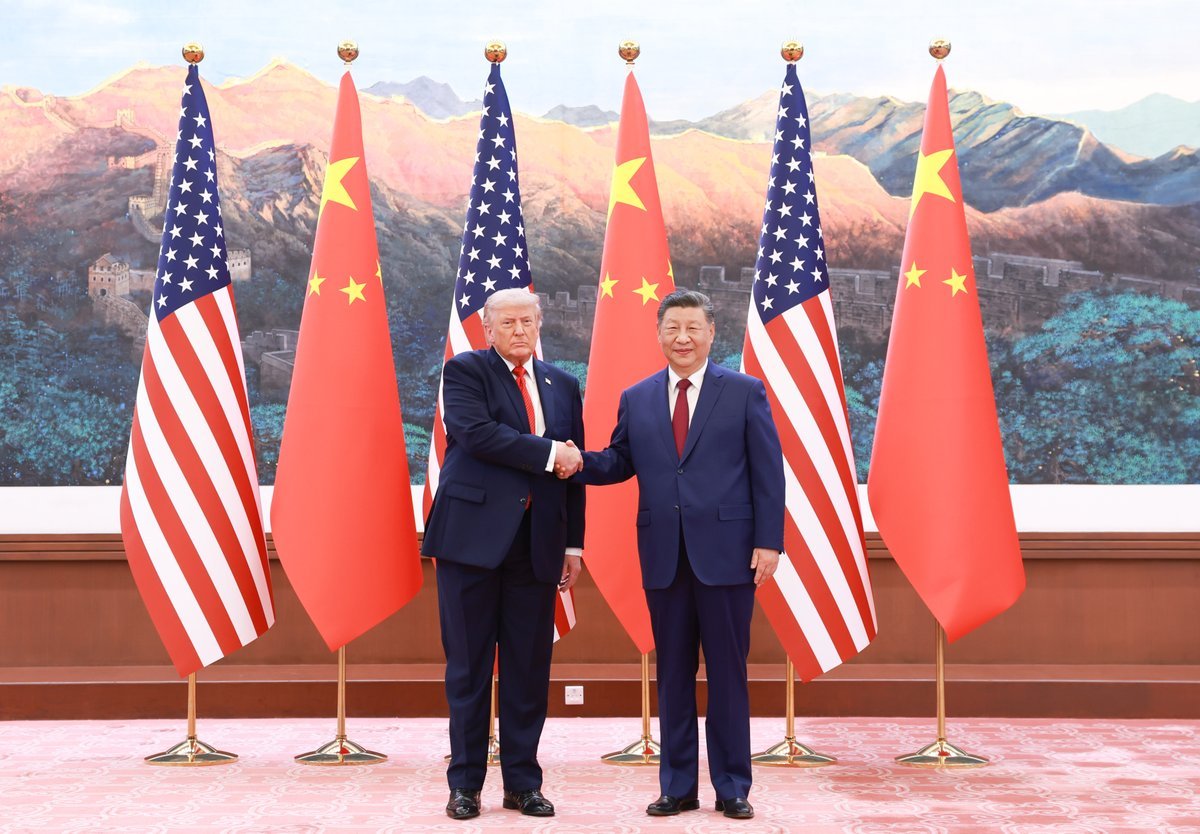
Washington, Sept 2026 : US President Donald Trump has announced that Chinese President Xi Jinping will visit the United States on September 24, expressing optimism about his upcoming engagement with the Chinese leader as Washington and Beijing continue to navigate trade, technology and geopolitical tensions.
Trump disclosed the date on Wednesday while meeting US travel industry executives, during discussions on foreign investment, artificial intelligence and America’s economic competition with China.
“By the way, we have the president of China coming on the 24th, it’ll be very exciting, be great, love to have him,” Trump said.
“We have a lot of good things to... with President Xi,” he added, according to a proofread transcript of the meeting.
Trump did not provide details about the agenda for Xi’s visit. Earlier on Wednesday, during an exchange with reporters in the Oval Office, the US President had confirmed that the Chinese leader would be travelling to the United States.
“I have (Chinese leader Xi Jinping) coming here,” Trump said.
The announcement comes as the world’s two largest economies remain locked in a complex relationship shaped by extensive economic ties as well as disputes over tariffs, technology restrictions, supply chains and strategic influence.
During his meeting with the travel industry representatives, Trump repeatedly referred to China while highlighting what he described as the growing flow of investment into the United States. He also claimed that the US maintains a substantial lead over China in artificial intelligence.
“AI is going up, and we’re leading China in AI very substantially,” Trump said.
Artificial intelligence, semiconductors, advanced manufacturing and other strategic technologies have become central to the US administration’s economic and national security strategy. Washington has sought to strengthen its technological edge while imposing various restrictions on China’s access to advanced technologies.
At the same time, Trump has maintained direct engagement with Xi as both countries seek to manage their economic rivalry and prevent disputes from escalating into broader confrontation.
Trump also brought China into his comments about the United States’ increasingly contentious relationship with Canada. He said some people were surprised when he described Canada as more difficult to deal with than China.
“Who’s the toughest one to deal with?” Trump said, referring to questions about whether China or other countries posed the greatest challenge.
He said he had responded: “No, actually it’s Canada. Canada has felt emboldened.”
Xi’s September 24 visit would bring the two leaders together at a particularly consequential point in US-China relations. Despite years of tariffs, export controls and restrictions on sensitive technologies, the two countries remain deeply economically interconnected.
The meeting could provide an opportunity for Washington and Beijing to address economic and trade concerns while discussing wider strategic issues. However, the precise agenda and expected outcomes of Xi’s visit have not yet been detailed by the US administration.
The planned engagement also comes as both countries compete for influence in emerging technologies and global markets, making high-level dialogue between Trump and Xi significant for the future direction of bilateral relations and the wider global economy.