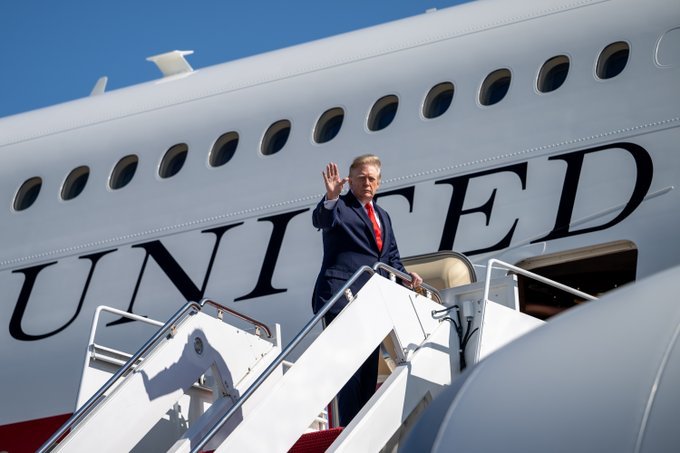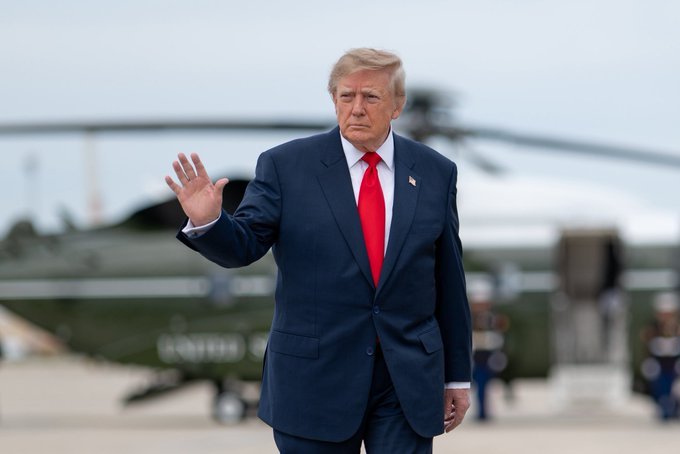
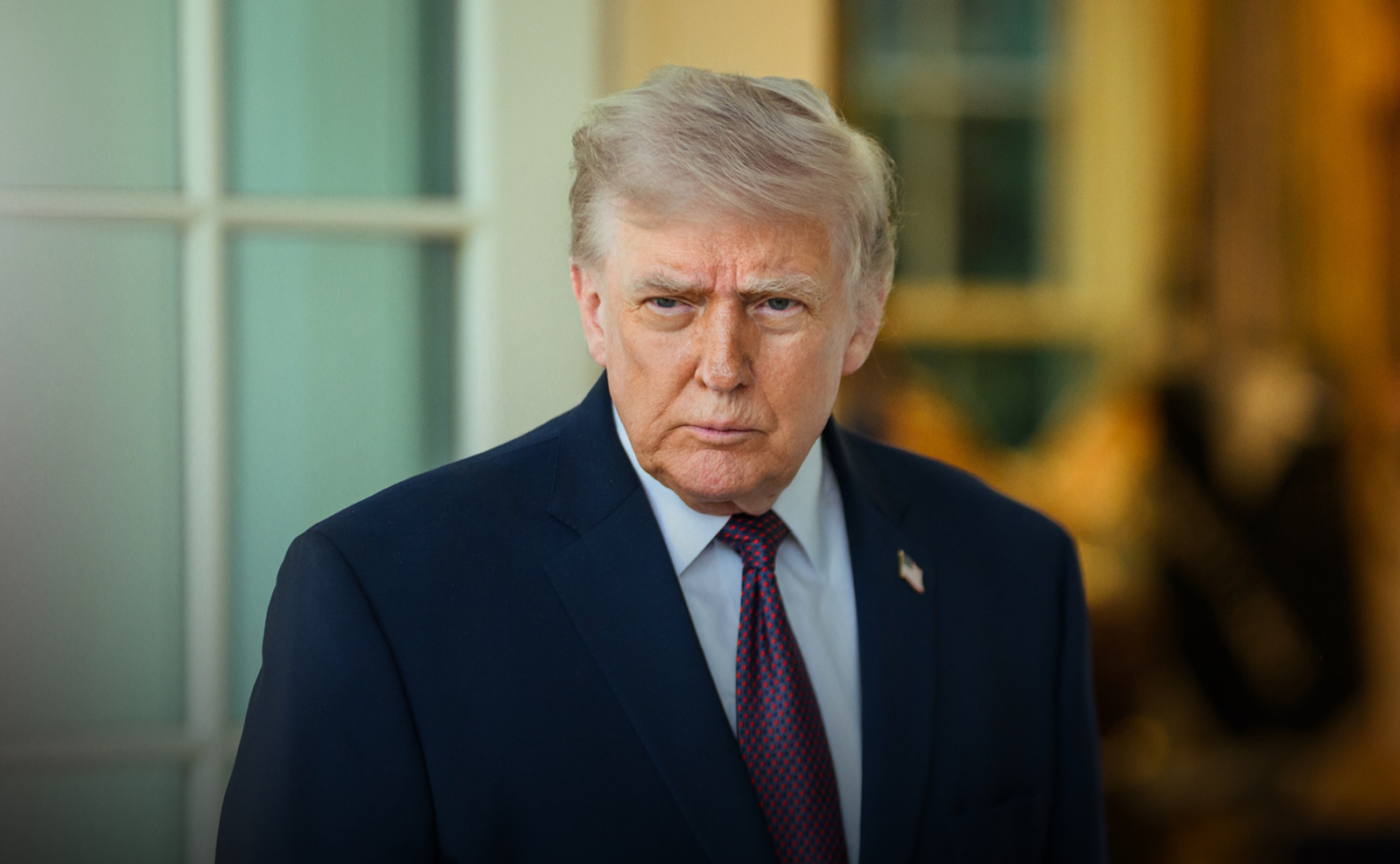
Washington, Sep 2026 : US President Donald Trump has characterised the confrontation between Washington and Tehran as an intermittent “military conflict” rather than a full-scale war, claiming that American forces have established control over the strategically vital Strait of Hormuz and prevented Iran from acquiring a nuclear weapon.
Trump made the remarks while responding to questions about Vice President J.D. Vance's decision not to describe the confrontation as a war, despite the United States having resumed military strikes against Iran. Trump said the scale of the operation did not warrant comparison with major American wars of the past.
“Well, I'll tell you what, a lot of people don't call it a war. I call it a military conflict because it's small potatoes for us. It's not a big thing,” Trump told reporters.
The president said the confrontation had resulted in the deaths of 18 US service members but maintained that the situation was fundamentally different from prolonged conflicts such as the Vietnam and Afghanistan wars. He described the military action as intermittent, saying the US had carried out strikes at intervals rather than maintaining continuous combat operations.
“I would say that it's intermittent. You know, we do intermittent strikes. We're not fighting right now. There's no fighting,” Trump said.
Asked whether calling a conflict that had claimed American military lives “small potatoes” was appropriate, Trump defended the five-month-long US operation and reiterated that preventing Iran from obtaining a nuclear weapon remained Washington's primary objective.
“Iran will not have a nuclear weapon. We've stopped them from having,” he said.
Trump also warned that the United States could launch another attack on a location he identified as “Pickaxe” if American intelligence detected renewed activity there. He said Washington was closely monitoring developments and movements across Iran and would respond forcefully if it believed the situation warranted military action.
“We may hit Pickaxe very soon because if there was anything going on with Pickaxe,” Trump said, adding, “And if anything goes bad, we hit them. We hit them hard.”
The president further claimed that US forces had destroyed Iranian radar systems, aircraft and other military equipment used to protect the Strait of Hormuz. He said American minesweepers had cleared mines from the strategic waterway and claimed that oil shipments were continuing to move through the passage.
“We control the Hormuz Strait, and we control it very strongly,” Trump said.
Trump also made a broader claim about the extent of American influence resulting from the military campaign, stating that the United States had “essentially taken over Iran” and referring separately to Venezuela.
According to Trump, there had been no fighting for several days following the latest US strikes. He claimed Iran could require as long as 25 years to rebuild its military capabilities if Washington ended its campaign immediately. At the same time, he indicated that he would eventually like to end the operation so that the next US president would not inherit the issue, although he did not provide a timeline.
“But I want to leave so that the next president doesn't have to worry about it,” Trump said.
On China's role, Trump said he had personally asked Chinese President Xi Jinping not to become involved in the confrontation. Trump claimed Beijing had maintained only limited involvement despite China's dependence on oil supplies moving through the Strait of Hormuz.
“I said, please don't get involved to President Xi,” Trump said, adding that China had shown “very little involvement.”
Trump also argued that the strategic importance of Hormuz could decline as alternative energy transportation routes develop across the region. He pointed to new pipelines and an overland route through Syria as potential alternatives for transporting oil without relying entirely on the narrow maritime passage.
“The Hormuz Strait is not what it used to be,” Trump said, arguing that pipelines were being built across the Middle East to reduce dependence on the waterway.
His remarks underscored Washington's continued focus on Iran's nuclear capabilities, control of key maritime routes and the possibility of further military action if US authorities detect renewed Iranian activity.