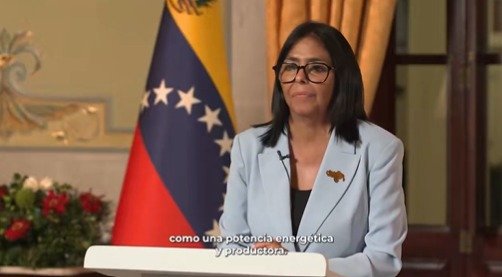
CARACAS, Aug 2026 : Interim Venezuelan leader Delcy Rodriguez has assured the country that Venezuela will retain ownership and sovereignty over its oil resources under a new agreement giving the United States significant access to the nation’s vast petroleum reserves.
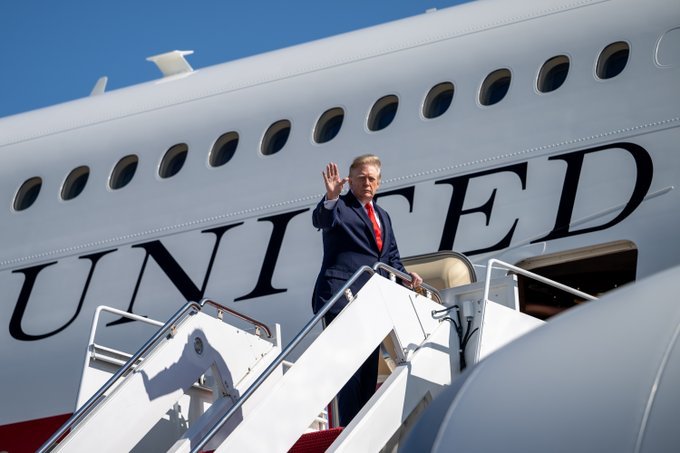
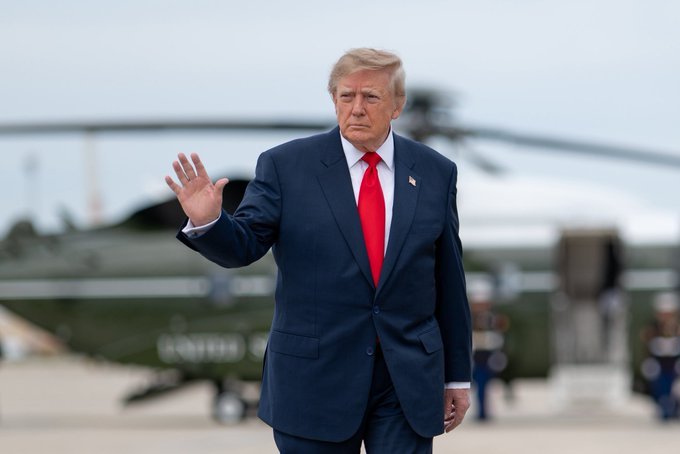
The arrangement involves US participation in the development of Venezuela’s proven oil reserves, estimated at around 65 billion barrels. US President Donald Trump described the agreement on Friday as “the biggest oil deal in world history”, highlighting its potential scale and significance for global energy markets.
Addressing the nation on state television on Saturday, Rodriguez sought to reassure Venezuelans concerned about the implications of the agreement.
“One thing must be absolutely clear: Venezuela retains ownership and sovereignty over its resources,” she said.
According to the interim government, the agreement is designed to revive Venezuela’s struggling oil industry by attracting around $100 billion in private investment. Rodriguez said the objective was to transform the country’s largely underdeveloped underground resources into a source of economic and social benefits for Venezuelans.
However, the deal has generated uncertainty among sections of the population, including some supporters of the government. The lack of detailed information about the agreement has fueled debate on social media, with critics questioning how much Venezuela will ultimately gain and whether the arrangement could compromise national sovereignty.
Jesus Salazar, a 68-year-old security guard, said many Venezuelans remained unsure about who would benefit most from the deal.
“We don't know who this will benefit -- whether it's Venezuela or the United States,” he said, adding that he had doubts but wanted to see how the agreement developed.
The agreement comes as Venezuela undergoes major political and economic changes following years of confrontation with Washington. The Trump administration has maintained significant pressure on Caracas, while Rodriguez has remained in the leadership under an arrangement that requires her government to cooperate with US demands.
Venezuela’s ruling party on Saturday endorsed economic measures aimed at protecting national interests and overcoming the impact of years of sanctions and other restrictions imposed by the United States.
The government has repeatedly blamed US sanctions for contributing to the collapse of Venezuela’s economy.
Push to Revive Oil Industry
Rodriguez has introduced reforms in the mining and petroleum sectors, opening industries that were previously tightly controlled by the state to greater participation from private and foreign investors.
Washington has also eased restrictions on Venezuela’s oil industry, creating greater scope for international companies to participate in the country’s energy sector.
Venezuelan oil production increased by 29.8 per cent between January and July, reaching approximately 1.2 million barrels per day. Despite the improvement, output remains far below the roughly three million barrels per day produced by the country about 25 years ago.
The new agreement seeks to substantially increase production, although experts caution that rebuilding Venezuela’s ageing oil infrastructure will take several years.
Oswaldo Felizzola, an engineer and professor at Caracas-based IESA, said significant production gains were unlikely to emerge immediately and could take at least three or four years.
He welcomed the prospect of greater US involvement, arguing that international guarantees could help attract the investment Venezuela has struggled to secure for more than a decade.
Felizzola said state-owned Petroleos de Venezuela, or PDVSA, lacks the financial resources required to independently develop many of the country’s oil fields.
The investment could therefore accelerate efforts to rebuild an industry that has suffered from years of underinvestment, declining production and economic instability.
Poverty Remains Major Challenge
Venezuela’s economic crisis remains severe despite recent signs of improvement. The country experienced an extraordinary economic contraction of around 80 per cent between 2014 and 2021, pushing millions of people into poverty.
For many Venezuelans, the benefits of higher oil production have yet to translate into meaningful improvements in daily life. The monthly minimum wage remains extremely low, while government subsidies provide additional support but still fall well short of household expenses.
Carlos Baco, a 74-year-old government employee, said rising prices continued to make life difficult despite increased oil production.
“Consumer goods and food are more expensive... the dollar is rising and prices are going up,” he said.
Rodriguez has projected that the agreement could generate more than $204 billion in tax revenue, although the government has not released detailed figures explaining how that estimate was calculated.
Some analysts nevertheless see the agreement as a potential turning point for Venezuela’s energy sector.
Elias Ferrer of the Orinoco think tank said the arrangement represented an improvement because Venezuela’s enormous reserves could generate little revenue if they remained undeveloped.
Former deputy energy minister Dolores Dobarro also described the agreement as a significant opportunity, provided the investment is implemented transparently and efficiently.
The central challenge for Caracas will now be converting the proposed investment into higher production, government revenue and broader economic benefits while convincing Venezuelans that national control over their strategic resources remains intact.
(Disclaimer :The content of this article is sourced from a news agency and has not been edited by the Mavericknews30 team.)