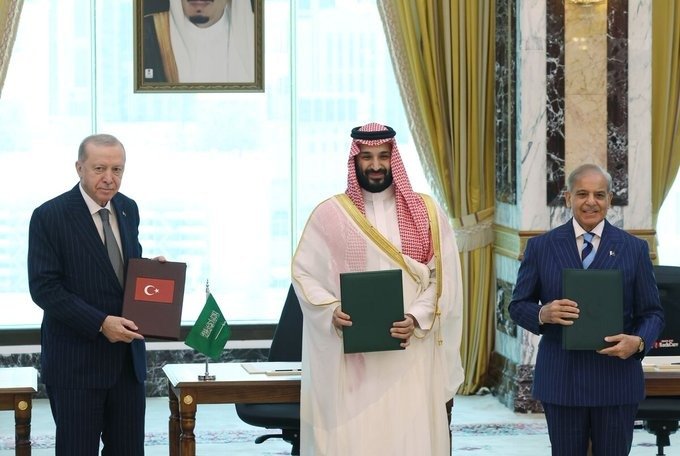
New Delhi, Aug 2026 : The newly signed Mecca Joint Defence Agreement between Pakistan, Saudi Arabia and Turkey has emerged as a significant development in regional security cooperation, with potential implications for the wider strategic environment in West Asia and South Asia.
According to Pakistan’s Foreign Ministry, the agreement provides that an armed attack against any one of the three signatories would be treated as an attack against all three. The pact also seeks to expand defence cooperation among the countries across multiple areas, strengthening their coordination amid growing regional security challenges.
Security analysts believe the agreement has been shaped largely by changing strategic dynamics in West Asia following the recent US-Israeli military action against Iran, Tehran’s retaliatory strikes targeting American bases and increasing concerns over the vulnerability of critical Gulf infrastructure, including energy and water facilities.
Against this backdrop, experts view the agreement primarily as an attempt to strengthen collective deterrence and improve strategic coordination among the three countries at a time of heightened uncertainty in the region.
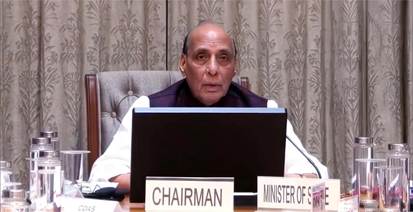
However, the new defence arrangement has also raised questions in India, particularly over how its mutual defence provision could operate in the event of a future India-Pakistan military confrontation.
One of the key concerns is how the clause would be interpreted if India were to undertake military action against terrorist infrastructure in Pakistan following a major cross-border terror attack.
India has consistently maintained that military operations undertaken in self-defence against terrorist threats are fundamentally different from aggression against another sovereign state. Analysts, however, point out that whether such an action could trigger the mutual defence provision would ultimately depend on the circumstances, diplomatic consultations and the interpretation adopted by Pakistan, Saudi Arabia and Turkey.
The growing defence relationship between Turkey and Pakistan is another factor being closely watched in New Delhi. Turkey has steadily expanded military and defence cooperation with Islamabad, while Saudi Arabia’s considerable financial resources could potentially contribute indirectly to Pakistan’s economic and military resilience.
“These developments naturally merit close observation from New Delhi,” an analyst said.
At the same time, India maintains strong and expanding strategic relations with Saudi Arabia, covering energy security, trade, investment, infrastructure and counter-terrorism cooperation. Riyadh remains an important partner for New Delhi, making the nature and future interpretation of the defence agreement particularly significant for India.
Experts believe Saudi Arabia could help reduce uncertainty by making clear that the agreement is not directed against India and does not compromise its commitment to combating terrorism in all its forms.
For New Delhi, analysts argue, the appropriate response would be neither alarm nor complacency. Instead, India would need to pursue sustained diplomatic engagement with Saudi Arabia and other regional partners while closely monitoring the evolving security architecture.
At the same time, New Delhi is expected to maintain its firm position that regional security arrangements should not provide political or diplomatic cover for cross-border terrorism.
(The content of this article is sourced from a news agency and has not been edited by the Mavericknews30 team.)