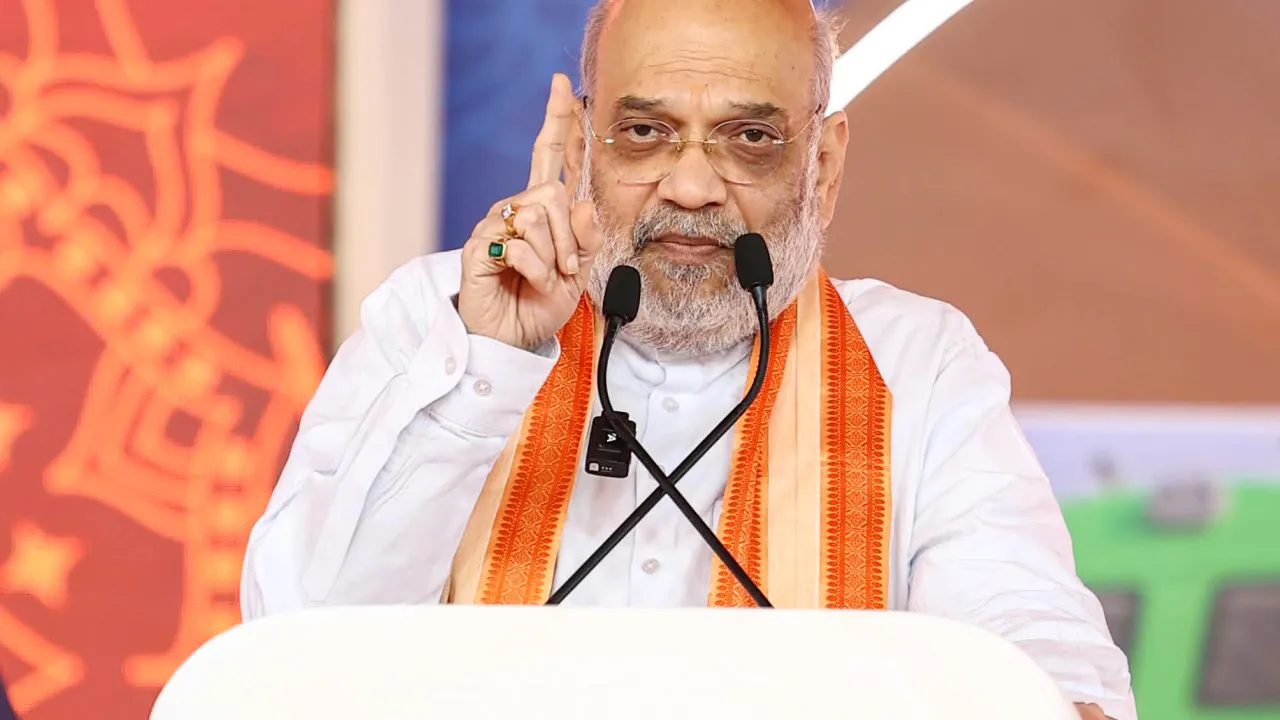
Home Minister says alleged drug trafficker was brought back to India after agencies uncovered his identity and tracked him down abroad
New Delhi, Oct 2026 : Union Home Minister Amit Shah on Saturday described the deportation of alleged narco-trafficking kingpin Navpreet Singh from Türkiye as a “historic milestone”, crediting Indian agencies with tracking him down and securing his return to the country.
In a post on social media platform X, Shah said the Modi government had achieved a major breakthrough by bringing Singh back to India. According to the Home Minister, Singh had obtained Turkish citizenship using the alleged fake identity of Navab Virk and continued to smuggle heroin and methamphetamine from Afghanistan into India.
“Modi govt has achieved a historic milestone by securing the deportation of hardened narco-trafficking kingpin Navpreet Singh from Türkiye,” Shah said.
He said Indian agencies had traced Singh despite his use of a different identity and eventually secured his deportation.
“Obtaining Turkish citizenship under the fake identity of Navab Virk, he had continued to smuggle heroin and methamphetamine to India from Afghanistan,” Shah said.
The Home Minister added that agencies had tracked Singh and uncovered his alleged identity before bringing him back to India. He said Singh had now been taken into custody in connection with cases involving alleged drug trafficking and other offences.
Shah congratulated the agencies involved in the operation and reiterated the government’s stated objective of taking action against organised narcotics networks.
“Modi govt is committed to destroying every narco-cartel before Dec 2029,” he said.
The latest development follows other cases in which Indian agencies have brought alleged drug traffickers and organised crime suspects back from abroad.
In April, Mohammad Salim Dola, described as a close aide of gangster Dawood Ibrahim and a suspected drug trafficker, was brought back to India from Türkiye. Shah had then said the Narcotics Control Bureau had achieved a breakthrough in securing Dola’s return.
At the time, the Home Minister said Dola’s arrest demonstrated the government’s resolve to pursue alleged narcotics fugitives and members of organised crime networks and bring them before the law.
Another case involved fugitive Prabhdeep Singh, who was brought back from Azerbaijan in May in connection with a major narcotics case involving the alleged recovery of 358 kg of heroin.
According to Delhi Police, its Special Cell coordinated with the Central Bureau of Investigation to secure Prabhdeep Singh’s extradition. He had allegedly been absconding since 2023 and was brought from Baku to India by a three-member Special Cell team after the completion of extradition procedures.
India and Türkiye have an extradition treaty signed in 2001, which came into force in June 2002. The agreement provides a legal framework for both countries to seek the transfer of fugitives wanted in connection with terrorism and other serious offences, subject to the treaty’s provisions.
The two countries have also cooperated in cases involving individuals suspected of links to extremist organisations. Such international investigations and transfers can involve established mechanisms including Interpol notices and coordination between law enforcement authorities.
Singh’s deportation therefore adds to a series of recent operations involving the return of suspects wanted in India in connection with serious criminal and narcotics cases.
The development also highlights the role of international cooperation in pursuing alleged drug traffickers who operate across national borders. Indian authorities have increasingly sought assistance from foreign governments and international law enforcement mechanisms to locate and bring back fugitives facing criminal cases in the country.