Washington, Aug 2026 : A bipartisan group of US lawmakers has introduced legislation that would require social media influencers working on behalf of foreign governments or other foreign interests to register under the country’s foreign-agent disclosure law, in a move aimed at increasing transparency around online political influence.
The proposed Foreign Propaganda Disclosure Act would amend the Foreign Agents Registration Act (FARA) to explicitly include social media influencers within the existing definition of a “publicity agent.” Supporters of the legislation said the measure would help address growing concerns about foreign-backed propaganda and influence campaigns conducted through digital platforms.
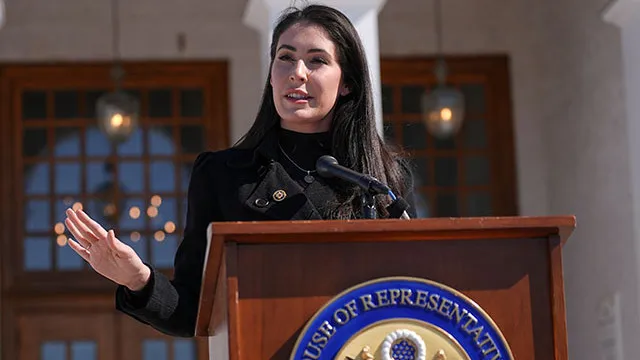
The bill was introduced by Republican Congresswoman Anna Paulina Luna of Florida, along with Democratic Representatives Vicente Gonzalez of Texas and Jared Moskowitz of Florida and Republican Representative Derrick Van Orden of Wisconsin.
Under the proposed legislation, a social media influencer would be defined as an individual operating a monetised account on a social media platform. However, the measure would not automatically classify every monetised influencer as a foreign agent.
Instead, FARA’s registration and disclosure requirements would apply when an influencer is acting on behalf of a foreign government or another foreign principal in circumstances already covered by the law.
Luna said the legislation was intended to distinguish between individuals expressing their personal views and those secretly working for foreign interests to influence American audiences.
“There is a big difference between having an organic opinion and secretly acting on behalf of foreign interests to push propaganda to Americans,” Luna said.
She accused foreign adversaries of using disinformation and psychological operations to create divisions within the United States, weaken national security and influence American foreign policy. According to Luna, Americans should know when individuals shaping online discussions are operating on behalf of foreign interests.
The proposed legislation comes amid growing congressional scrutiny of the role played by social media personalities in shaping political debate and public opinion. Influencers can reach large audiences directly through personal accounts, often without the traditional editorial structures associated with newspapers, television networks or other established media organisations.
Lawmakers backing the bill argue that this environment can create transparency gaps, particularly when influencers receive financial support from foreign governments or foreign entities.
Democratic Representative Vicente Gonzalez said federal laws need to evolve alongside changes in the way Americans consume news and participate in public discussions.
“Federal law must adapt to an ever-changing digital media landscape, especially as more Americans turn to social media for news consumption and public discourse,” Gonzalez said.
He added that the legislation would increase transparency surrounding paid partnerships between influencers and foreign governments and help audiences make more informed judgments about the content they encounter online.
The bill would rely on an existing federal definition of a social media platform and incorporate monetised influencers into the existing FARA framework rather than establishing an entirely new regulatory system specifically for online personalities.
Supporters said this approach would allow the government to address foreign-backed influence operations using an established legal mechanism while requiring greater disclosure of relationships, activities and financial arrangements.
Luna said the measure would bring foreign-supported influence campaigns into greater public view and reinforce transparency in the American digital public sphere.
The lawmakers, however, did not identify specific influencers or foreign governments that would potentially be covered by the legislation. The announcement also did not provide an estimate of how many social media accounts could ultimately fall within the bill’s scope.
FARA was enacted in 1938, during a period of concern over foreign propaganda activities in the United States. The law generally requires individuals and organisations acting under the direction or control of foreign principals in political or public-relations activities to register with the US Department of Justice.
Registered entities are required to disclose information concerning their relationships with foreign principals, as well as their activities and finances.
If enacted, the proposed legislation would extend that transparency framework more explicitly into the modern social media environment, potentially requiring foreign-backed influencers to disclose their relationships with overseas interests when engaging in activities covered by FARA.
(Disclaimer :The content of this article is sourced from a news agency and has not been edited by the Mavericknews30 team.)