Washington, Aug 2026 : Canada has announced retaliatory tariffs of up to 50 per cent on $27.6 billion worth of US goods, escalating the trade dispute with Washington after suspending negotiations over a new trade arrangement.
The Canadian government said on Tuesday that the new duties will take effect on September 8 and cover a wide range of products, including steel, dairy goods, appliances, agricultural equipment, pulp and paper, electronics, furniture and clothing.
Ottawa said the tariffs would match US duties “dollar for dollar, rate for rate”. The move follows Washington’s decision to impose a 50 per cent tariff on $27.6 billion of Canadian goods from August 22.
Canada said its new tariffs will be imposed at rates of 15, 25 and 50 per cent, corresponding to the applicable US tariffs under American Section 338 and Section 232 measures.
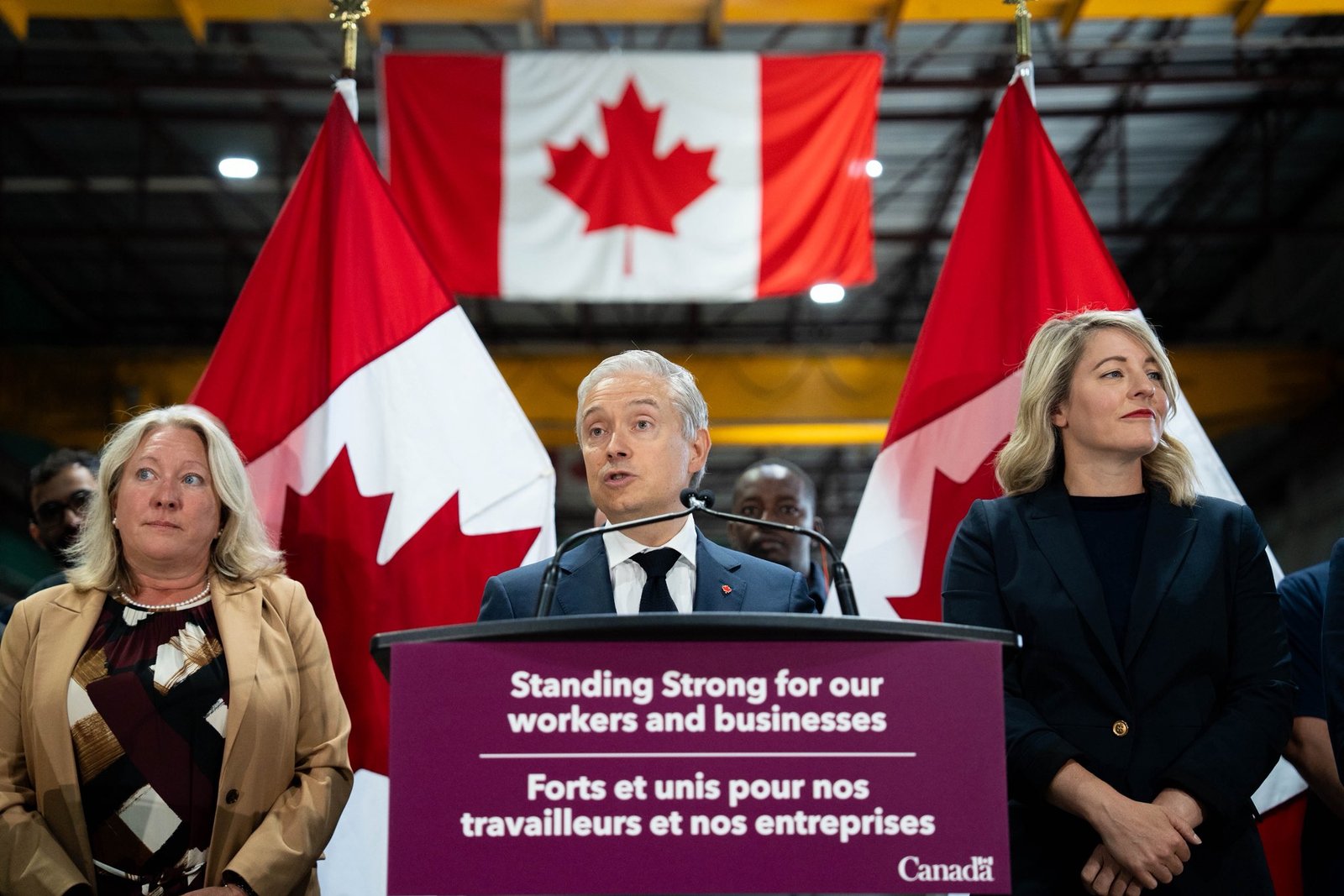
“When the United States asked too much and offered too little, we chose to stand up for Canadians,” Finance and National Revenue Minister Francois-Philippe Champagne said.
He said the counter-tariffs, together with a multi-billion-dollar support programme, would help protect Canadian workers, farmers, families and businesses while strengthening the country’s economic resilience.
Under the new measures, products facing the highest 50 per cent tariff include steel and aluminium goods that were previously subject to a 25 per cent Canadian counter-tariff. Furniture, clothing and apparel will also face the 50 per cent rate.
A 25 per cent tariff will apply to a range of products, including appliances, dairy items such as cheese, fish and seafood, as well as certain steel and aluminium derivative products.
Existing Canadian counter-tariffs on other American products, including automobiles, will remain in place.
Ottawa said it decided to suspend intensive trade negotiations after Washington presented new terms that Canadian authorities considered contrary to the country’s national interests. The Canadian government argued that accepting the proposed terms could have placed Canadian workers, businesses and strategically important industries at a disadvantage.
The government said Canada did not initiate the trade confrontation but had a responsibility to ensure that domestic companies were able to compete fairly with American products.
Industry Minister Melanie Joly said Canada would continue investing in its workers, businesses and productive capacity despite growing uncertainty in the global economy.
The government has also announced a $7.5 billion support package aimed at helping workers and businesses affected by the tariff dispute.
The package includes an additional $1.5 billion for small and medium-sized businesses through the Regional Tariff Response Initiative. A new $500 million liquidity facility will provide financial assistance to businesses facing immediate cash-flow difficulties.
Another $2 billion will be allocated to the Canada Strong Diversification Fund to support tariff-affected companies with projects that are ready to begin. The government said the programme would help businesses diversify markets and strengthen domestic supply chains.
Canada has also announced $3.5 billion in rapid-response assistance for workers and employers. The measures include income support, training programmes and initiatives designed to help companies retain employees during the period of economic uncertainty.
Ottawa further announced changes to programmes operated by the Business Development Bank of Canada. The minimum revenue requirement for businesses seeking tariff-related assistance will be reduced to $1 million, allowing more companies to access government-backed financial support.
The government will also provide greater flexibility under its loan facilities for larger enterprises affected by the trade dispute.
The latest escalation comes as the United States and Canada remain deeply interconnected economically. The two countries share one of the world’s largest bilateral trading relationships, with supply chains spanning automobiles, agriculture, energy, steel, aluminium and manufacturing.
Many products and components cross the US-Canada border multiple times before reaching consumers. As a result, prolonged tariff measures could increase costs for manufacturers, businesses and consumers in both countries.
The new Canadian tariffs mark another significant escalation in the trade dispute and could put additional pressure on businesses that depend heavily on cross-border commerce. Ottawa, however, maintains that the measures are necessary to protect Canadian industries while preparing the economy to become more diversified and resilient.
(Disclaimer :The content of this article is sourced from a news agency and has not been edited by the Mavericknews30 team.)