- Bihar will become an industrial hub, and by 2030 the state's youth will get employment within Bihar itself: Chief Minister
Key Highlights
The target is to provide employment within Bihar by 2030. The government will examine investment proposals and work towards formulating policies for the relevant sectors within 30 days, as required.
Work will be undertaken on a rapid rail service between Muzaffarpur and Patna, and between Patna and Gaya. The target is to develop a data centre with a capacity of 1,000 MW before 2030.
The Chief Minister inaugurated and inspected the Common Facility Centre. He also distributed shed allotment and land allocation letters to industrial units. In his presence, the Industries Department and the Footwear Design and Development Institute (FDDI) signed a Memorandum of Understanding (MoU).
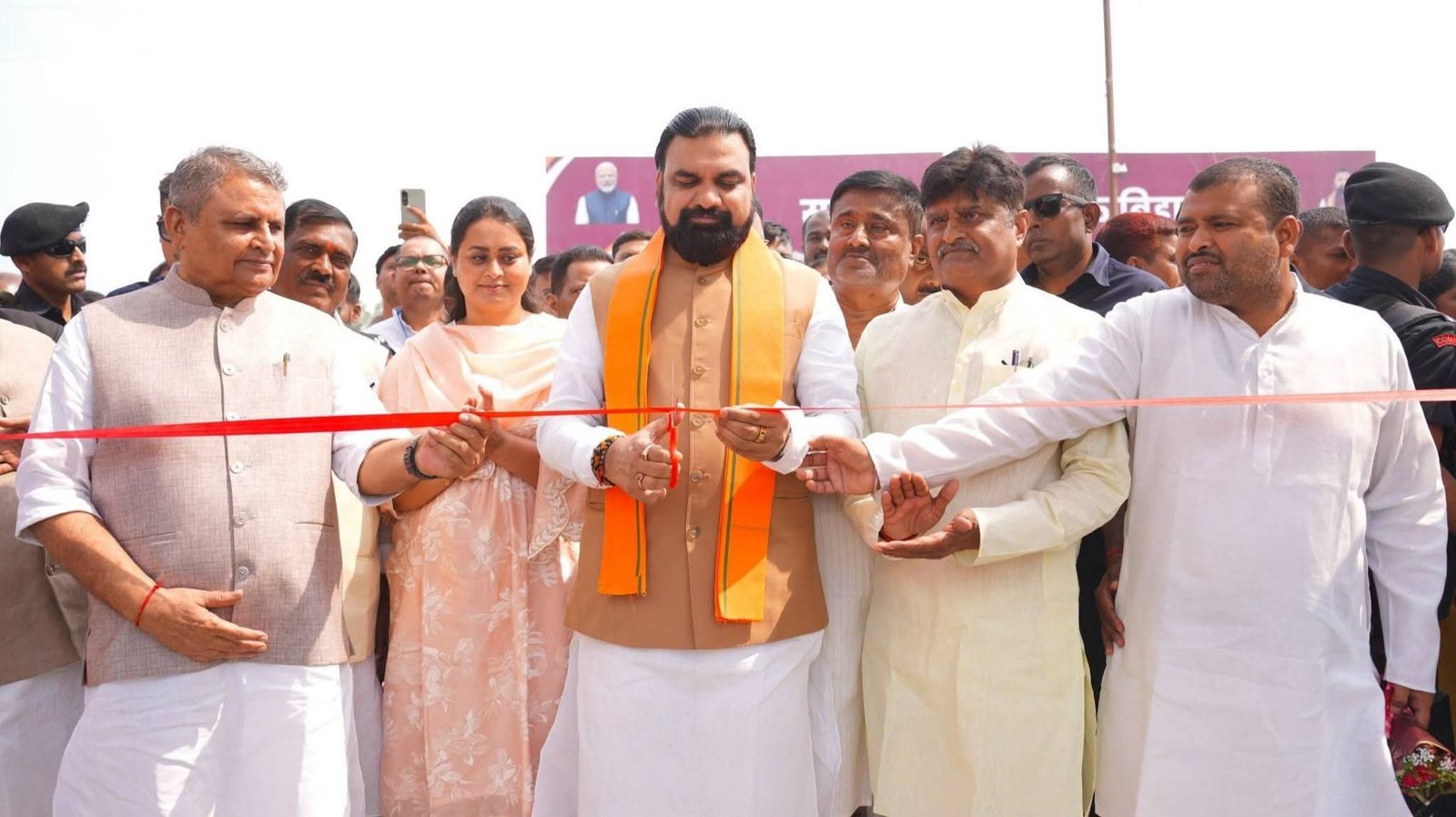
Patna, October 2026: Chief Minister Samrat Choudhary today inaugurated the Mega Leather, Footwear and Accessories Cluster and Common Facility Centre, built at a cost of ₹140.95 crore in the Mahwal Industrial Area of Motipur block in Muzaffarpur district.
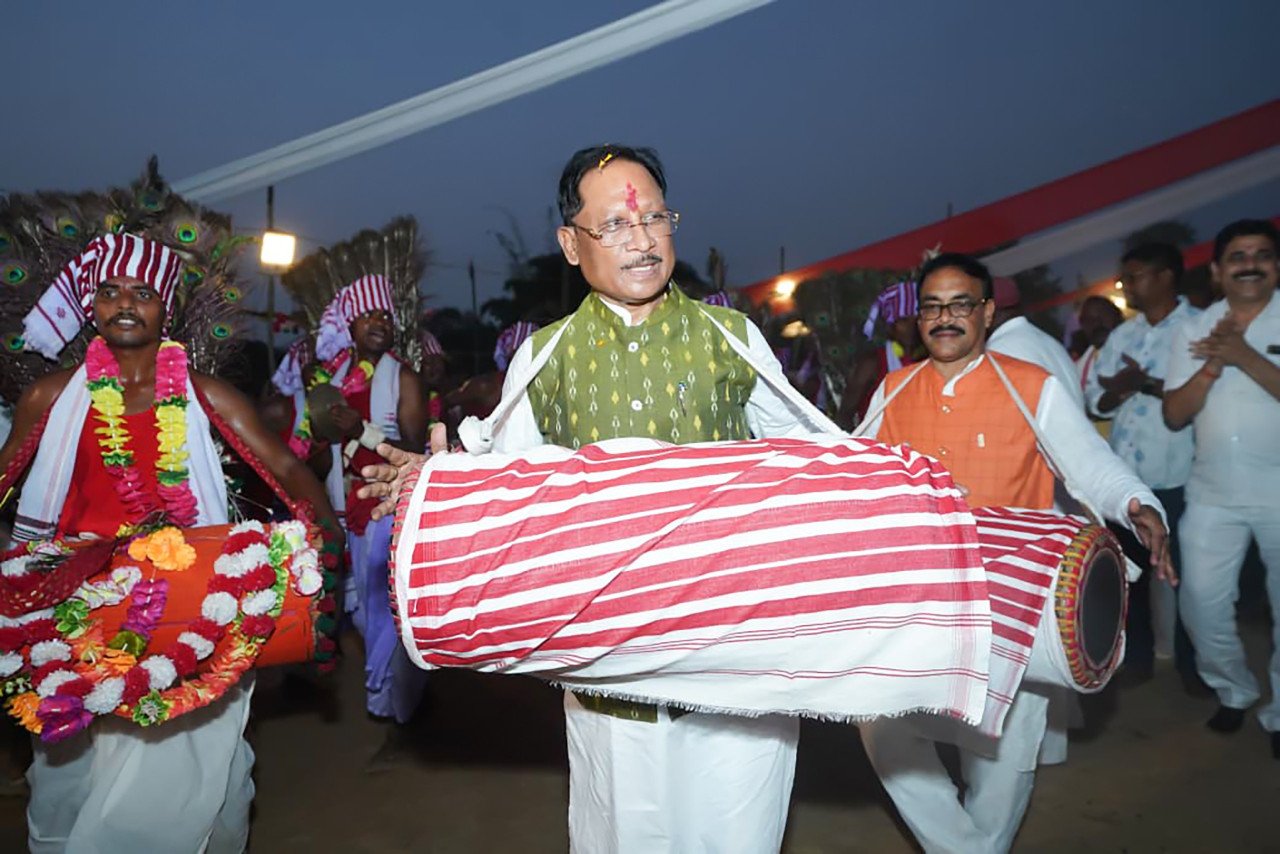
During the visit, he inspected the various facilities provided at the cluster, reviewed the arrangements and visited different stalls set up there. At the beginning of the programme, the Chief Minister inaugurated and inspected the Common Facility Centre. He also distributed shed allotment and land allocation letters to industrial units. In his presence, the Industries Department and the Footwear Design and Development Institute (FDDI) signed a Memorandum of Understanding (MoU).
Addressing the gathering, the Chief Minister said that the establishment of industries, promotion of investment, employment generation and expansion of infrastructure would give new strength to Bihar's economy. The people of Bihar have the ability and talent to work. What is needed is to provide them with sufficient employment and entrepreneurial opportunities within their own state.
He said the target was to ensure, by 2030, that people leaving Bihar to work as labourers elsewhere could find employment within the state itself. For this purpose, a widespread network of industries would be developed across Bihar.
The Chief Minister said work was also being undertaken on a plan to operate rapid rail services between Muzaffarpur and Patna, and between Patna and Gaya. Reiterating the target of developing a data centre with a capacity of 1,000 MW before 2030, he said this would create the possibility of attracting large-scale investment to Bihar.
He said Prime Minister Narendra Modi had set the goal of a developed India by 2047. Former Chief Minister Nitish Kumar had envisioned a prosperous Bihar. The entire team was now working together to translate that vision into reality and strengthen Bihar economically. The dream of a developed India would be fulfilled only when Bihar became prosperous.
The Chief Minister said the state government was continuously formulating new policies to promote industries. Over the past two years, policies had been advanced in various sectors in response to the demands of industrialists. During the last five to six months, work had also been undertaken on policies related to several sectors, including semiconductors and renewable energy.
Appealing to industrialists to submit investment proposals for Bihar, he said the government would examine them and work towards formulating policies for the relevant sectors within 30 days, wherever necessary. The government's priority was not merely to prepare industrial proposals but to ensure that factories were actually established in the state so that people in Bihar could get employment. The state government was promoting MSMEs, heavy industries and other industrial sectors.
The Chief Minister said that around 12 lakh people still travelled outside Bihar to work as labourers. The government's target was to provide employment to these people within Bihar before 2030. He urged those who had gone outside the state for better education, jobs or industrial and business opportunities to actively participate in strengthening Bihar's economy.
He said Bihar had considerable potential in digital infrastructure and data centres. A 12 MW data centre of CtrlS had recently been inaugurated in Patna and had begun operations. However, he said, limiting development to a capacity of just 12 MW would not be sufficient. The state would have to expand this sector on a large scale.
The government's target was to develop data centres with a total capacity of 1,000 MW in Bihar before 2030. Achieving this target could create the potential for investments of around ₹10 lakh crore in the data centre sector. If data centres with capacities of 50 MW or 100 MW also began operating successfully, the state could earn thousands of crores of rupees in revenue. This would strengthen the economy and open new avenues for industrial development.
Referring to electricity availability and infrastructure development in Bihar, the Chief Minister said that at one time the state's electricity consumption was not even 500 MW, whereas it had now reached approximately 10,000 MW. The target was to make around 10,000 MW of electricity available to the industrial sector over the next five years. This would facilitate industrial expansion and strengthen Bihar's economy.
He said significant work had been done in the construction of rural roads in Bihar. After roads and electricity had reached village after village, accelerating industrial development had become the need of the hour. Bihar's water resources and the strength of its young population would have to be linked with the state's development.
Work had already begun on the construction of an airport in Muzaffarpur to improve air connectivity, and more than 10 per cent of the work had been completed. Development work was also underway on several other airports in the state.
He said work was progressing towards developing an international airport at Patahi in Muzaffarpur. The aim was to create facilities that would enable the packaging and marketing of local products within the city and allow goods to be transported directly to domestic and international markets. The development of facilities such as a dry port in Muzaffarpur would reduce the dependence of businesses on additional arrangements to transport their products to other cities. This would benefit local industries and increase export opportunities.
Referring to the Integrated Manufacturing Cluster (IMC), the Chief Minister said its development was underway in Gaya. Similar industrial clusters would also be developed in Muzaffarpur and Darbhanga.
He said work would be undertaken on rapid rail services to make travel easier between Muzaffarpur, Patna and Gaya. Under the plan, the possibility of developing faster rail connectivity from Muzaffarpur to Patna and from Patna to Gaya was being examined. Once operational, the service could make it possible to reach Patna from Muzaffarpur in approximately 30 to 40 minutes and Gaya in around one to one-and-a-half hours.
The Chief Minister said the state government was providing financial assistance to connect young people with self-employment and entrepreneurship. A programme organised by the Industries Department at Bapu Sabhagar in Patna a few days earlier had initiated an effort to turn around 7,000 people into entrepreneurs at one time.
He said beneficiaries under the scheme were provided assistance of ₹10 lakh, comprising a grant of ₹5 lakh and the remaining ₹5 lakh at a low interest rate. The scheme would give young people opportunities to start their own businesses and generate employment.
Connecting the younger generation with the industrial sector was a priority for the government, he said, urging young people to submit their research and startup-related proposals through appropriate platforms, including Bihar Tech. The Industries Department would work towards supporting such proposals so that young people's innovations could be converted into viable businesses.
Describing Muzaffarpur as a rapidly emerging destination for investment, the Chief Minister said investment opportunities existed in various districts of Bihar, but entrepreneurs were showing particular interest in establishing industries in Muzaffarpur. Despite the presence of several districts around Patna, Muzaffarpur was developing a favourable environment for business and industrial activity.
He directed the district administration to make land available for industries and said there should be no delay in land allocation. The government would work towards developing available land and allotting it to industrialists. He said providing land for the establishment of industries was an important responsibility of the administration.
Regarding land acquisition, the Chief Minister said a policy had been formulated under which a person voluntarily offering land to the government would receive payment at a rate 10 per cent higher than the prescribed amount. The objective was to simplify the process of making land available and accelerate industrial projects.
He noted that Bihar had a population of approximately 14 crore, compared with India's population of around 140 crore. Nearly one-tenth of the country's population lived in Bihar. Developing industries was essential to meet the needs of such a large population and provide employment to its people.
The Chief Minister said the launch of the Mega Leather, Footwear and Accessories Cluster was an important step towards industrial development in Bihar. Describing it as a promising opportunity for the state, he said the continuous establishment of industrial units would bring changes to Bihar's economy.
Congratulating entrepreneurs and organisations associated with the leather park, he said agreements had been signed with various companies through the Industries Department, which would help promote industrial activities.
He said industrial development would increase employment opportunities, raise state revenue and make Bihar economically stronger. He appealed to all industrialists to invest in Bihar and participate in the state's development.
The Chief Minister also announced that an architecture university would be established in Muzaffarpur in the name of Shaheed Jubba Sahni. The expansion of higher education facilities would give the younger generation opportunities to advance in technical and professional fields.
Extending his Navratri greetings, Choudhary said Thursday was the fifth day of the festival. On the occasion of worshipping the fifth form of Goddess Durga, he urged everyone to work together for Bihar's development and prosperity.
He said expanding industries, generating employment and developing education, transportation, electricity and infrastructure were essential to transform Bihar. The government was working in all these areas.
The Chief Minister said Muzaffarpur should establish a distinctive identity on the industrial map of India and the world. The development of facilities such as expressways, airports and better transport connectivity would give fresh momentum to the city's economic activities. He said the government, the industrial sector and the general public would have to work together to make Bihar prosperous and developed.
During the programme, a video film on the industrial park was screened, showing how Bihar was rapidly progressing towards becoming an industrial hub.
The Industries Department Secretary welcomed the Chief Minister by presenting him with an angavastram and a memento.
Deputy Chief Minister Vijay Kumar Choudhary; Industries Minister Shreyasi Singh; Backward Classes and Extremely Backward Classes Welfare Minister Rama Nishad; Tourism Minister Kedar Prasad Gupta; MP Veena Devi; MLAs Shankar Prasad, Aditya Kumar, Ajay Kumar, Ranjan Kumar, Kamal Singh, Ajit Kumar, Raju Kumar Singh, Arun Kumar Singh and Bechi Kumari; Legislative Council member Dinesh Prasad Singh; Mayor Vimla Sahu; former minister Suresh Sharma; other public representatives; Development Commissioner Mihir Kumar Singh; Director General of Police Preetika Verma; Chief Minister's Secretary Sanjay Kumar Singh; Industries Department Secretary Kundan Kumar; BIADA Managing Director and Information and Public Relations Department Secretary Naveen Kumar; Industries Department Director Mukul Kumar Gupta; District Magistrate Kumar Gaurav; Senior Superintendent of Police Kantesh Mishra; other officials, investors, entrepreneurs and distinguished guests were present.