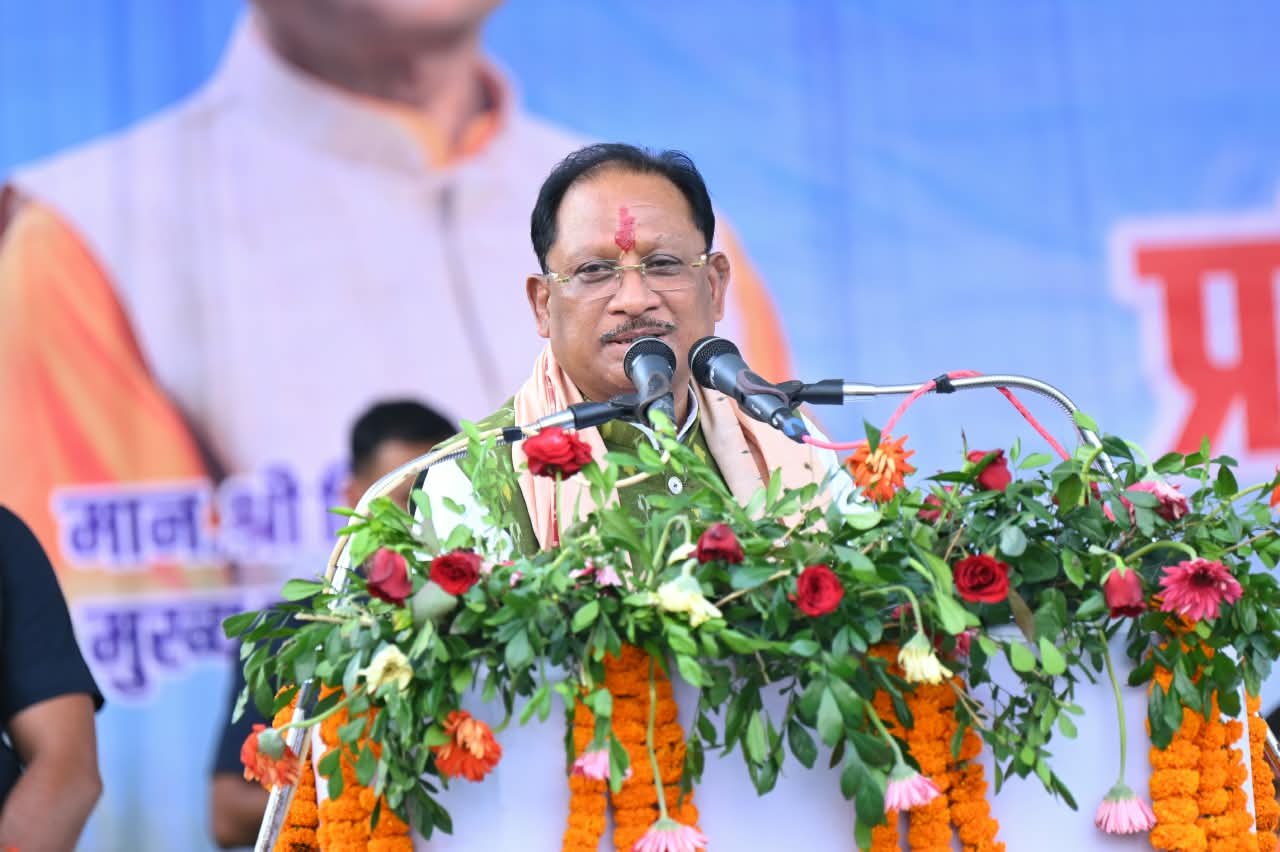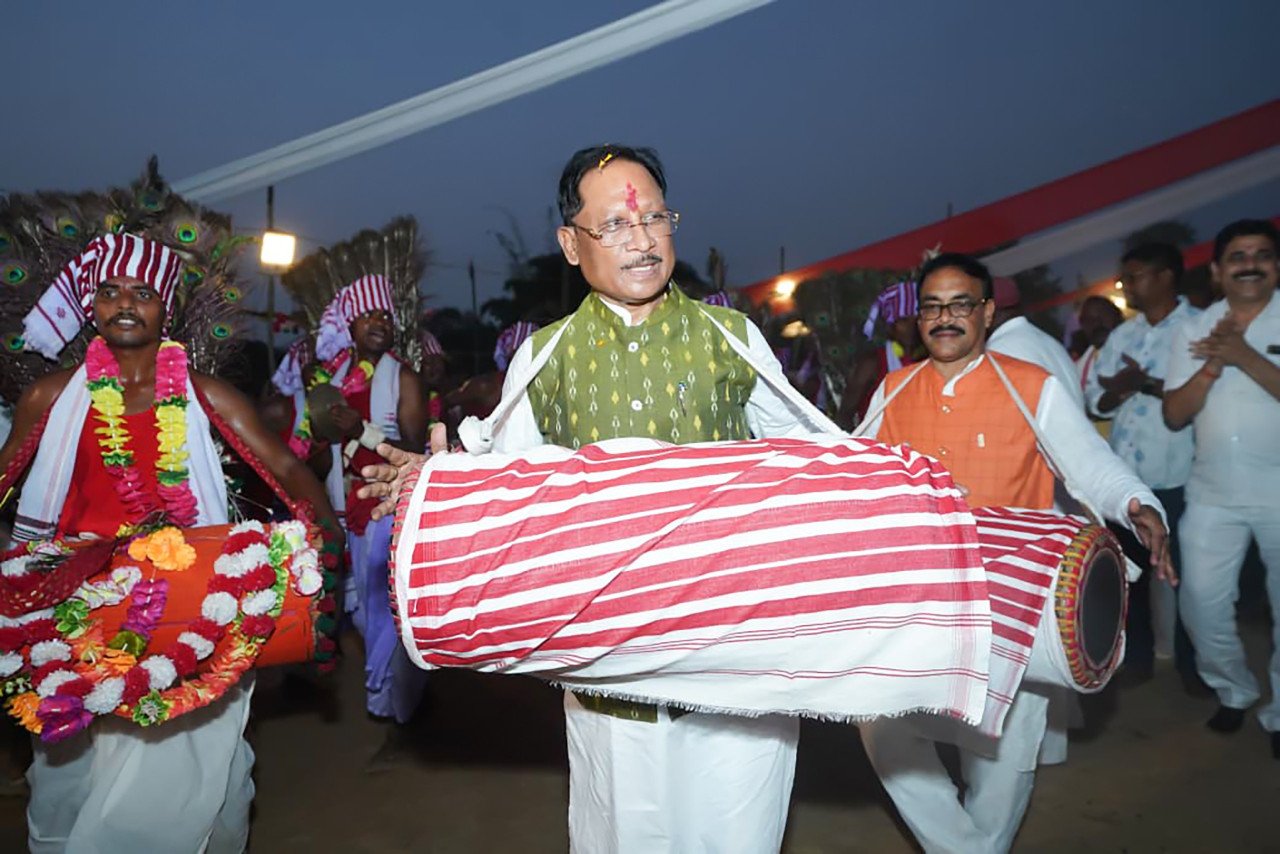
Chief Minister participates in Karma Puja festival at Sarasmal, joins community members in traditional Karma dance to the beats of the mandar
Offers prayers to Lord Karam Dev, seeking prosperity, happiness and well-being for the state
Education is the strongest instrument of social progress; youth should set ambitious goals and move forward: Chief Minister
Government committed to the dignity, education, employment and expansion of basic facilities for tribal communities
Chief Minister urges youth to make the most of competitive examinations, higher education and emerging employment opportunities
Raipur, October 2026 : Chhattisgarh Chief Minister Vishnu Deo Sai has said that the history of tribal communities is a glorious legacy of valour, self-respect, struggle and deep reverence for nature. In tribal culture, nature is not merely the foundation of life but is also revered. The lessons imparted by tribal communities over centuries through their way of life and traditions on protecting water, forests and land are an inspiration for the entire world today.
He said the Karma festival is a living symbol of this rich cultural consciousness, collective spirit and gratitude towards nature.
The Chief Minister was addressing the Karma Puja festival organised by the Oraon Samaj Vikas Samiti, Chhattisgarh–Odisha Himgir region, at the playground of the middle school in Sarasmal village, under Tamnar development block of Raigarh district.
Sai offered prayers to Lord Karam Dev, along with the community’s revered deities, Lord Shiva and Goddess Parvati, and wished for prosperity, happiness and well-being for the people of Chhattisgarh.
The vibrant colours of tribal culture came alive when, at the request of the Karma dance groups, the Chief Minister picked up a mandar drum and joined members of the community. Accompanied by the beats of the mandar and traditional folk melodies, he performed the Karma dance alongside men and women. His warm and informal participation generated considerable enthusiasm among the gathering. Community representatives welcomed him by presenting a traditional floral garland.
Struggles of Tribal Heroes Are an Invaluable Heritage
Extending his greetings on Karma Tihar, Sai said tribal communities had made an unforgettable contribution to the country’s culture and freedom struggle. Tribal heroes such as Bhagwan Birsa Munda, Shaheed Veer Narayan Singh and Gundadhur fought with extraordinary courage to protect their motherland, self-respect and rights.
He said it was the responsibility of everyone to familiarise the younger generation with the sacrifices, dedication and struggles of these great personalities.
The Chief Minister said former Prime Minister and Bharat Ratna awardee Atal Bihari Vajpayee had accorded special priority to the welfare and development of tribal communities by establishing a separate Ministry of Tribal Affairs. This provided institutional support and fresh momentum to efforts aimed at tribal development.
Today, under the leadership of Prime Minister Narendra Modi, extensive efforts are being made to uphold the dignity of tribal communities and expand access to education, healthcare, housing, roads, drinking water, livelihoods and other basic amenities, he said.
Sai said it was a matter of pride that Droupadi Murmu, a woman from a tribal community, occupies the country’s highest constitutional office as President of India. In Chhattisgarh too, a member of the tribal community has been given the opportunity to serve the state as Chief Minister. This reflects the growing recognition, dignity and participation of tribal communities, he added.
The Chief Minister said the tribal museum established in Nava Raipur was an important initiative to connect the younger generation with the community’s rich heritage. The museum provides an opportunity to learn about tribal history, lifestyles, traditions, culture and the contributions of its great heroes.
He said the state government was committed to preserving tribal culture and traditions while connecting communities with modern opportunities for development.
Karma Festival Celebrates Cultural Roots and Bond with Nature
Sai said tribal communities were traditionally worshippers of nature. Coexistence with nature and environmental conservation were deeply embedded in their customs and traditions.
The Karma festival celebrates the joy of a new harvest, gratitude towards nature and the spirit of collective living. Such events not only preserve cultural identity but also connect the younger generation with its roots, languages, traditions and social values, he said.
The Chief Minister urged community members to pass on their rich culture, traditions and languages to future generations. He said society could progress rapidly by remaining connected to its roots while embracing education and modern opportunities.
“Culture is our identity, and education is the foundation of our bright future,” he said.
Education Will Open the Path to Progress; Youth Must Set High Goals
Addressing young people in particular, Sai said education was the most powerful means of advancing in life. There was no shortage of opportunities for young people today; what was needed was to set clear goals, work hard and make full use of the available facilities.
He said the state government was continuously working to provide tribal students with quality education and better opportunities to prepare for competitive examinations. Through Prayas residential schools, talented students were being given opportunities to advance their education.
Modern study facilities, such as Nalanda campuses, were also being expanded to provide young people with a conducive environment and the necessary resources to prepare for competitive examinations.
The Chief Minister encouraged young people to seek admission to prestigious educational institutions at the national level. He said the capacity of hostels for tribal students in Delhi had been increased to 200 seats, providing greater support to those pursuing higher education and preparing for competitive examinations.
Society would progress rapidly when the younger generation received quality education and secured a strong presence in administration, medicine, engineering, technology, industry, entrepreneurship and other fields, he said.
New Opportunities Being Created to Connect Youth with Employment
Sai said the state government was placing special emphasis on connecting young people with skill development and employment opportunities alongside education.
Opportunities were being created through recruitment processes in government departments, employment fairs and industries. Expanding investment and industrial activity in the state was also aimed at generating more employment opportunities for local youth, he said.
The Chief Minister urged young people to stay informed about competitive examinations, skill development programmes, employment fairs and self-employment schemes, and to make the best possible use of them.
Every young person who advances through education and employment helps pave the way for the progress of their family as well as society as a whole, he said.
Development Schemes Reaching the Last Person in Tribal Areas
Sai said the Central and state governments were committed to expanding basic development facilities in tribal-dominated regions.
Through initiatives such as the Dharti Aaba Janjatiya Gram Utkarsh Abhiyan and the Pradhan Mantri Janjati Adivasi Nyaya Maha Abhiyan (PM-JANMAN), housing, roads, drinking water and other essential facilities were being extended to tribal areas, particularly to Particularly Vulnerable Tribal Groups (PVTGs).
The government’s aim was to ensure that no family living in remote tribal regions remained excluded from the mainstream of development or from the benefits of welfare schemes. Ensuring that development reaches the last person remained the government’s highest priority, he said.
Rajya Sabha MP Devendra Pratap Singh said tribal communities had preserved their culture, traditions and folk arts across generations. He said it was everyone’s responsibility to ensure wider recognition of tribal heroes and their contributions.
He urged young people to give the highest priority to education and strengthen social unity. Education was the foundation of social progress, while cultural unity strengthened a community’s identity, he said.
Oraon Samaj Vikas Samiti president Panat Ram Bhagat, in his welcome address, highlighted the ancient traditions of the Karma festival, the language, culture and folk arts of the Oraon community, and the distinctive features of clans associated with nature. He emphasised the need to preserve the community’s cultural identity and social cohesion.
Tribal Folk Culture Comes Alive to the Beats of the Mandar
The Karma Puja festival offered a colourful glimpse of the rich folk culture and traditions of tribal communities.
Men and women dressed in traditional attire performed the collective Karma dance to the rhythmic beats of the mandar, mridang and dhol. Through their coordinated movements, the dancers beautifully expressed their love for nature, collective spirit, joy and devotion to their revered deities.
The Karma festival is an important symbol of tribal cultural identity. It celebrates the joy of the new harvest, gratitude towards nature, social unity and a deep connection with folk traditions.