Chief Minister Rekha Gupta addresses press conference, expresses gratitude to the Prime Minister on behalf of 2.5 crore Delhi residents
Transparent and dedicated government in Delhi since February 2025, with central welfare schemes being implemented on the ground to accelerate the vision of a ‘Viksit Delhi’
Delhi provides health cover of up to ₹10 lakh under Ayushman Bharat, over 9 lakh registrations and claims worth ₹118 crore settled
Over 5,300 e-buses, road infrastructure projects worth ₹1.25 lakh crore and metro expansion mark major improvements in connectivity and the environment
Protests are inconveniencing Delhi’s residents and traders, Opposition focused on stalling development for political gains: Chief Minister Rekha Gupta
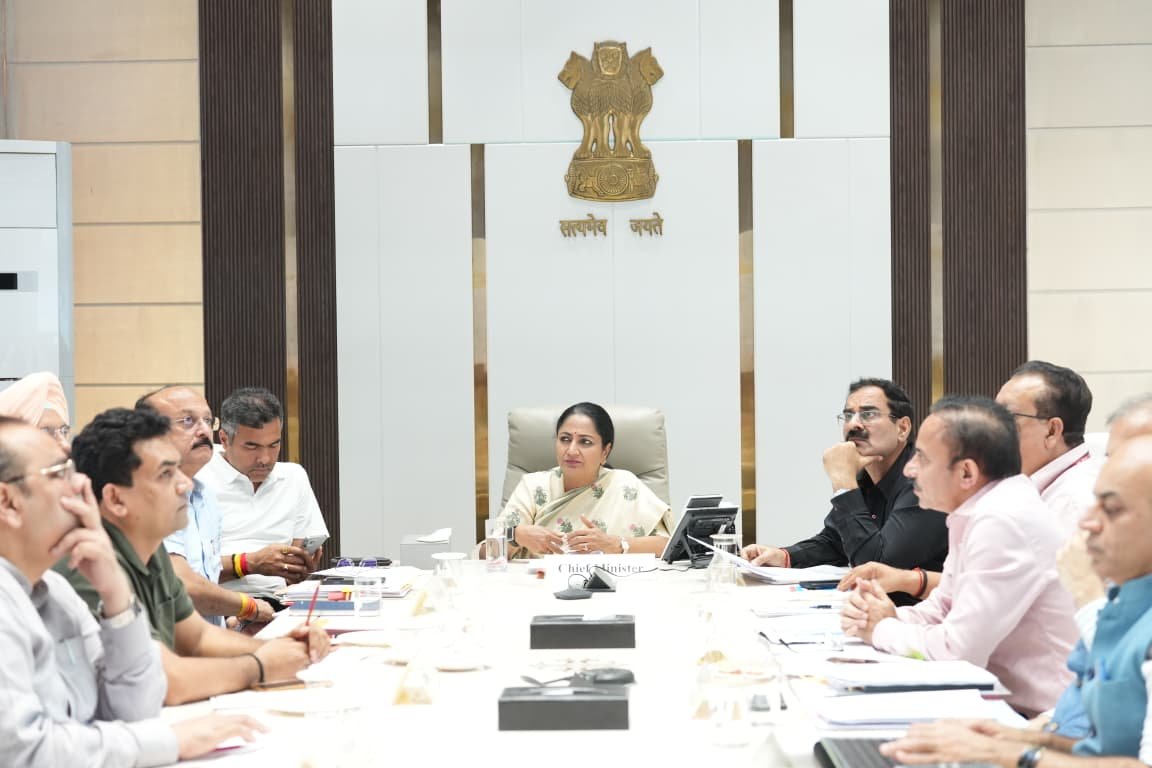
New Delhi, October 2026 : Delhi Chief Minister Smt. Rekha Gupta addressed a press conference at the Chief Minister’s Janseva Sadan on Wednesday to mark Hon’ble Prime Minister Shri Narendra Modi Ji’s 25-year journey from public service to service of the nation. She said the Delhi Cabinet had unanimously passed a resolution honouring this milestone. The Chief Minister said that throughout his 25 years in public life, the Prime Minister Ji had consistently worked for the country’s progress, public welfare, improvement in citizens’ quality of life and development of the states. Under his leadership, India had achieved new milestones across various sectors, while Delhi had also benefited from the Centre’s welfare schemes, development projects, and financial and technical support. She expressed gratitude to the Prime Minister on behalf of Delhi’s 2.5 crore residents.
The Chief Minister said that since the government took office in Delhi in February 2025, its commitment had been to implement the Centre’s welfare schemes effectively and ensure that their benefits reached citizens directly. Work was being carried out across healthcare, housing, education, transport, social security, sanitation, the environment, industrial development and infrastructure. In line with the vision of a Viksit Bharat, the government remained committed to building a Viksit Delhi.
Ayushman Bharat Brings Health Security to Delhi Residents
Chief Minister Rekha Gupta said that while crores of citizens across the country had been receiving health cover under Ayushman Bharat, Delhi residents had remained deprived of its benefits for a long time. After the government was formed in February 2025, the decision to implement the scheme in Delhi was taken at its very first Cabinet meeting.
Under the scheme, the Delhi government has added ₹5 lakh to the Centre’s health cover of ₹5 lakh, taking the total coverage to ₹10 lakh. More than 9 lakh people have registered under the scheme in Delhi so far, and payments of ₹118 crore have been made against approximately 85,000 claims. The initiative aims to protect families from financial hardship while dealing with serious illnesses and ensure that no eligible person is denied treatment because of financial difficulties.
Vaya Vandana Scheme Extends Health Cover to Senior Citizens
Referring to the Vaya Vandana scheme for senior citizens, the Chief Minister said it was an important initiative that provides health cover to people aged 70 and above without any income-related eligibility condition. She said around 3 lakh senior citizens in Delhi had registered under the scheme. The government aims to ensure that older people have access to better healthcare and do not face financial difficulties while seeking treatment.
Expansion of Jan Aushadhi Kendras and Ayushman Arogya Mandirs
CM Rekha Gupta said essential medicines were being made available under the Pradhan Mantri Jan Aushadhi Yojana at prices nearly 90 per cent lower than market rates. Around 415 Ayushman Arogya Mandirs have been established in Delhi, and the government aims to increase their number to approximately 1,100. These initiatives are helping residents access affordable medicines and primary healthcare services closer to home. They are also improving the early detection of health problems and access to initial treatment.
PM Awas Yojana Aims to Provide Permanent Homes to Poor Families
Referring to the Pradhan Mantri Awas Yojana, the Chief Minister said the scheme had helped provide housing to poor and needy families across the country. Work in this direction was now being undertaken in Delhi in a planned manner. With the Centre’s support, efforts are being made under the ‘Jahan Jhuggi, Wahan Makan’ initiative to provide better housing to eligible families. Providing dignified homes to poor families remains a priority, and the Centre is extending full support to these efforts.
Jan Dhan, Mudra, PM SVANidhi and Ujjwala Schemes Promote Public Welfare
Chief Minister Rekha Gupta said the benefits of the Jan Dhan, Mudra, PM SVANidhi and Pradhan Mantri Ujjwala Yojana schemes, launched under Prime Minister Narendra Modi Ji’s leadership, were reaching Delhi residents. The Jan Dhan Yojana has helped bring people into the banking system, the Mudra Yojana has created opportunities for financial assistance to small business owners and entrepreneurs, and PM SVANidhi has provided financial support to street vendors. Around 3 lakh gas connections have been provided in Delhi under the Pradhan Mantri Ujjwala Yojana, giving eligible families, particularly women, access to clean cooking fuel.
Free Rations for 73 Lakh Families, Support Continued During Covid
Referring to the free ration provision under the Pradhan Mantri Garib Kalyan Anna Yojana, the Chief Minister said around 73 lakh families in Delhi were receiving free rations every month. During the Covid pandemic, free rations provided support to numerous families facing difficult circumstances. The scheme has played an important role in ensuring food security for needy households.
Central Support for Education Under the National Education Policy
CM Rekha Gupta said Delhi had also continued to receive the Centre’s support in the education sector. Under initiatives such as the National Education Policy and Samagra Shiksha, efforts were being made to improve the quality of education in schools and provide better opportunities to students with the Centre’s assistance. The Delhi government is working with the Centre to improve the education system.
Financial Support for Swachh Bharat Mission, AMRUT and Sewer Networks
Chief Minister Rekha Gupta said the Centre’s financial and technical support had been important in addressing Delhi’s longstanding problems, particularly its garbage dumps, sewer networks and the cleaning of the Yamuna. Delhi has received around ₹1,200 crore under the Swachh Bharat Mission and approximately ₹830 crore under the AMRUT scheme. The funds under AMRUT are being used to expand sewer networks, clean the Yamuna and construct decentralised sewage treatment plants (STPs). She added that Delhi had also received around ₹1,650 crore under the SASCI scheme, supporting nearly 30 projects. These efforts aim to address the capital’s longstanding infrastructure challenges and improve civic amenities.
Road and Transport Projects Improve Delhi’s Connectivity
Chief Minister Rekha Gupta said road infrastructure projects worth more than ₹1.25 lakh crore had been completed, were under way or were at various stages of planning in Delhi over the past 12 years, with the Centre’s support. These include the Pragati Maidan Integrated Transit Corridor, the Dhaula Kuan signal-free corridor, the Mahipalpur underpass, the Delhi-Meerut, Delhi-Dehradun and Delhi-Mumbai expressways, and the Eastern and Western Peripheral Expressways.
She said these projects had improved connectivity between Delhi and surrounding areas. The peripheral expressways have provided an alternative route for heavy vehicles to pass around Delhi without entering the capital, helping reduce traffic pressure on its roads. An improved road network is essential for smoother passenger movement, freight transportation and business activity, while also helping Delhi develop world-class transport infrastructure.
Delhi Metro Network Expands
Chief Minister Rekha Gupta said the Delhi Metro was providing convenient public transport to lakhs of commuters across the capital and the National Capital Region (NCR). Before 2014, India’s metro network extended to around 228 km. It has since expanded to approximately 1,155 km, with metro services now available in 26 cities. Delhi-NCR is among the country’s largest metro networks, benefiting around 85 lakh passengers every day. Approximately ₹1,21,206 crore has been spent on Delhi Metro projects from Phase I to Phase V, of which the Delhi government’s share was around ₹27,000 crore. The Centre’s support has played an important role in expanding the metro network and strengthening public transport.
Regularisation of 1,511 Unauthorised Colonies to Benefit Millions
Referring to the PM-UDAY scheme and the regularisation of unauthorised colonies, Chief Minister Rekha Gupta said the process of regularising 1,511 unauthorised colonies on an ‘as is, where is’ basis had opened the way for benefits to reach around 45 lakh people and lakhs of families. Eligible families are being given an opportunity to secure property rights, develop and redevelop their properties, and access financial facilities in accordance with the rules. Describing this as an important initiative for lakhs of families in Delhi, the Chief Minister expressed gratitude to the Prime Minister.
Bharat Mandapam and Yashobhoomi Strengthen Delhi’s Global Event Infrastructure
The Chief Minister said modern venues such as Bharat Mandapam and Yashobhoomi had equipped Delhi with better infrastructure for national and international conferences, summits and major events. The development of these centres has strengthened the capital’s ability to host global events. It has also helped Delhi expand its role on the international stage and create new opportunities for cooperation across sectors.
Steps Towards Cleaner Transport
CM Rekha Gupta said the Centre’s support was helping Delhi promote clean and environment-friendly public transport to tackle pollution. Around 5,300 electric buses are operating in Delhi. Central assistance for electric bus operations and the development of charging infrastructure has strengthened efforts to control pollution. Referring to the financial and technical support being provided under the National Clean Air Programme (NCAP), she said improving air quality required monitoring, technology, better transport and coordination among various agencies.
PM Surya Ghar Muft Bijli Yojana Aims to Make Delhi a Solar Capital
Referring to the PM Surya Ghar Muft Bijli Yojana, the Chief Minister said the scheme was encouraging households to adopt rooftop solar energy. The Delhi government was also working to expand solar power and increase the use of clean energy. With the Centre’s support, efforts were under way to advance solar energy initiatives and develop Delhi as a solar capital.
Promoting Industry, Trade and Ease of Doing Business
Chief Minister Rekha Gupta said the Centre’s support was helping Delhi create a better environment for industry and trade through the new industrial policy, the warehousing policy and initiatives to improve the ease of doing business. Efforts were under way to complete the green industry approval process in approximately 20 days. The government was also focusing on better coordination among various agencies and simplifying procedures. Reducing the time required for approvals and creating a favourable environment for investment are important for Delhi’s economic growth.
Coordination with NCR States to Accelerate Yamuna Cleaning and Pollution Control
The Chief Minister said challenges such as cleaning the Yamuna, air pollution and transport were not confined to Delhi. Their resolution required coordination among states in the National Capital Region and the agencies concerned. Under the Prime Minister’s guidance, dialogue and cooperation with various states had increased. This had encouraged efforts to clean the Yamuna, control pollution and develop the NCR as a coordinated region. Expressing gratitude for the Centre’s financial, technical and administrative support, CM Rekha Gupta said coordinated efforts at various levels were essential to resolving Delhi’s complex problems.
Centre’s Support Strengthens Delhi’s Administrative and Financial Systems
Chief Minister Rekha Gupta said the Centre’s support had been important in strengthening Delhi’s administrative and financial systems. The Reserve Bank of India’s acceptance of arrangements for it to act as Delhi’s banker, financial agent and debt manager has created an opportunity for Delhi to move towards opening a separate account and borrowing from the market.
She also referred to the Centre’s support in permitting a separate cadre for the Public Works Department (PWD) and in connection with a board established to address Delhi’s specific challenges. She said administrative reforms, better coordination between departments and stronger financial management would help Delhi carry out development work in a more systematic manner.
Viksit Delhi Has a Key Role in the Vision of Viksit Bharat 2047
Chief Minister Rekha Gupta said the Prime Minister Ji’s 25 years in public life reflected a consistent commitment to public service, service of the nation and development. Under his leadership, the country was progressing across various sectors, and Delhi was also accelerating its development journey with the Centre’s support. The goal of building a Viksit Bharat by 2047 could be achieved only if all states and regions, including the national capital, played an effective role in the development process. The Delhi government is committed to building a Viksit Delhi alongside a Viksit Bharat.
Protests Are Causing Inconvenience to Delhi Residents: Chief Minister
Chief Minister Rekha Gupta described the Special Intensive Revision (SIR) as a regular electoral process and questioned the inconvenience that protests were causing to traders and the general public.
She said protests were creating difficulties for traders and ordinary citizens in Delhi. The closure of metro stations, the impact on shops and commercial activities, and disruptions to people’s movement were affecting economic activity in the capital. Questioning the politics of the Congress and the Aam Aadmi Party (AAP), the Chief Minister said both parties should explain the grounds on which they were opposing a process such as SIR.
She said the Congress had not received public support in Delhi elections since 2015, even though SIR had been conducted before. The Election Commission had carried out SIR at different times under successive governments. The last SIR in Delhi took place in 2002. She questioned why there had been no similar opposition to the process at that time if it had been conducted previously.
Targeting AAP, the Chief Minister said no such opposition to SIR had emerged when the party was in power in Delhi. She alleged that political parties raised issues according to their electoral circumstances. Political parties should adopt a responsible approach towards democratic institutions and processes and should not inconvenience the public in the name of protest. Referring to law and order and drug-related incidents in Punjab, the Chief Minister criticised the Aam Aadmi Party. She said drug-related cases and incidents of murder in Punjab also required serious attention.
She alleged that AAP and the Congress were raising political issues through protests in Delhi while failing to give adequate attention to problems in states where they were in power. Expressing concern over drug networks and law-and-order challenges in Punjab, she said public safety and the resolution of citizens’ problems must take precedence over political priorities.
The Chief Minister accused Opposition parties of diverting attention from development and public welfare for political reasons. She said the Delhi government remained focused on improving civic amenities, resolving basic problems and taking the capital forward in line with the vision of a Viksit Bharat. The interests of Delhi’s residents, the convenience of traders, uninterrupted movement of citizens and continuity in development work were important, she said. Political parties must play their role responsibly on these issues within a democratic system.