We Will Build a Delhi Where People Are Free to Dream and Have the Opportunities to Fulfil Those Dreams: CM Rekha Gupta
Developed Delhi Will Be the Foundation of Viksit Bharat, Delhi Will Be a City of Opportunities, Not Problems: CM Rekha Gupta
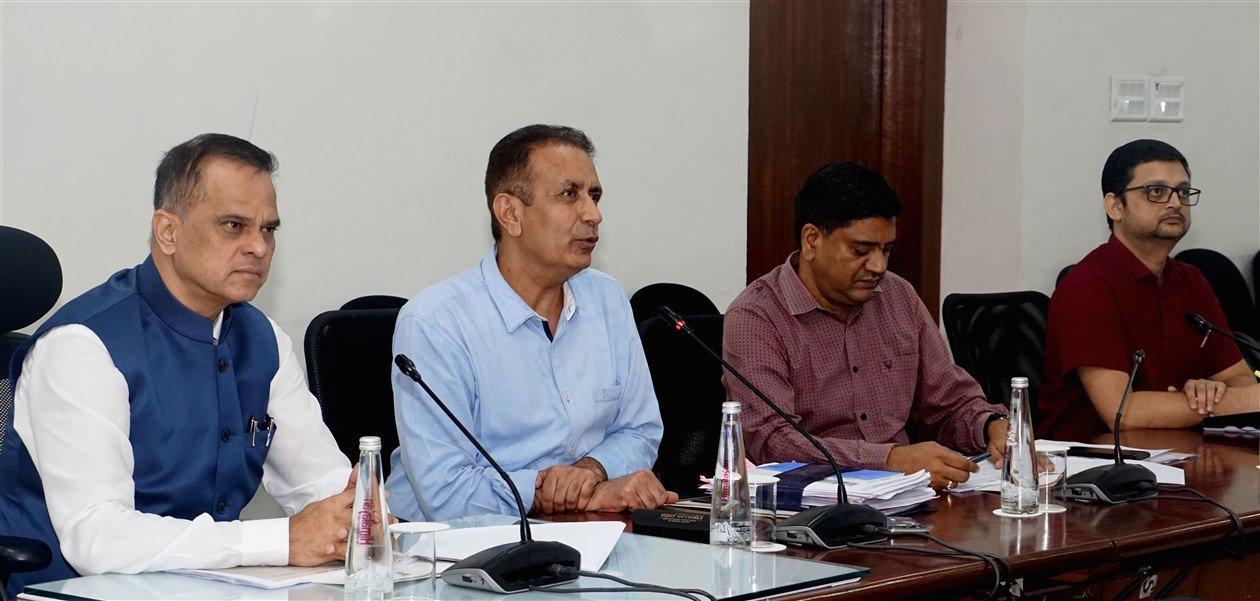
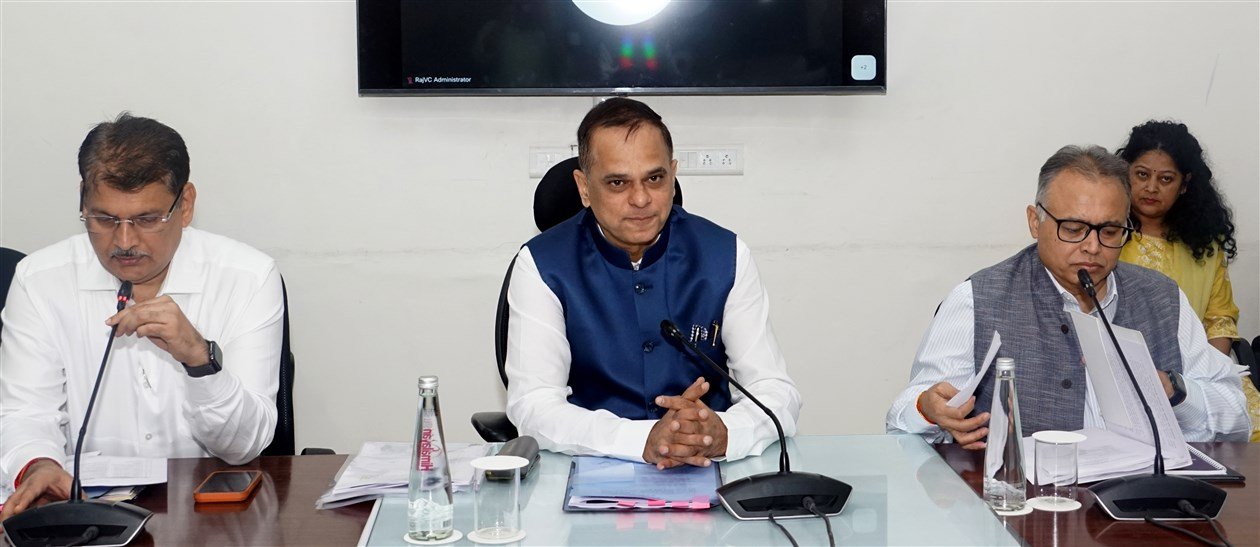
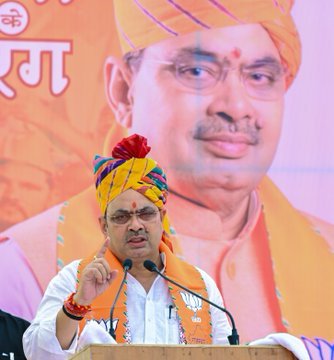
New Delhi, August 2026 : Delhi Chief Minister Smt. Rekha Gupta addressed the people of Delhi from Chhatrasal Stadium on Saturday on the occasion of Independence Day. She said her government was seriously implementing schemes and welfare programmes that would help Delhi emerge as the country’s growth engine. The Delhi government will build a city where people are free to dream and have the opportunities to fulfil those dreams, she said. The Chief Minister said health, education, infrastructure, the environment and the transport system were being developed as strong foundations for Delhi’s growth. Delhi will take the first major step at the threshold of a developed India and become a role model for other states, she said.
In her address, Chief Minister Rekha Gupta also presented her vision for a ‘Developed Delhi’. She said Delhi’s responsibility, as the national capital, could not be an ordinary one. Delhi is not just the centre of governance, but also represents India’s democratic consciousness, cultural diversity, economic energy and national aspirations. Therefore, the development of Delhi is not only a matter for its residents but is also linked to the prestige of the entire nation, she said. The fact that the same vision of government exists at the Centre and in Delhi is now benefiting the city’s development. Under the guidance of Hon’ble Prime Minister Shri Narendra Modi Ji, a separate department for Delhi’s development has been created under the Union Ministry of Housing and Urban Affairs. Institutional arrangements such as the Department of Capital Development will prove to be a game changer in making Delhi the growth engine of a developed India, she said.
Chief Minister Rekha Gupta said the government was developing infrastructure in Delhi that would meet today’s needs while also anticipating the requirements of the coming decades. With this approach, work is being carried out with connectivity, mobility and quality of life being taken forward together. More than 4,500 electric buses have already been deployed in Delhi, with a target of increasing their number to 12,000. As many as 9,000 EV charging points have been installed, and there are plans to increase this number to 32,000. “We want Delhi to become a model for the EV transition, where the pace of development and environmental protection move together,” she said. Referring to the expansion of the Metro network, she said three newly approved corridors would add around 47 km to the existing network.
Speaking about linking Delhi’s heritage with development, Chief Minister Rekha Gupta said Delhi would be developed as a major centre for spiritual, medical, heritage, cultural and food tourism. Delhi will move forward with Hon’ble Prime Minister Shri Narendra Modi Ji’s vision of a developed India by becoming a developed Delhi while preserving its heritage and identity, she said. She wants Delhi to be not just a city of dreams, but a city that enables people to fulfil those dreams. The government’s promise is that when India completes 100 years of independence, other states in the country will also want to adopt the Delhi model. “This is not a small ambition, but Delhi was not made for small ambitions either,” she said.
The Chief Minister said that on this Independence Day, a resolve had been taken to make Delhi the country’s leading region in the effort to achieve the goal of a developed India. Delhi needs to be viewed not only through the lens of its problems but also through its opportunities, she said. The city has talent, enterprise, education, healthcare, tourism and technology. “Our aspiration is for a Delhi where people are free to dream and have opportunities to fulfil those dreams; where even a poor child can dream big, women are safe, young people are empowered and the elderly are respected,” she said. Such a Delhi would not merely be the national capital, but also the country’s hope, she added.
Women’s Progress Will Drive Delhi and the Country Forward
Chief Minister Rekha Gupta, while outlining various schemes and programmes for women, said that more than 18 lakh Pink Cards have been issued to Delhi’s daughters and sisters. These cards have also been provided to citizens from the transgender community. She said the Delhi government will soon launch the ‘Durga Yojana’, under which permits for electric auto-rickshaws will be given to 1,100 women and transgender persons.
Referring to the ‘Delhi Lakshmi Yojana’, she said registration has begun to provide eligible women financial assistance of ₹2,500 every month, with the first instalment to be given on Raksha Bandhan. The Chief Minister said more than 7.25 lakh registrations had been completed within the first two weeks under the scheme. She said this would help 17 lakh women in Delhi move towards self-reliance. The Chief Minister also spoke about the ‘Lakhpati Bitiya Yojana’ launched for Delhi’s daughters. Once the scheme matures after the completion of education, the beneficiary daughter will receive ₹1 lakh.
The Chief Minister said arrangements have been made to provide two free LPG cylinders every year to ration card-holding families on Holi and Diwali. She said around 13 lakh ration card holders were provided free LPG cylinders during the last Holi.
Clean-Green Delhi and the Rejuvenation of the Yamuna
Reiterating the pledge to make Delhi clean and green, Chief Minister Rekha Gupta stated that the government's priority for the first five years is to clear away all forms of waste from the city. This encompasses not just physical roadside garbage, but also the associated corruption, red tape, archaic and complex systems, pollution, and the massive mounds of accumulated waste. She further emphasized that cleaning the Yamuna is also among her government's key priorities. Environmental issues, particularly climate change, rank among Delhi's greatest challenges. To address this, a 'Green Budget' has been introduced in Delhi for the first time; this year, 21.44 percent of the total budget, amounting to ₹22,236 crore, has been allocated for this purpose.
She said pollution is a major challenge in Delhi, but the problem cannot be solved merely through blame. As part of the solution, the government has decided to plant 70 lakh trees and saplings across Delhi. More than 63 lakh saplings have already been planted, while public participation is being increased through the ‘Ek Ped Maa Ke Naam 2.0’ campaign. The garbage mountains in Delhi have been reduced and 75 acres of land have been reclaimed. The garbage mountains at Okhla and Bhalswa are now in their final days. The government is fulfilling its resolve to remove the garbage mountains from Delhi.
The Chief Minister described cleaning and rejuvenating the Yamuna as a top policy priority of the government. She said 37 sewage treatment plants are operational, of which 28 have already been upgraded. Work has begun on 27 new drainage sewage treatment plants so that every drain flowing into the Yamuna can be tapped. One of the reasons for pollution in the Yamuna is also the lakhs of tonnes of cow dung that used to reach the river through drains. To address this problem, the Delhi government, in collaboration with the Municipal Corporation and the National Dairy Development Board, is working towards compressed biogas plants with a total capacity of 600 TPD. The first biogas plant has been started at Ghogha Dairy. What was waste until yesterday is now an opportunity for energy, fuel and employment. She expressed her resolve to build a Delhi that is clean, green and environmentally safe.
Delhi’s Development Gets New Momentum with the Prime Minister’s Vision and the Centre’s Support
Chief Minister Rekha Gupta said that under the visionary leadership of Hon’ble Prime Minister Shri Narendra Modi Ji and with the support of the Central government, Delhi is rapidly moving towards playing a leading role in the journey towards a developed India. The benefit of having a government with the same vision at the Centre and in Delhi is now being reflected in the capital’s development, while coordination among the Central government, various central agencies, local bodies and the Delhi government has given fresh momentum to important projects that had remained pending for years.
The Chief Minister said that under the leadership of Hon’ble Prime Minister Shri Narendra Modi Ji, India today is setting new benchmarks in development, good governance, infrastructure, digital transformation, social justice, environmental protection and global stature. The national resolve of Viksit Bharat-2047 has now become the resolve of every state, every city and every citizen. Expressing her gratitude to the Prime Minister for his visionary leadership and continued guidance and support for Delhi’s development, the Chief Minister said that with the support of the Central government, Delhi will play its leading role in the journey towards a developed India even more effectively.
Referring to the financial assistance being received from the Centre, the Chief Minister said that under the leadership of Hon’ble Prime Minister Shri Narendra Modi Ji, the Central government had provided Delhi ₹542 crore under SASCI last year. This year, ₹2,638 crore has been sanctioned, of which ₹1,840 crore has already been received by Delhi. The amount will be used to complete 61 important projects in Delhi. The increase reflects the strong cooperation between the Central and Delhi governments and their shared commitment to Delhi’s development. This speed and strength of the double-engine government will set new benchmarks in development. The Chief Minister also referred to the Centre’s support for metro expansion in Delhi.
She said Hon’ble Prime Minister Shri Narendra Modi Ji recently inaugurated and dedicated to the people the priority corridors of Phase IV from Majlis Park to Maujpur and from Deepali Chowk to Majlis Park. The remaining corridors of Phase IV - G Block Saket-Lajpat Nagar, Kundli-Rithala and Inderlok-Indraprastha - have been approved. These three corridors will add around 47 km to the existing metro network. The Delhi government is working, with the support of the Central government and a shared vision, to make the capital a city that advances the aspirations of a developed India through modern development, better infrastructure and a better quality of life.
Young People Should Not Limit Their Strength to Social Media Screens
Chief Minister Rekha Gupta called upon Delhi’s youth to channel their talent and technological capabilities towards nation-building, saying that Delhi’s youth are not merely job seekers but have the ability to become job creators. Today’s youth do not merely use technology; they create technology and have the ability to compete with the world. India’s Amrit generation is questioning, understands technology, is connected to the world and is sensitive to issues such as mental health, climate change, gender equality, innovation and social justice.
She urged young people not to limit their strength to social media screens. They should turn their ideas into startups, creativity into innovation, questions into research, sensitivity into service and talent into nation-building. India’s youth are connected to the world, embracing technology and thinking globally, but they do not need to give up their Indian identity to do so. India’s youth are connected to the world, embracing technology and thinking globally, but they do not need to give up their Indian identity to do so. A developed Delhi does not mean moving forward by leaving its identity behind. A developed Delhi is one that is modern while remaining connected to its roots.
She said that on this Independence Day, Delhi’s resolve is to become the country’s leading state in the direction of achieving Hon’ble Prime Minister Shri Narendra Modi Ji’s goal of a developed India. As the national capital, Delhi has a special responsibility, and the youth of Delhi will shoulder this responsibility. Calling upon young people to contribute to the country, she said freedom fighters gave the country independence and the Constitution gave citizens their rights. Now, it is the duty of citizens to fulfil their responsibilities along with these rights. Working towards a strong, prosperous and developed India is now everyone’s responsibility.
Government Building a Health System Where the Poor Do Not Have to Sell Their Home or Land During Illness
Chief Minister Rekha Gupta said the Delhi government is developing the healthcare system as a strong foundation that meets today’s needs while also living up to the aspirations of the coming decades. For her, healthcare does not mean merely providing access to treatment; it also means ensuring that a poor family does not have to sell its land or home when faced with illness and that an elderly person does not have to go from one place to another seeking treatment.
The Chief Minister said the objective of the healthcare system is also to provide a newborn with better healthcare right from the beginning of life. With this approach, the Ayushman Bharat Jan Arogya Yojana has been implemented in Delhi for the first time. It covers 8.9 lakh beneficiaries. This includes more than 3.07 lakh Vay Vandana Yojana cards for senior citizens above the age of 70. She said 417 Ayushman Jan Arogya Mandirs have been started in Delhi, where 80 types of tests and free medicines are available. Five new hospital blocks have also been completed as part of efforts to strengthen healthcare services.
The Chief Minister also referred to the steps taken to strengthen healthcare services in government hospitals. She said the Hospital Information Management System (HIMS) has been implemented in 38 government hospitals in Delhi. In addition, around 4,500 posts have been created and 1,194 medical personnel have been appointed. She also referred to the ‘Anmol’ scheme launched for the health of newborn children. She said that under the scheme, 56 types of tests are being conducted free of cost using just one drop of a newborn’s blood. The objective is to identify any deficiency or disease in a child at birth so that timely treatment can be provided. She said that when a child’s health is being protected, the government also has the responsibility of shaping the child’s future. The government aims to build strong systems that meet today’s needs and live up to Delhi’s aspirations for decades to come.
Expansion of Schools and Education Facilities, Focus on Modern Technology and Skill-Based Education
Chief Minister Rekha Gupta, while outlining the expansion and modernisation of Delhi’s education system, said 10 new schools have been started in the past year, providing around 9,000 additional seats. She said the number of Schools of Excellence in Delhi is being increased and 75 schools have been fully equipped as CM Shri Schools.
The Chief Minister said 4,000 smart classrooms have been prepared in Delhi government schools to integrate modern technology into the education system. In addition, smart boards have already been installed in around 9,000 classrooms, with a target of increasing their number to 21,000 classrooms. She said more than 1,200 modern computer labs have been established, while arrangements are being made for a computer lab, STEM lab, language lab, playground and digital library in every school.
She said CCTV cameras have been installed in more than 800 schools, while fans and coolers have been provided in more than 16,000 classrooms. More than 6,000 teachers have been appointed to strengthen the education system. At the same time, AI-based personalised learning has been introduced to integrate technology into education. The Chief Minister also spoke about other initiatives launched for students. She said initiatives such as NEEV (NEEV) and Rashtraniti have been introduced in schools. Meritorious students are being provided laptops, while every girl studying in Class 9 is being given a bicycle to facilitate her commute to and from school. She said 100 new vocational courses are being introduced to prepare students for the requirements of the changing employment landscape. Through these courses, efforts are being made to provide students with education and skills related to various vocational sectors.