Make a commitment to respect Hindi, Marathi and all Indian languages: Chief Minister Devendra Fadnavis
- Hindi Diwas 2026 and 6th Akhil Bharatiya Rajbhasha Sammelan inaugurated in Navi Mumbai
- Several apps, books and dictionary initiatives launched
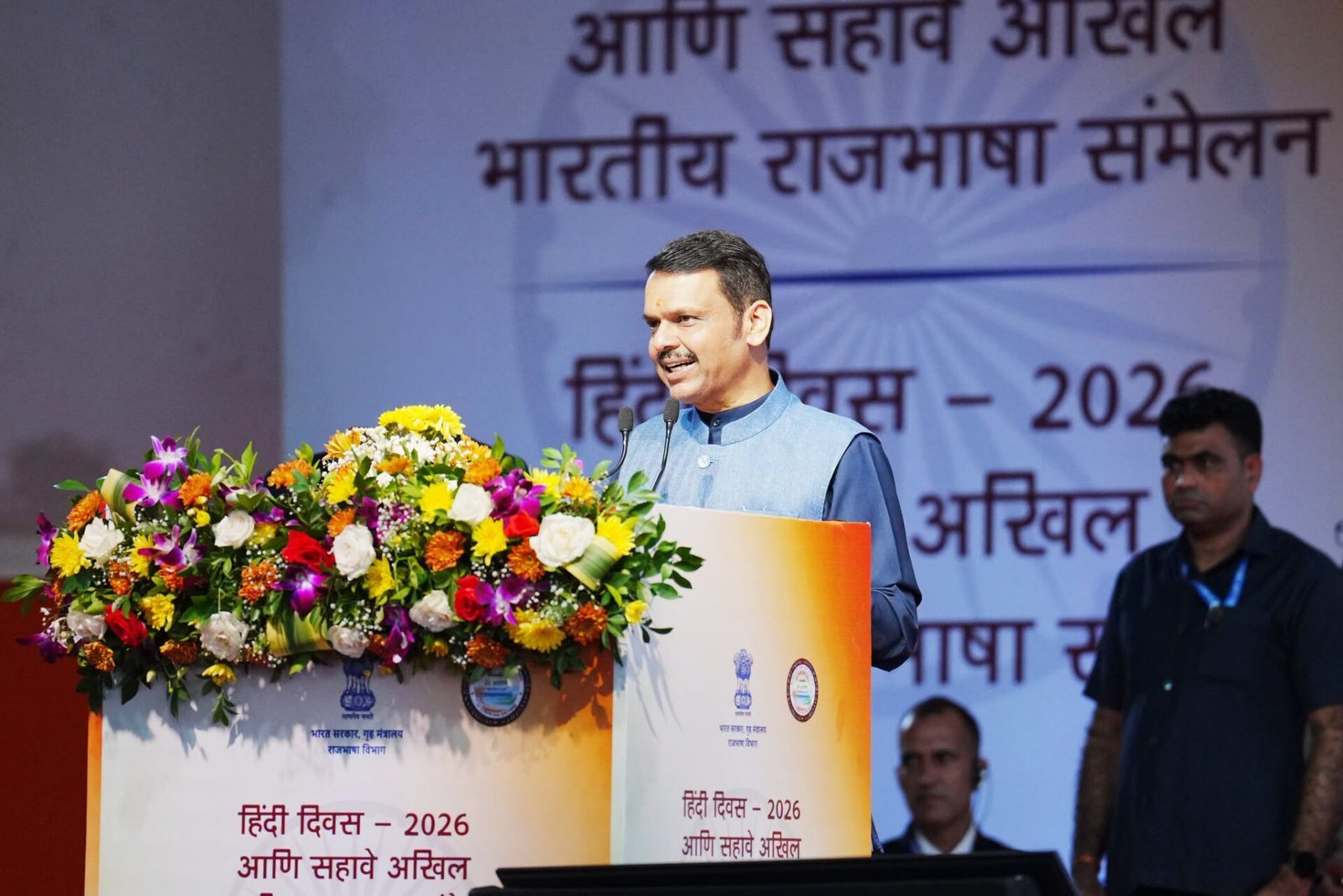
Thane, September 2026 : Chief Minister Devendra Fadnavis called upon people to respect Hindi, Marathi and all other Indian languages, saying that greater knowledge and mutual respect for the country’s diverse languages would help realise the vision of ‘Ek Bharat, Shreshtha Bharat’.
He was speaking at the inauguration of Hindi Diwas 2026 and the 6th Akhil Bharatiya Rajbhasha Sammelan, organised by the Department of Official Language under the Union Ministry of Home Affairs at the CIDCO Exhibition and Convention Centre in Vashi, Navi Mumbai.
Union Home and Cooperation Minister Amit Shah, who inaugurated the event, said the Central Government was firmly committed to the preservation, development and promotion of Indian languages. Describing the regional languages as beautiful petals of a lotus, Shah urged people to respect all these rich languages while making Hindi a connecting link among them.
The event was attended by Union Minister of State for Home Nityanand Rai, MP Naresh Mhaske, Chief Minister Devendra Fadnavis, Deputy Chief Ministers Eknath Shinde and Sunetra Ajit Pawar, Department of Official Language Secretary Anshuli Arya, V.L. Kantarav, Joydeep Chattopadhyay, descendant of Bankim Chandra Chattopadhyay, and Milind Prabhakar Sabnis, among others.
Shah said the decision to take the Rajbhasha Sammelan beyond New Delhi and organise it in different states had proved successful, with Maharashtra hosting the sixth edition.
Highlighting Maharashtra’s cultural heritage, Shah recalled how Lokmanya Bal Gangadhar Tilak gave a wider public character to Ganeshotsav and the birth anniversary celebrations of Chhatrapati Shivaji Maharaj, helping strengthen cultural nationalism and patriotism. He said Shivaji Maharaj had accorded importance to self-rule, faith and language and had prepared the Rajvyavahar Kosh for the development and use of Marathi in administration.
Shah also recalled that during the freedom struggle, Bankim Chandra Chattopadhyay’s Vande Mataram, composed in Anandamath, became a national call of the freedom movement.
He said Prime Minister Narendra Modi had revived the tradition of singing Vande Mataram in its complete form at government functions and had honoured Maharashtra’s historical identity by granting Marathi the status of a classical language.
Emphasising the importance of the mother tongue, Shah said it forms the foundation of human thought and connects individuals with their culture, traditions and values. This, he said, was one of the reasons the National Education Policy places emphasis on education in the mother tongue at the primary level.
He also stressed that every student should learn at least one other Indian language to strengthen their connection with the country. Under Prime Minister Modi’s leadership, the Department of Official Language has made extensive use of technology, with more than five lakh Central Government employees trained in Hindi.
The AI-based ‘Kanthasth 2.0’ system now contains more than five crore sentences, while ‘Leela Rajbhasha’ and ‘Leela Pravah’ have accelerated language learning. Shah said the Hindi Shabdsindhu dictionary, which initially contained 51,000 words, has now expanded to eight lakh words and expressed confidence that it would become the world’s largest dictionary by 2029.
Fadnavis Calls for Respect for All Indian Languages
Chief Minister Devendra Fadnavis appealed to people to make a commitment to mutually respect Hindi, Marathi and all Indian languages.
“Marathi is my mother tongue, but all other languages of the country are like my aunts. While honouring one’s mother, one must also give complete respect to one’s aunts,” Fadnavis said.
He said education in the mother tongue significantly improves students’ comprehension and the quality of learning. The concept of ‘Ek Bharat, Shreshtha Bharat’ can be truly realised by increasing knowledge and appreciation of Indian languages.
Fadnavis recalled former Prime Minister Atal Bihari Vajpayee’s historic address in Hindi at the United Nations, saying it enhanced India’s prestige on the global stage. He noted that several developed countries proudly use their respective mother tongues and said India should similarly increase the use of its rich languages in everyday and administrative affairs.
The Chief Minister also highlighted Hindi’s literary contribution, noting that writers such as Munshi Premchand played an important role in giving Hindi the character of a widely spoken people’s language. Works such as Premchand’s Godaan portrayed the struggles of ordinary people, while poets Ramdhari Singh Dinkar and Dushyant Kumar gave Hindi literature intellectual depth. Hindi also played an important role as a link language during the freedom struggle.
Eknath Shinde Highlights Hindi-Marathi Bond
Deputy Chief Minister Eknath Shinde said Hindi is a friend of all Indian languages and that hosting the conference in Maharashtra was also a matter of pride for Marathi.
He described Marathi and Hindi as sister languages written in the Devanagari script. He said the teachings of Sant Dnyaneshwar, Sant Tukaram and Sant Namdev had guided the entire country, while compositions of Sant Namdev had been respectfully included in the Guru Granth Sahib.
Shinde said the use of Hindi in the functioning of the Central Government had increased significantly compared with the period before 2014 and should expand further in science, technology, policing, law and the judicial system. He also noted the contribution of Hindi-speaking citizens settled in Maharashtra to the state’s overall development while respecting Marathi.
Sunetra Ajit Pawar Stresses Use of Indian Languages
Deputy Chief Minister Sunetra Ajit Pawar said celebrating Hindi Diwas on the auspicious occasion of Ganesh Chaturthi was a fortunate coincidence. She said Ganeshotsav promotes unity by removing social barriers and obstacles.
Although India has many languages, the national sentiment of Indians remains one, she said. There is a need to increase the use of Indian languages in administration, education and modern technology. She also highlighted the rich tradition of translation and exchange between Marathi and Hindi literature.
She said the peaceful coexistence of people speaking different languages in cities such as Mumbai and Navi Mumbai represents the true spirit of ‘Ek Bharat, Shreshtha Bharat’. She stressed that the language of government should be simple and easily understood by ordinary citizens.
Books, Apps and Language Initiatives Launched
During the event, Amit Shah released several important publications, including a special Vande Mataram edition of Rajbhasha Bharati, Shiv Anadi, Shiv Anant, Bharatiya Gyan Tantra: Srot aur Swaroop, Andheron Se Ujalon Tak and Vande Mataram Ke 150 Adhyay.
The book Navanvesh: Bharatiya Gyan Parampara, published by the Defence Research and Development Organisation, was also released.
C-DAC’s ‘Bharatiya Bahubhashik Anuvad Sarathi’ mobile application and ‘Bhashakunj’, an indigenous language data centre, were also launched.
Under the Pradhan Mantri Kaushal Vikas Yojana, Hindi dictionary resources, Hindi typing and Hindi shorthand training programmes for citizens were launched. The Rajbhasha Kirti Awards for 2025-26 were also presented to various Central ministries, government departments, banks and public sector undertakings for their outstanding contribution to the promotion of official language.
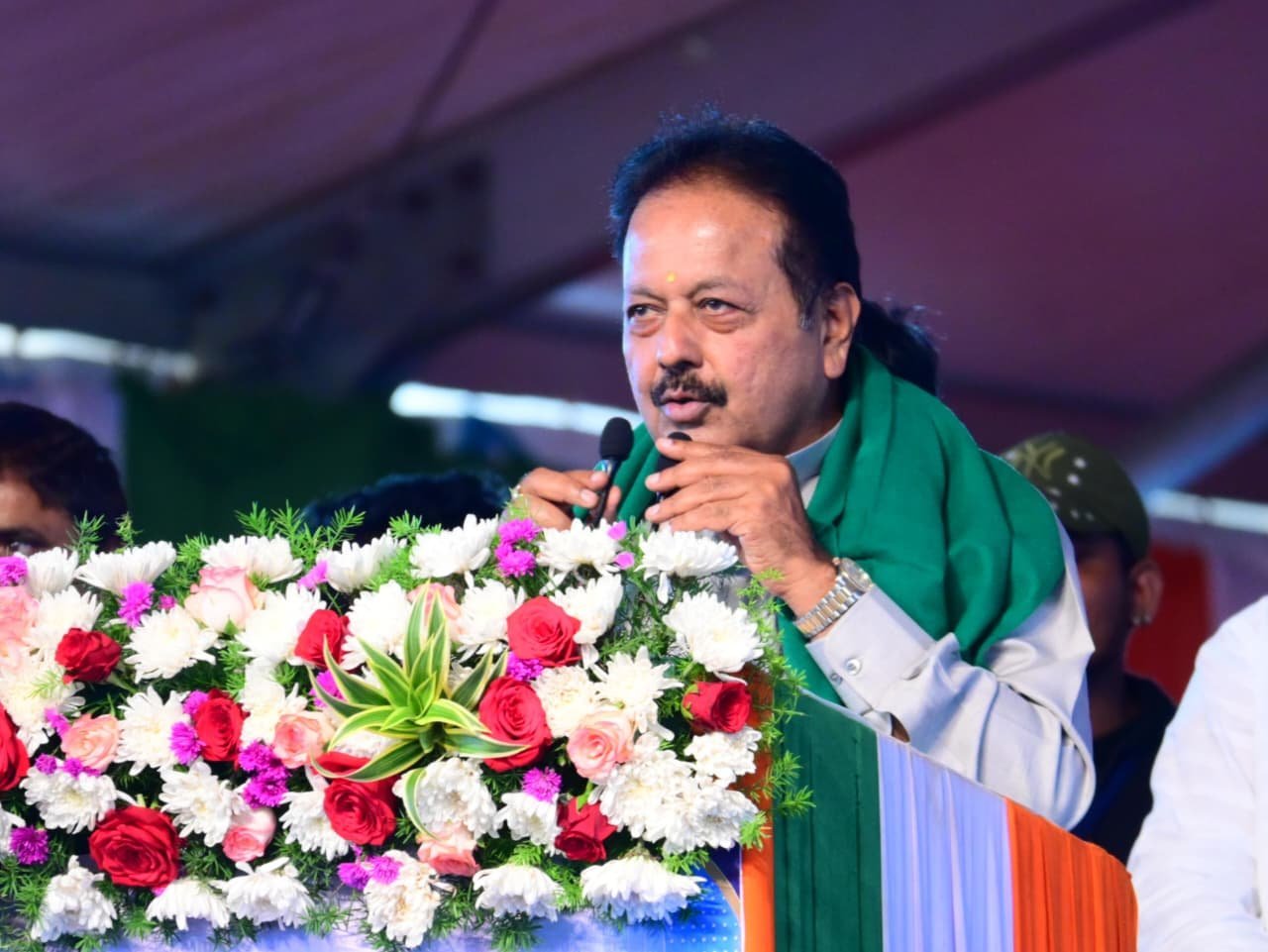
Forest Minister Ganesh Naik, local MLA Manda Mhatre, Divisional Commissioner Rubal Aggarwal, District Collector Dr Shrikrishna Panchal, Navi Mumbai Municipal Commissioner Kailas Shinde, Navi Mumbai Police Commissioner Milind Bharambe, along with writers, language experts, administrative officials and citizens from across the country, attended the inaugural ceremony.