Brazilian aerospace major Embraer has confirmed Mahindra Group as its Indian industrial partner for the company’s bid to supply C-390 Millennium aircraft to the Indian Air Force under the 60-aircraft Medium Transport Aircraft programme. The partnership, which dates back to a 2024 MoU and was expanded through a strategic agreement in 2025, envisages local manufacturing, assembly, supply-chain development and MRO capabilities in India. The C-390 is being pitched as a multi-mission platform for replacing ageing transport aircraft, with Embraer highlighting its 26-tonne payload, tactical flexibility and air-to-air refuelling capability.
New Delhi, September 2026 : Brazilian aerospace manufacturer Embraer has confirmed Mahindra Group as its Indian industrial partner for its bid for the Indian Air Force’s proposed 60-aircraft Medium Transport Aircraft (MTA) programme.
Embraer is offering the C-390 Millennium multi-mission military transport aircraft for the requirement, which is aimed at modernising the IAF’s ageing medium transport fleet. The company has positioned the aircraft as a potential replacement for the Russian-origin Antonov An-32 fleet and as a platform capable of performing a broad range of transport, logistics and tactical missions.
The confirmation of Mahindra as its Indian partner reinforces an industrial relationship that has been under development for more than two years. Embraer and Mahindra first entered into a Memorandum of Understanding (MoU) in February 2024 to jointly pursue the C-390 for the IAF’s MTA requirement.
The MoU was signed at the Embassy of Brazil in New Delhi and envisaged engagement with the IAF on the procurement programme, along with discussions with India’s aerospace industry to develop an industrialisation plan for the aircraft.
Partnership expands beyond aircraft marketing
The partnership was expanded in October 2025 when Embraer Defence & Security and Mahindra Group signed a Strategic Cooperation Agreement. The agreement broadened the proposed cooperation to include industrialisation, local manufacturing, assembly facilities, supply-chain development and maintenance, repair and overhaul (MRO) activities in India.
The two companies said their longer-term objective was to explore the possibility of developing India into a manufacturing and support hub for the C-390 Millennium, serving both Indian and regional requirements.
For Embraer, such an industrial base could expand the company’s global supply and sustainment network as the C-390 gains additional international customers. For Mahindra, the partnership offers an opportunity to participate in a major fixed-wing military aviation programme and potentially expand its role in aircraft manufacturing, maintenance and aerospace supply chains.
Mahindra Defence Systems, a wholly owned subsidiary of Mahindra, was the entity involved in the original 2024 agreement. Its activities include defence manufacturing and systems, including armoured transport and defence electronics.
IAF seeks 60 medium transport aircraft
The Indian Defence Ministry issued a Request for Proposal in August 2026 for 60 Medium Transport Aircraft for the IAF. The programme is intended to replace ageing transport aircraft, particularly the An-32 fleet. Under the reported procurement structure, 12 aircraft are to be supplied in flyaway condition, while 48 are to be manufactured in India.
The programme requires aircraft in the 18-to-30-tonne payload category. The C-390, with a maximum payload of up to 26 tonnes, falls within that requirement. The aircraft is competing with other platforms, including Lockheed Martin’s C-130J, while Airbus has also been associated with the wider MTA competition.
The procurement process remains a competition and the C-390 has not been selected by the IAF. The final decision is expected to take into account operational capability, technical parameters, delivery schedules, commercial terms, indigenous manufacturing, lifecycle support and other procurement criteria.
C-390 designed for multiple missions
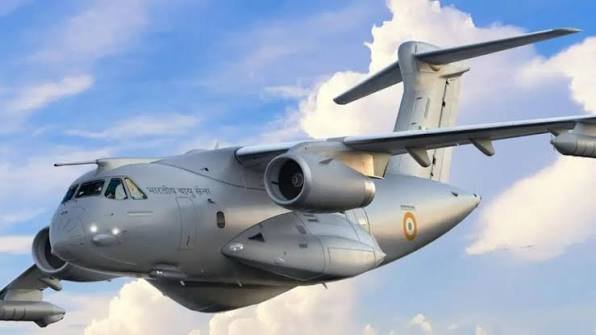
The C-390 Millennium is a twin-engine military transport aircraft designed for both tactical and strategic airlift missions. Embraer says the aircraft can carry up to 26 tonnes and reach speeds of up to 470 knots, or around 870 kmph.
The aircraft can be used to transport troops, vehicles, equipment and other cargo. It is also designed for airdrop operations, medical evacuation, search and rescue, aerial firefighting and humanitarian missions.
Another feature highlighted by Embraer is its ability to operate from temporary and unpaved runways, including surfaces made of packed earth, soil and gravel. Such capability is relevant to military operations where aircraft may need to operate from austere airfields or locations affected by natural disasters and other emergencies.
The C-390 can also be equipped for aerial refuelling. In the air-to-air refuelling configuration, designated KC-390 aircraft can operate as tankers and can also receive fuel from another suitably equipped aircraft. Embraer has highlighted this capability as an additional operational option for air forces seeking a multi-role platform rather than a transport aircraft restricted to logistics operations.
Availability and global operator base
Embraer has also highlighted the aircraft’s operational performance and growing international customer base as part of its pitch.
The C-390 entered service with the Brazilian Air Force in 2019, followed by Portugal in 2023. Embraer says the aircraft has subsequently been selected by a growing list of international customers, including Hungary, the Netherlands, Austria, the Czech Republic and South Korea, among others.
The expanding operator base is significant for Embraer because a larger international fleet can support common training, maintenance, logistics and supply-chain arrangements among operators.
The company has previously cited operational availability and mission-completion figures for the aircraft. In its 2024 announcement, Embraer said the C-390 fleet had accumulated more than 11,500 flight hours, with operational availability of around 80 per cent and mission-completion rates above 99 per cent at that stage.
India-based MRO plans
Local maintenance and lifecycle support form a major component of the Embraer-Mahindra proposal.
In February 2026, the two companies announced plans to work towards establishing C-390 MRO capability in India if the aircraft is selected for the IAF programme. The proposed capability would be intended to support the fleet throughout its operational life.
The companies have indicated that the proposed MRO scope could include maintenance activities, structural inspections and testing, component repair and overhaul, avionics support and training.
The initiative would complement the wider industrialisation plans announced under the October 2025 strategic agreement, which included examining local production and assembly as well as developing an Indian supply chain for the aircraft.
Wider industrial opportunity
The Embraer-Mahindra proposal therefore goes beyond the supply of aircraft. The companies are seeking to combine the C-390 platform with an Indian industrial ecosystem that could eventually support manufacturing, assembly, maintenance and components.
For India, the proposed arrangement could potentially create opportunities for domestic aerospace companies to participate in the C-390 supply chain, subject to the outcome of the procurement and the industrial commitments agreed under any eventual contract.
For Embraer, establishing a manufacturing and support presence in India would potentially strengthen its position in one of the world’s largest defence aviation markets and could provide a base for supporting future regional customers.
Mahindra, meanwhile, brings an established Indian industrial presence and experience across the defence sector. Its involvement gives Embraer a domestic partner through which it can pursue its proposed localisation strategy and engage with Indian aerospace and manufacturing companies.
The immediate focus, however, remains the IAF’s 60-aircraft MTA competition. The C-390’s payload, speed, multi-mission capability, air-to-air refuelling option and ability to operate from austere runways form the core of Embraer’s aircraft proposition, while the Mahindra partnership underpins its industrial offer.
The outcome will depend on the IAF and the Defence Ministry’s evaluation of competing aircraft and proposals, including operational performance, acquisition costs, indigenous production, technology and industrial participation, maintenance requirements, delivery timelines and long-term lifecycle support.
If selected, the Embraer-Mahindra partnership would represent a significant expansion of India-Brazil aerospace cooperation and could establish a new manufacturing and sustainment ecosystem around the C-390 Millennium in India. For now, however, the aircraft remains one of the contenders in the IAF’s ongoing Medium Transport Aircraft procurement programme.
(Disclaimer :The content of this article is sourced from a news agency and has not been edited by the Mavericknews30 team.)