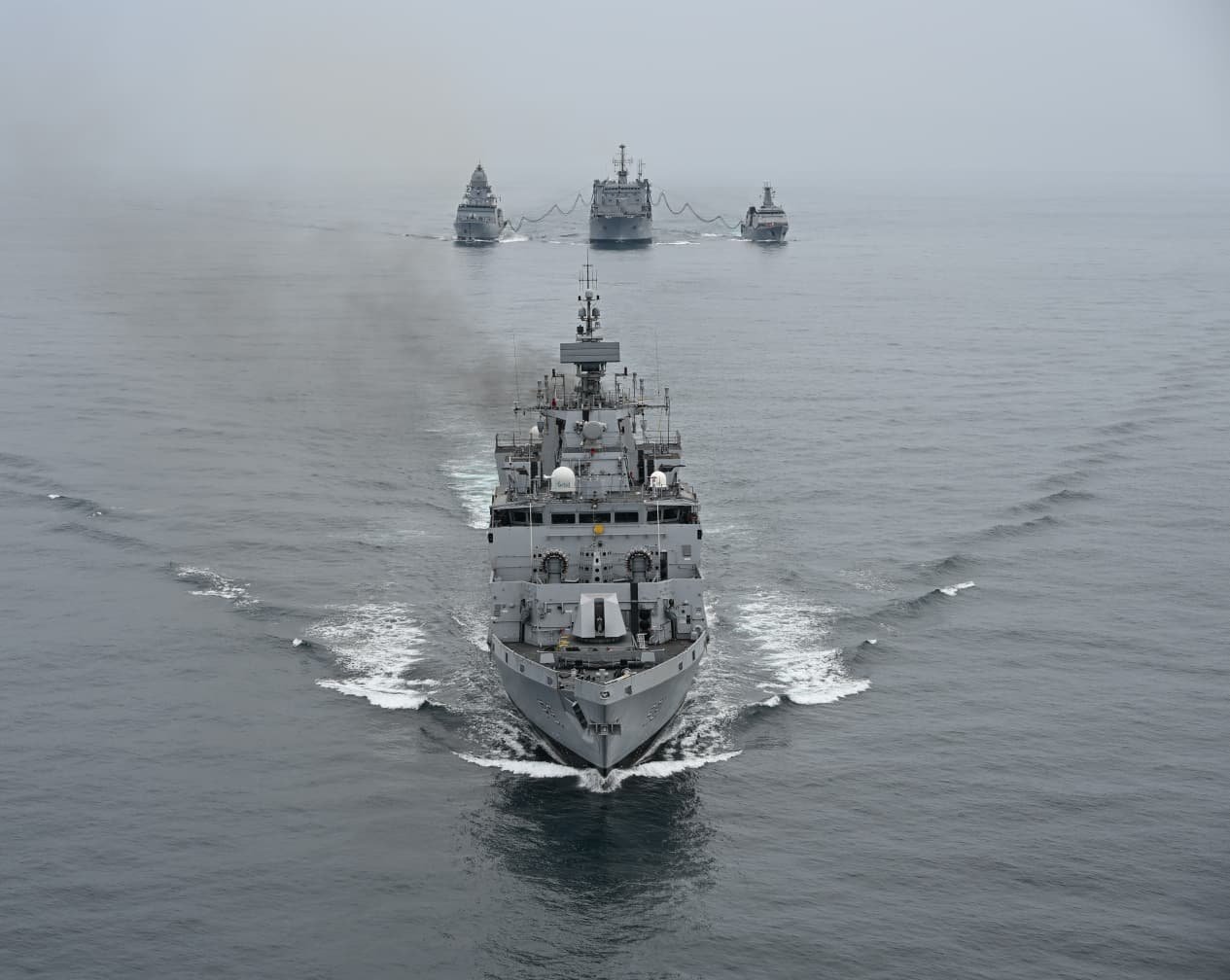
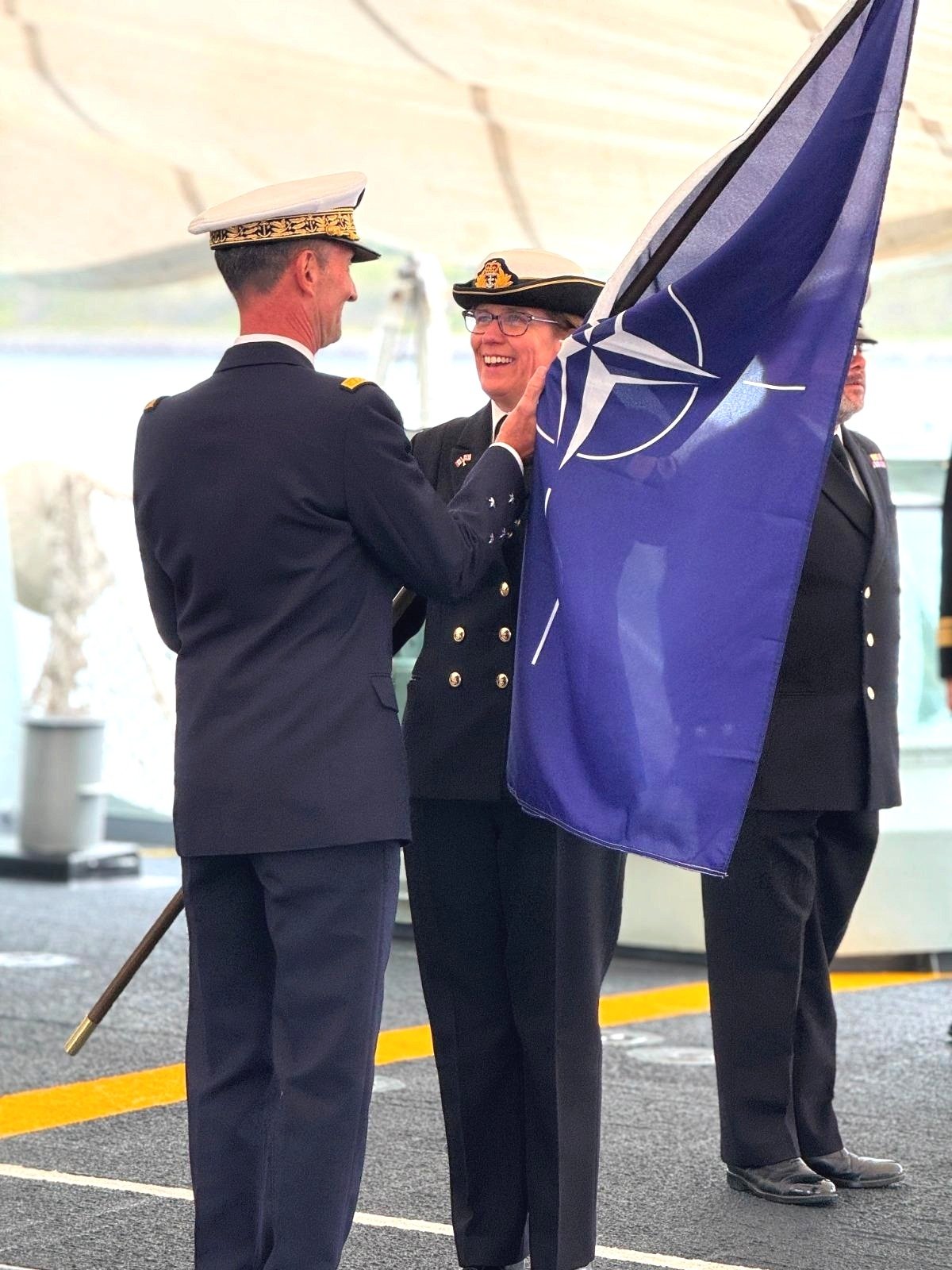
Reykjavík, Iceland; August 2026: The command of Standing NATO Maritime Group One (SNMG1) was formally handed over from the UK-led Battle Staff, commanded by Royal Navy Commodore Maryla Ingham, to the French-led staff under Rear Admiral Nicolas Molitor during a ceremony in Reykjavík, Iceland, on 19th August 26. Allied Maritime Command (MARCOM) is the central command of all NATO maritime forces and serves as the Alliance's principal maritime adviser.
Throughout its deployment, the UK-led Battle Staff operated as a truly multinational team, integrating personnel from Belgium, Germany, Poland, Portugal and Spain alongside the UK contingent. This multinational approach strengthened Allied relationships, enhanced interoperability, and demonstrated NATO’s ability to bring together diverse maritime forces and expertise in support of collective maritime security.
Leading Standing NATO Maritime Group One has been a great privilege. I am incredibly proud of my Battle Staff and the ships from across the Alliance that have served alongside us, demonstrating NATO’s unwavering commitment to collective defence and deterrence
In a significant milestone for the Royal Navy, the UK Battle Staff initially embarked on the German frigate FGS Sachsen before later transferring to the Canadian warship HMCS Ville de Quebec. This marked the first time a Royal Navy-led Task Group had commanded operations from the ships of two Allied nations, underlining the high levels of trust, integration and interoperability achieved among Allied navies.
During the deployment, the Task Group operated across the breadth of the Atlantic Area of Operation, from the Baltic Sea to the Arctic and High North, to the Eastern Seaboard of the US. The group participated in a demanding programme of operations and exercises, including Baltic Sentry and Arctic Sentry, Exercise Dynamic Mongoose, FLEETEX250 and the International Naval Review 250. The Task Group was further strengthened by ships from across the Alliance, with contributions from Belgium, Canada, Denmark, France, Germany, the Netherlands, Norway, Portugal, Spain, Türkiye and the United States, reflecting the depth of NATO’s maritime integration and collective commitment to regional security.
Alongside maintaining a persistent deterrence and reassurance presence at sea, the Task Group delivered a demanding programme of operational activity throughout its deployment. This included manoeuvring exercises, boarding operations, gunnery, anti-submarine warfare, protection of critical national infrastructure, cross-deck integration serials, and casualty evacuation drills. Together, these activities demonstrated the Task Group’s readiness, adaptability, and ability to operate seamlessly with Allied and Partner forces across a range of maritime environments.
Commodore Maryla Ingham said: “Leading Standing NATO Maritime Group One has been a great privilege. I am incredibly proud of my Battle Staff and the ships from across the Alliance that have served alongside us, demonstrating NATO’s unwavering commitment to collective defence and deterrence. Throughout my tenure, we have shown that our strength at sea comes not from any one nation, but from the unity, trust and professionalism that bind us together as Allies. In an increasingly complex security environment, that solidarity remains our greatest strategic advantage”.
While embarked aboard FGS Sachsen, the Royal Navy also provided a Wildcat HMA2 helicopter from 815 Naval Air Squadron, further enhancing the Task Group’s maritime aviation capability. The helicopter supported a range of missions across the Area of Operations, including surveillance, reconnaissance, and force protection, strengthening the group’s ability to maintain situational awareness and respond effectively to emerging requirements.
The Battle Staff welcomed visits from Commander Task Force Baltic, German Navy Rear Admiral Stephan Haisch, and the Royal Navy Fleet Commander, Vice Admiral Sir Steve Moorhouse. The Task Group also worked closely with Commander Joint Force Command Norfolk, US Navy Vice Admiral Douglas Perry, demonstrating the breadth of navies contributing to NATO's maritime command structure.
Standing NATO Maritime Group One (SNMG1) is one of NATO's four Standing Naval Forces, maintained at high readiness to provide persistent maritime security, assure freedom of navigation, and respond rapidly to emerging threats across the Alliance.
Team Maverick.