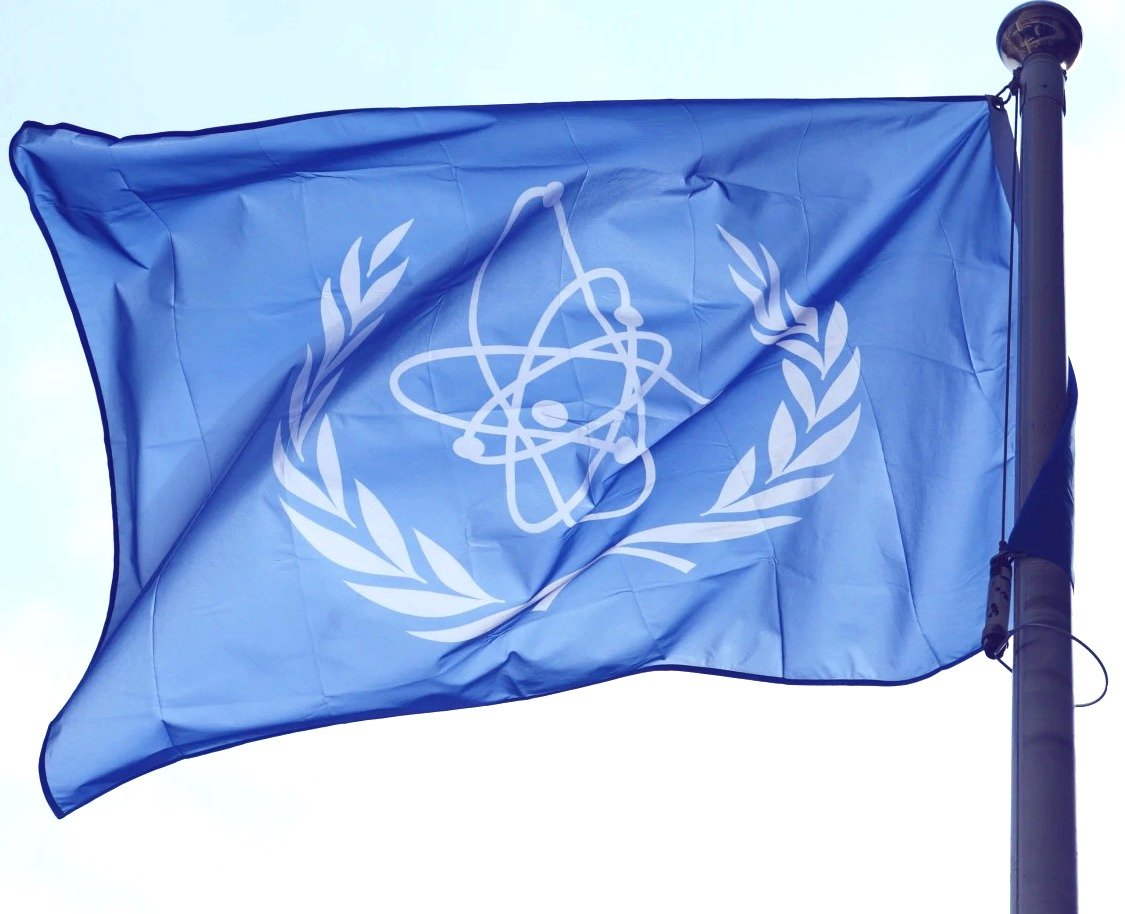
Vienna; September 2026: Today (Thursday - 10th September 2026; Early Morning IST) 23 (Twenty-three) countries on the International Atomic Energy Agency (IAEA’s) 35-member board of governors voted for a resolution at IAEA headquarters in Vienna, has reported against Iran to the UN Security Council for the first time in 20 years, citing it for failure to cooperate in a long-running investigation into uranium traces detected by inspectors at undeclared sites.
Western officials suspect that the traces could provide evidence that Iran had a secret nuclear weapons program until 2003. Iran says that it’s not pursuing nuclear weapons, and that its program is entirely peaceful. Such a reporting, would entangle Iran to possible sanctions and asset freezes, though such punitive measures are unlikely because Iran’s allies Russia and China hold veto power on the panel.
China, Russia and Niger opposed it, while 08 countries abstained and 01 didn’t vote as it was in arrears, according to diplomats who spoke on condition of anonymity to describe the outcome of the closed-door vote. The resolution was put forward by the United States, Britain, France and Germany.
The diplomatic move has been under consideration since June 2025, when the IAEA board found Iran officially in noncompliance with its non-proliferation obligations because of Tehran’s lack of cooperation in the investigation.
Iran’s ambassador to the U.N. in Vienna, Reza Najafi, rejected the resolution, describing it as a ‘political tool’ and saying that it ruined confidence in the IAEA’s ‘independence, impartiality and credibility’. He suggested that compliance with any obligation to allow U.N. inspections of nuclear sites inside Iran was, in any case, impossible at the moment because of the country’s continuing war with the U.S. and Israel.
Meanwhile, U.S. this week has destroyed 05 Iranian oil tankers, and Iran has too hit back at American targets in Jordan, the latest burst of back-and-forth strikes that have lurched the sides back toward open hostilities in a more than 6-month-old war.
The resolution also reiterated its call upon Iran to urgently remedy its non-compliance with previous agreements and to take steps deemed necessary by the IAEA to assure the non-diversion of nuclear material.
Since Israel and the U.S. struck Iran’s nuclear sites during the 12-day war in June 2025, Iran hasn’t given IAEA inspectors access to nuclear sites that were affected by the strikes. The IAEA also has been unable to verify the status of Iran’s stockpile of near weapons-grade uranium since the June bombing.
Najafi said that airstrikes by the U.S. and Israel made safe access for inspectors to Iran’s nuclear sites ‘materially impossible’. He said that Iran has “neither stopped nor suspended its safeguards obligations”, adding that performance is currently impossible under continuing military operations and persistent threats.
Iran’s Deputy Foreign Minister Kazem Gharibabadi echoed that sentiment in a post on X. “They attack Iran’s safeguarded nuclear facilities, disrupt the normal verification process, and then use that very disruption as a pretext to pass a resolution at the IAEA Board of Governors”, he said.
According to the IAEA, Iran maintains a stockpile of 440.9 kilograms (972 pounds) of uranium enriched up to 60% purity — a short, technical step away from weapons-grade levels of 90%. That stockpile could allow Iran to build as many as 10 nuclear bombs, should it decide to weaponise its program, IAEA chief Grossi warned in an interview last year. He said that it doesn’t mean that Iran has such a weapon.
Team Maverick.