New Delhi, Aug 2026 : The Indian Air Force is increasingly turning to advanced technologies such as predictive artificial intelligence and digital twins to strengthen its preparedness for future conflicts, with Air Chief Marshal Amar Preet Singh highlighting their growing importance in operational planning and decision-making.
Speaking at an event in Kanpur, the IAF Chief said predictive AI is being used to analyse large volumes of data, identify emerging trends and help planners anticipate possible future developments. The approach is intended to give commanders greater insight into potential battlefield scenarios and allow the force to prepare responses before situations develop in real time.
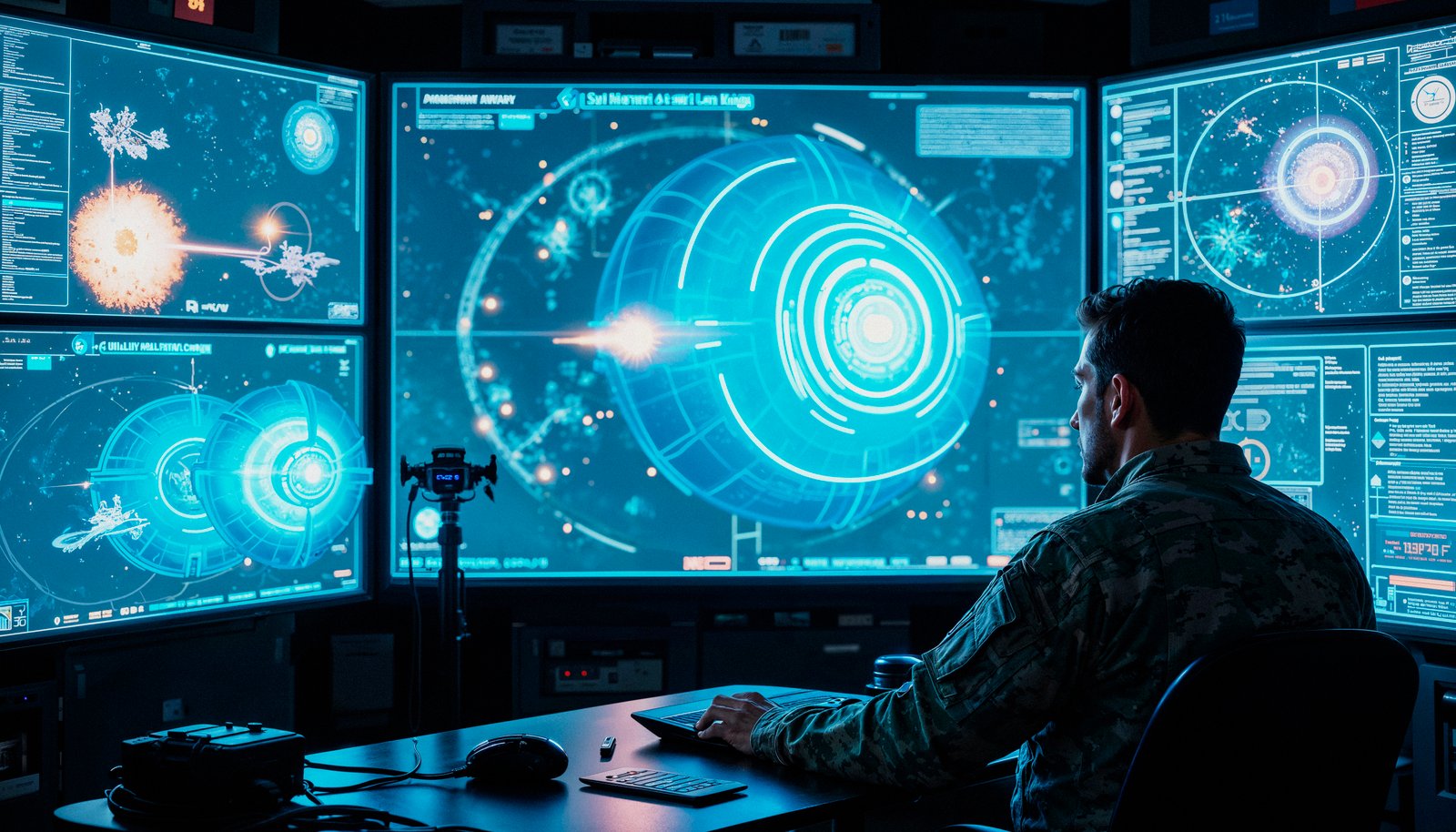
Digital twin technology is another key component of this effort. Digital twins are virtual representations of real-world systems that allow military planners to replicate and test complex situations in a simulated environment. Within the IAF, such technology can be used to model combat operations, strike packages, air defence responses and logistics networks under different levels of pressure.
The ability to conduct such simulations enables planners to evaluate strategies and identify weaknesses without exposing aircraft, equipment or personnel to unnecessary risks. Potential operational challenges can be tested repeatedly in a virtual environment, allowing commanders and teams to refine their plans before implementing them in real-world conditions.
Air Chief Marshal Singh also stressed the importance of sharing operational data and lessons across the force. He said mistakes should be identified and learned from once rather than being repeated by different units. By bringing together information and experiences from across the organisation, the IAF aims to develop stronger systems and improve institutional learning.
The emphasis reflects a broader transformation in modern military operations, where data, artificial intelligence and simulation are becoming increasingly important to combat preparedness. The integration of these technologies is expected to support areas ranging from surveillance and training to logistics, mission planning and battlefield decision-making.
The IAF is also exploring machine learning and other data-driven technologies as part of its wider modernisation programme. By analysing large datasets, AI-based systems can potentially assist commanders in identifying patterns, assessing risks and developing responses to rapidly changing operational circumstances.
The shift towards predictive technologies is particularly significant as militaries around the world increasingly prepare for highly complex and technology-intensive conflicts. China’s People’s Liberation Army, for instance, has invested heavily in artificial intelligence, simulation technologies and decision-support systems, making technological preparedness an important element of the strategic competition in the region.
The IAF Chief’s remarks underline the risks of relying solely on real-world exercises to identify weaknesses. A military that tests its strategies only during actual operations could face heavy costs if those plans fail. Virtual simulations and digital twins offer the opportunity to identify shortcomings beforehand and continuously improve operational concepts.
At the same time, the adoption of these technologies forms part of India’s broader push towards defence modernisation and greater self-reliance in critical military capabilities. Developing indigenous AI and simulation solutions could reduce dependence on foreign technologies while allowing the armed forces to tailor systems to India’s specific operational requirements.
Air Chief Marshal Singh has also emphasised the importance of innovation, collaboration and continuous adaptation in maintaining an effective defence force. The rapidly changing character of warfare means that military organisations must constantly reassess their strategies, technologies and methods of training.
For the IAF, predictive AI and digital twins could therefore become important tools for preparing for a future battlefield where speed of decision-making, accurate intelligence and the ability to anticipate an adversary’s actions may prove decisive.
The growing use of these technologies marks another significant stage in the IAF’s modernisation journey. By combining operational experience with advanced data analysis and virtual simulation, the force aims to improve preparedness, reduce avoidable risks and build greater resilience against emerging threats in the decades ahead.
(Disclaimer :The content of this article is sourced from a news agency and has not been edited by the Mavericknews30 team.)