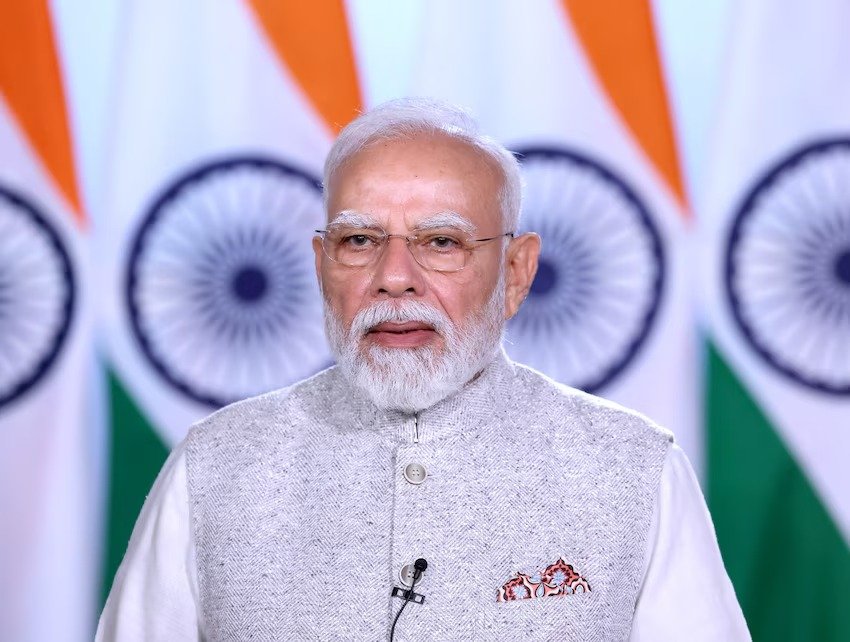
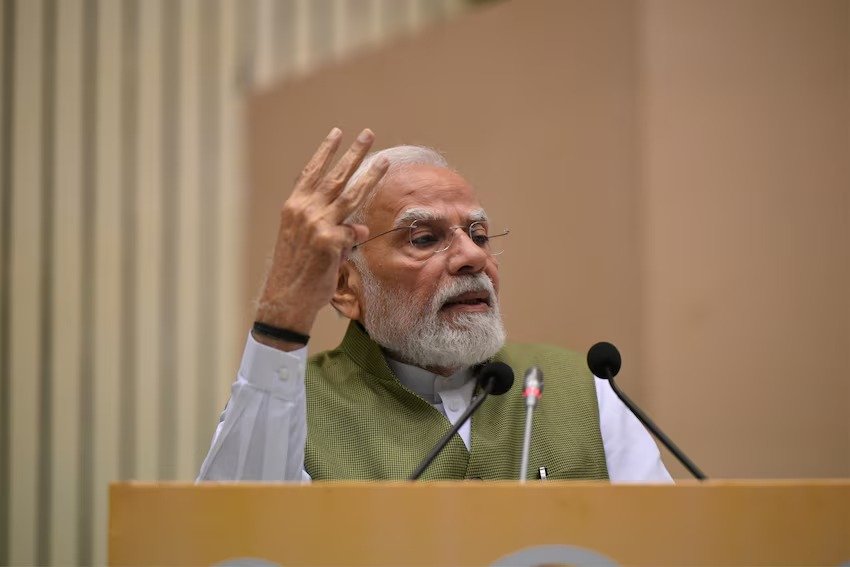
New Delhi, Sept 2026 : Prime Minister Narendra Modi on Saturday said India is the only G20 country to have fulfilled all the commitments it made at the Paris COP21 Summit ahead of schedule, highlighting the country's progress in renewable energy, clean mobility, electric vehicles and other areas of environmental protection.
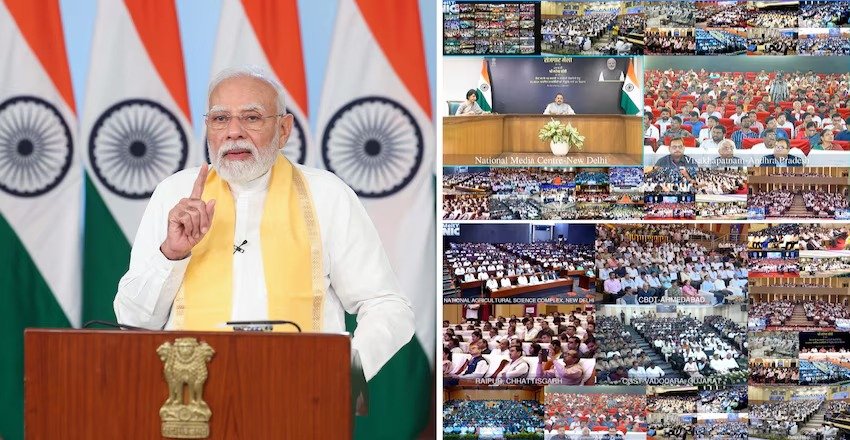
Modi made the remarks after inaugurating an international conference on ‘The Future of Environment and Climate Dynamics’, where he outlined India's approach to addressing climate change while integrating traditional environmental values with modern development.
Speaking at the event, the Prime Minister said India's performance on parameters such as non-fossil fuel capacity, solar energy and carbon emission reduction was receiving positive attention globally.
“India is the only country that has fulfilled all the commitments made at the Paris COP21 Summit ahead of schedule,” Modi said, adding that he was making the statement in the presence of leaders of the G20. He described the achievement as a reflection of India's growing capabilities in the environmental and clean-energy sectors.
The Prime Minister said India has also established and supported several international initiatives and platforms focused on climate action. These include the One Sun, One World, One Grid vision, the International Solar Alliance, the Coalition for Disaster Resilient Infrastructure (CDRI), the Global Biofuels Alliance, the International Big Cat Alliance and Mission LiFE (Lifestyle for Environment).
According to Modi, these initiatives reflect India's efforts to promote environmental protection and climate action at both the domestic and international levels.
Solar energy expansion
Highlighting India's progress in renewable energy, Modi said solar power capacity has expanded significantly over the past 12 years. According to him, India's solar capacity was around 2 GW about 12 years ago and has now crossed 160 GW.
He cited the PM Surya Ghar Muft Bijli Yojana, under which rooftop solar systems have been installed in more than 50 lakh households. The government has provided financial assistance of up to around Rs 80,000 per household under the programme, he said.
The Prime Minister also referred to the PM-KUSUM scheme, under which solar pumps have been installed for around 30 lakh farmers.
Modi said the large-scale adoption of solar energy has also contributed to reducing carbon emissions. According to his estimate, India has avoided nearly 20 crore tonnes of carbon emissions through solar energy alone.
He also highlighted the government's efforts to improve energy efficiency through the widespread distribution of LED bulbs, saying the initiative had helped conserve electricity.
Growth across clean-energy sectors
The Prime Minister said India's clean-energy transition extends beyond solar power. Wind energy capacity has increased three-fold over the past 12 years, while hydropower capacity has also recorded substantial growth.
He also pointed to the government's efforts to expand nuclear power generation, saying India was moving ahead in developing multiple clean-energy sources.
Modi further highlighted developments in clean mobility and green hydrogen. Referring to the recent flagging off of India's first hydrogen train, he described it as a major step towards a new phase of clean transportation.
Electric mobility expands
The Prime Minister said electric mobility has witnessed rapid growth in India. According to figures cited by him, EV sales have increased nearly 950 times over the past 12 years.
He said fewer than 3,000 electric vehicles were sold in India in the year preceding 2014, while nearly 25 lakh EVs were sold last year. Modi said the growth reflected the country's increasing adoption of electric mobility while also contributing to environmental goals.
He also cited the FASTag system on highways and expressways as an example of technology helping reduce fuel consumption. By cutting waiting time at toll plazas, FASTag has helped reduce fuel wastage, he said.
The Prime Minister also highlighted the expansion of India's metro rail network. Before 2014, the country had around 250 km of metro network across five cities, he said. Today, metro services operate in more than 20 cities, with India's overall metro network crossing 1,000 km.
Climate-resilient agriculture
Modi also outlined measures aimed at making agriculture more resilient to climate change. Under the National Mission on Natural Farming, around 24,000 clusters covering nearly 12.5 lakh hectares have been formed across the country, he said.
He further stated that nearly 3,000 varieties of climate-resilient crops have been developed as part of efforts to help agriculture respond to changing environmental conditions.
The Prime Minister also referred to the ‘Ek Ped Maa Ke Naam’ campaign, under which crores of trees have been planted across the country. He said the tree-planting movement was continuing to expand.
Modi said India's environmental approach combines traditional knowledge and values with modern technology, infrastructure and policy initiatives. He emphasised that renewable energy, clean transportation, sustainable agriculture, energy efficiency and afforestation were becoming important components of India's development strategy.
The Prime Minister's address highlighted India's efforts across multiple sectors as the country seeks to expand its clean-energy capacity while pursuing economic growth and climate-related commitments.