Joint India-Russia air drills strengthen combat interoperability, offer insights for Su-30MKI upgrades and support the Super Sukhoi modernisation programme
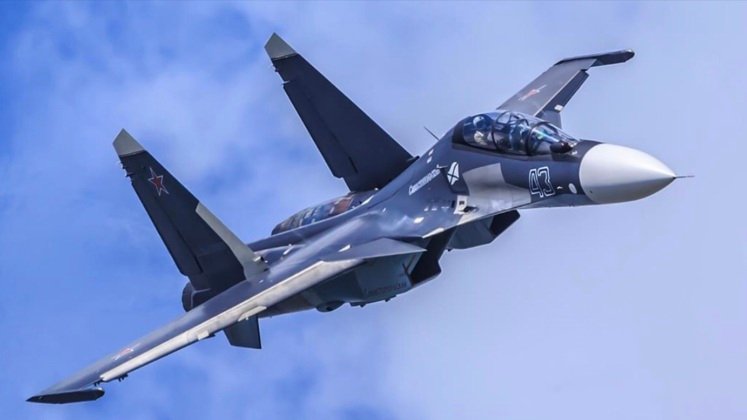
Indian Air Force (IAF) and Russian Aerospace Forces crews have conducted joint flying operations involving Russia’s Su-30SM multirole fighter during the Indra 2026 military exercise, providing Indian pilots with an opportunity to operate an aircraft closely related to India’s frontline Su-30MKI fighter fleet.
According to Russia’s state-owned news agency TASS, the joint flying operations formed part of efforts to strengthen operational coordination and improve interoperability between the two air forces through realistic combat training scenarios. The exercise also offered Indian pilots an opportunity to familiarise themselves with the Russian aircraft’s flight characteristics and operational procedures.
Indra 2026 Focuses on Air Combat Training
According to Russia’s Ministry of Defence, the aerial drills focused on engaging small, low-flying targets and intercepting aircraft carrying short- and medium-range air-launched weapons.
The participating flight crews also practised manoeuvring air combat at medium and low altitudes. These exercises were designed to sharpen the pilots’ skills in modern aerial warfare and prepare them for operations in contested airspace.
The joint flights provided an opportunity for personnel from both countries to exchange operational experience and strengthen coordination during complex aerial missions.
Su-30SM and Su-30MKI: Common Origins, Different Systems
The Russian Su-30SM and the Indian Su-30MKI share a common lineage, with both aircraft derived from the Su-27 Flanker family. The twin-engine fighters are known for their high manoeuvrability, advanced aerodynamic design and thrust-vectoring technology, which enable them to perform demanding air combat manoeuvres.
However, the two aircraft have different configurations, avionics and weapons systems tailored to their respective air forces.
The Indian Air Force’s Su-30MKI combines Russian airframe and engine technology with systems sourced from multiple international partners. This customised configuration has been developed to meet India’s operational requirements.
The Su-30MKI can carry advanced weapons, including the BrahMos-A air-launched cruise missile and the indigenous Astra air-to-air missile. These capabilities support a range of missions, including precision strikes and air superiority operations.
In comparison, Russia’s Su-30SM primarily uses domestically developed avionics, communications equipment and weapons. Its armament includes Russian R-73 and R-77 air-to-air missile families.
Russia has also developed the upgraded Su-30SM2 variant, featuring improvements to avionics and propulsion systems. Developments associated with newer Russian variants could provide useful reference points for countries operating the Su-30 family.
Indra 2026 and India’s Super Sukhoi Upgrade Programme
The joint flying operations come as India advances plans to modernise its extensive Su-30MKI fleet under the Super Sukhoi programme. Hindustan Aeronautics Limited (HAL) is expected to play a major role in implementing upgrades aimed at extending the operational relevance of the aircraft.
The proposed modernisation effort is expected to focus on improving avionics, mission systems, sensors, electronic warfare capabilities and weapons integration. These enhancements are intended to strengthen the Su-30MKI’s combat effectiveness and keep it relevant to emerging operational requirements.
Discussions surrounding the broader upgrade programme have also highlighted potential improvements in radar technology, mission computing and other combat systems. Experience gained from operating the Su-30SM could offer Indian pilots useful insights into differences in aircraft handling, cockpit design and operational procedures.
However, the joint flying exercise does not, by itself, establish that specific Russian systems will be incorporated into India’s Super Sukhoi upgrades. Any such decisions would depend on India’s modernisation requirements and the relevant technical and procurement processes.
India-Russia Defence Cooperation
For Indian pilots, flying the Su-30SM during Indra 2026 represented an opportunity to gain first-hand experience with a fighter closely related to the IAF’s principal heavy multirole combat aircraft.
The experience could support professional knowledge-sharing and provide additional operational perspectives as India evaluates future improvements to its combat aviation capabilities.
The exercise also underlined the longstanding India-Russia defence partnership, which has encompassed combat aircraft procurement, licensed production, maintenance, upgrades and technical cooperation.
As the Indian Air Force works to modernise its fleet and strengthen its operational readiness, joint exercises such as Indra 2026 provide a platform for improving interoperability, exchanging expertise and reinforcing defence cooperation between the two countries.
(Disclaimer :The content of this article is sourced from a news agency and has not been edited by the Mavericknews30 team.)