Mackay, Aug 2026 : Former Australia opener Justin Langer has criticised the growing number of Test matches ending within two days, describing the trend as “unacceptable” and warning that such short contests could have serious consequences for the future of the longest format.
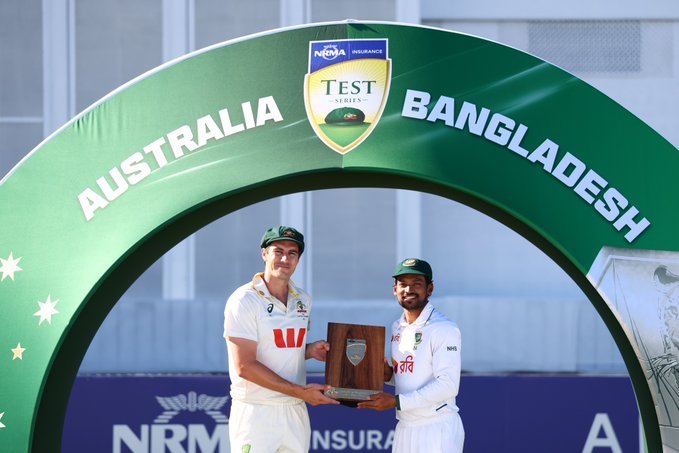
Langer’s comments came after Australia completed a dominant innings victory over Bangladesh in Mackay on Sunday, wrapping up the match inside six sessions. The result enabled Australia to level the two-match series 1-1 after suffering a surprise nine-wicket defeat in the opening Test in Darwin.
Australia’s victory was powered by a brilliant bowling performance from left-arm fast bowler Mitchell Starc, who claimed 10 wickets in the match. Bangladesh, however, struggled badly with the bat and were dismissed for just 95 in their second innings, only marginally improving on their first-innings collapse.
The match also marked the third Test in Australia’s last seven to finish within two days, prompting Langer to raise concerns about the sustainability and appeal of such contests.
“Two-day Test matches are unacceptable. It’s no good for the game for so many reasons,” Langer said on SEN Radio. He pointed to the impact on spectators, particularly young fans who lose the opportunity to watch their favourite players over a full Test match.
The former Australia captain also highlighted the financial implications of shortened matches. He argued that early finishes can hurt Cricket Australia’s revenues and, in turn, affect investment in grassroots cricket.
“Economically it's a disaster for Cricket Australia who put money into grassroots cricket,” Langer said, while rejecting the repeated tendency to attribute short matches entirely to pitches, curators or ball movement.
Instead, the former Test opener believes a decline in basic batting skills is playing a significant role in the increasing number of low-scoring contests.
Referring specifically to the Bangladesh-Australia Test, Langer said several dismissals reflected fundamental technical shortcomings, particularly poor footwork and a failure to move forward decisively while facing the new ball.
“I think a lot of it is down to basic batting technique,” he said, stressing that sound footwork remains essential to surviving against high-quality Test bowling.
Langer, who represented Australia in 105 Tests, said his experience coaching young players had reinforced his concerns. He recalled working with aspiring Test batsmen and finding that some of the basic technical lessons that were once considered fundamental are now unfamiliar to younger players.
According to him, greater emphasis must be placed on developing sound batting foundations if Test cricket is to produce longer and more competitive contests.
Australia will now turn their attention to their next red-ball assignment, a three-Test series in South Africa in October. The tour will mark Australia’s first Test visit to the country since 2018 and provide another test of their batting and bowling strength in challenging conditions.