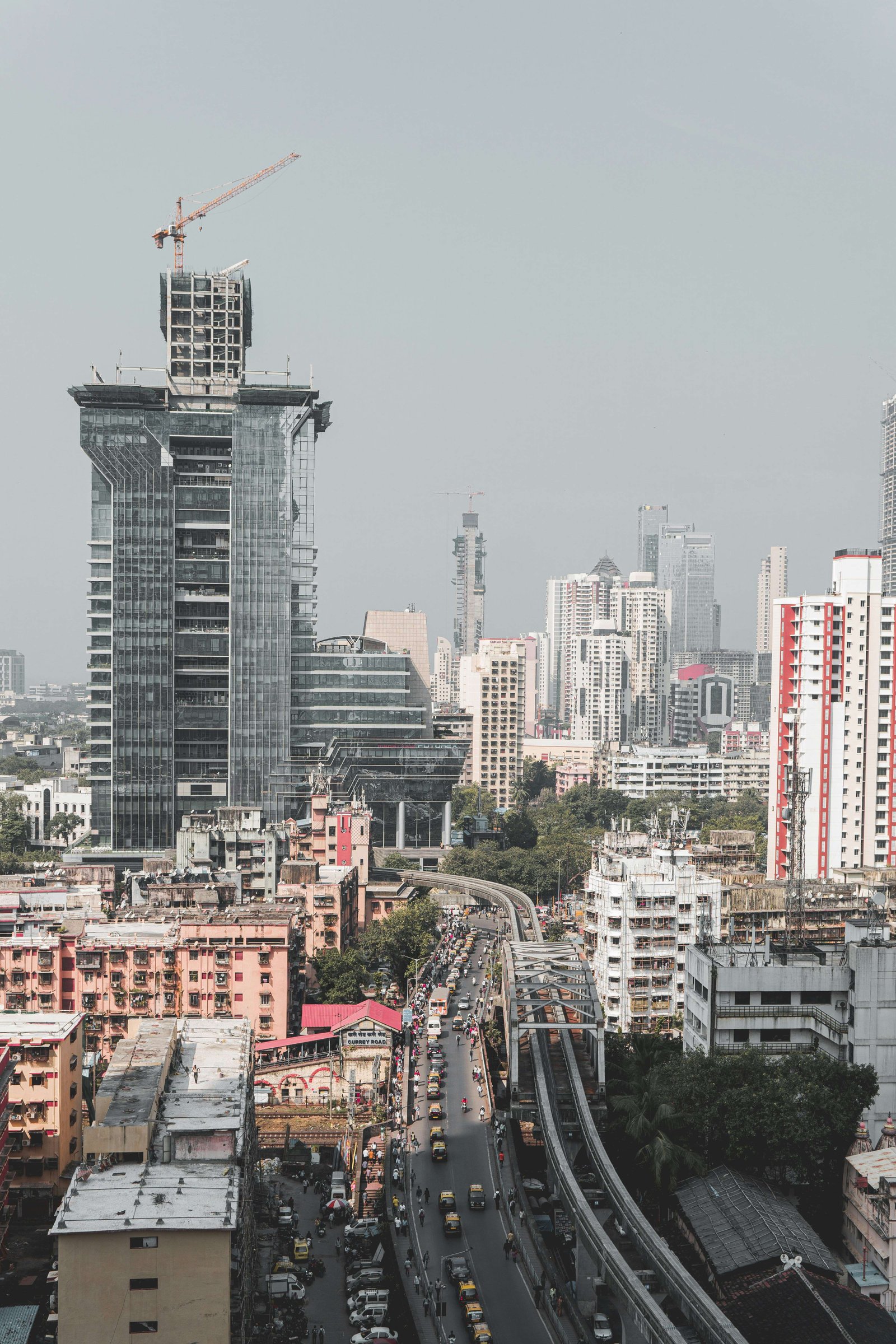
Mumbai, October 2026 : Mumbai’s deteriorating air quality has raised fresh concerns after the city ranked third among the world’s most polluted cities in a global air quality snapshot, behind Delhi and Lahore, according to rankings attributed to IQAir.
Lahore in Pakistan topped the list with an Air Quality Index (AQI) of 291, followed by Delhi at 232 and Mumbai at 176. Jakarta ranked fourth with an AQI of 173, while Dhaka and Kuala Lumpur recorded readings of 169 each. Kolkata stood seventh with an AQI of 166.
The rankings have highlighted concerns over rising air pollution in India’s financial capital, where hazy conditions have become increasingly noticeable. Pollution levels, however, vary across Mumbai, with some neighbourhoods recording significantly higher readings than others.
According to Central Pollution Control Board (CPCB) data for October 20, Mumbai’s overall AQI stood at 114. Among individual monitoring stations, Navy Nagar in Colaba recorded an AQI of 158, followed by Bandra-Kurla Complex at 156, Andheri East at 145, Siddharth Nagar in Worli at 143 and Malad at 138.
The IQAir and CPCB figures come from different monitoring systems and measurement snapshots, so they should not be directly compared. Nevertheless, the readings underline the need for continuous monitoring of air quality across the city and targeted action in pollution hotspots.
Several factors contribute to Mumbai’s air pollution, including vehicle emissions, dust from construction and redevelopment projects, industrial activity and open waste burning. Weather conditions also play a significant role in determining how quickly pollutants disperse. With the retreat of the monsoon, concerns have increased over the possibility of worsening air quality in the coming weeks.
Fine particulate matter, particularly PM2.5, poses serious health risks because its tiny particles can penetrate deep into the lungs and enter the bloodstream. Prolonged exposure to polluted air can aggravate asthma and other respiratory illnesses while increasing the risk of cardiovascular problems.
Children, senior citizens and people with pre-existing respiratory or heart conditions are especially vulnerable to the effects of poor air quality.
The latest figures have renewed calls for stronger pollution-control measures, including stricter enforcement of dust-control rules at construction sites, regular cleaning of roads, effective action against open waste burning and tighter checks on polluting vehicles.
Experts and environmental advocates have repeatedly emphasised the importance of identifying pollution sources and ensuring that preventive measures are implemented consistently. Monitoring stations can help authorities track changing conditions, but sustained improvements require action to reduce emissions and dust at their source.
While global air quality rankings draw attention to the scale of the challenge, Mumbai’s long-term response will depend on coordinated efforts by civic authorities, pollution-control agencies, industries and residents.
(Disclaimer :The content of this article is sourced from a news agency and has not been edited by the Mavericknews30 team.)