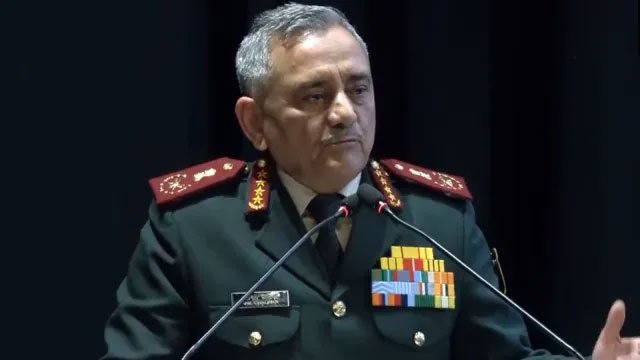
New Delhi, September 2026 : Pakistan will continue to remain a security concern and a potential threat to India in the years ahead, former Chief of Defence Staff General Anil Chauhan (retd) said on Saturday, underlining the need for New Delhi to maintain credible deterrence and remain prepared to respond to evolving security challenges.
Speaking at the Govind Ballabh Pant Memorial Lecture at Teen Murti Bhawan in New Delhi, Chauhan said Pakistan would remain a security concern “for the times to come”. He was addressing the broader subject of threats and challenges facing India on the birth anniversary of Govind Ballabh Pant, the prominent freedom fighter and former Uttar Pradesh chief minister who later served as Union Home Minister from 1955 to 1961.
Chauhan drew a distinction between a security threat and a challenge, explaining that a threat is generally immediate, visible and identifiable and therefore requires timely action to contain it. A challenge, on the other hand, tends to be longer-term, less clearly defined and constantly evolving. If neglected, he cautioned, a challenge can eventually transform into a direct threat.
Discussing Pakistan, the former CDS said India had significantly reduced the space for conventional military operations by Islamabad through a series of military responses in recent years. He referred to Operation Sindoor in 2025, the Balakot air strikes in 2019 and the Uri operation in 2017 as campaigns that had altered the dynamics surrounding conventional military action.
However, he stressed that terrorism and proxy warfare would continue to pose serious challenges to India. The country, therefore, would need to maintain credible military deterrence and remain prepared to counter attempts to exploit non-conventional methods of warfare.
Chauhan also referred to Pakistan’s recent strategic engagement with Saudi Arabia and Türkiye, cautioning that such developments could create a sense of overconfidence in Islamabad and potentially lead to “some kind of a miscalculation”. Although he did not name the agreement, his remarks came in the context of the trilateral Mecca Pact, signed on August 7.
“We got to be careful about that,” Chauhan said, highlighting the importance of closely monitoring developments involving Pakistan and its regional partnerships.
Turning to China, the former CDS described Beijing as a different and more comprehensive long-term challenge for India. He said the boundary dispute between the two countries remained unresolved, with no mutually agreed definition of the Line of Actual Control (LAC).
According to Chauhan, differing perceptions regarding the alignment of the LAC, combined with rapid infrastructure development on both sides, could increase the possibility of friction along the border. He emphasised that the Indian armed forces must therefore remain vigilant, agile and prepared to respond to changing circumstances.
At the same time, Chauhan welcomed efforts to improve military-to-military communication between India and China. He pointed to additional hotlines and continuing corps commander-level discussions as positive developments that could help manage tensions and prevent misunderstandings.
However, he stressed that India-China relations could not be viewed exclusively through the prism of the border dispute. “Safeguarding national security today means simultaneous engagements,” he said, pointing to the need for India to manage multiple strategic relationships and security concerns at the same time.
The former CDS identified the rapidly changing global security environment as India’s biggest national security challenge. He said the traditional balance of power was weakening, while the contours of a new global order were yet to fully emerge.
Chauhan said the international system could remain in a period of uncertainty and disorder for some time, with nations increasingly relying on issue-based and transactional partnerships rather than permanent alliances.
“It is increasingly difficult to place countries into permanent categories of friends and adversaries,” he observed, noting that a country could cooperate with India as a security partner on one issue while adopting a different position on another.
He also warned that military power was increasingly being employed “not as a last resort but as a first instrument of state policy”, adding another layer of complexity to the international security environment.
The lecture also carried historical significance. Govind Ballabh Pant’s son, K C Pant, served as India’s Defence Minister from 1987 to 1989. During his tenure, a task force was established to examine and strengthen the country’s national security architecture.