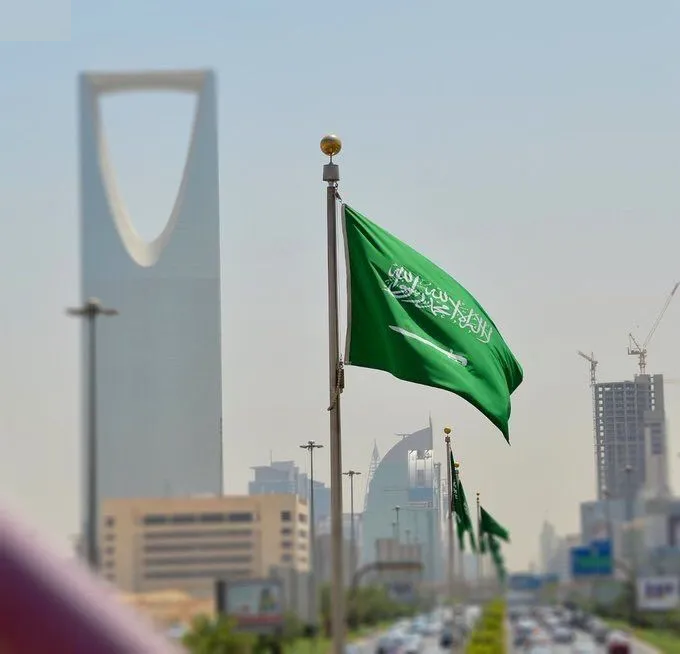
Dubai, Sept 2026 : Saudi Arabia is confronting a rapidly worsening security situation as Houthi rebels expand their presence along a crucial Red Sea shipping corridor, attacks blamed on Iran-backed Iraqi militias disrupt a major oil pipeline, and Iran continues to create uncertainty around the strategic Strait of Hormuz.
The developments have raised concerns in global energy markets and created what Saudi officials and regional analysts view as a nightmare scenario for the kingdom. Riyadh is increasingly exposed to threats on multiple fronts at a time when its most important security partner, the United States, appears reluctant to become further involved in another Middle Eastern conflict.
For Saudi Arabia, the challenge is particularly serious because the kingdom has spent years attempting to move beyond regional wars and concentrate on economic transformation, diversification and the creation of a more stable Middle East.
Michael Ratney, a former US ambassador to Saudi Arabia, described the latest developments as “incredibly frustrating” for Riyadh.
“Despite their antipathy for the Iranians, this is a war they never asked for, they had great trepidation about,” Ratney said. He added that once the conflict began, many of the kingdom’s worst-case scenarios started becoming reality.
The Saudi government did not respond to requests for comment. However, a Saudi official, speaking anonymously because he was not authorised to brief the media, said the kingdom would defend itself and cooperate with partners, including the United States, to protect freedom of navigation in the Red Sea.
Saudi Arabia’s Vision for a New Middle East Under Pressure
Saudi Crown Prince and de facto ruler Mohammed bin Salman has spent years pursuing an ambitious transformation of the kingdom. His plans have included sweeping social and economic reforms designed to reduce Saudi Arabia’s dependence on oil, attract international investment and establish the country as a global business and tourism hub.
Those ambitions have increasingly been challenged by regional instability following the Hamas attack on Israel on October 7, 2023, which triggered a series of conflicts across the Middle East.
The confrontation with Iran has further complicated the situation. After US and Israeli attacks on Iran on February 28, Iran responded with missile and drone strikes against Saudi Arabia and other Gulf states. The conflict also effectively disrupted the Strait of Hormuz, a vital global energy chokepoint, restricting the movement of oil and gas from Gulf producers and sending shockwaves through international markets.
Saudi Arabia was able to limit some of the impact by relying on alternative routes. Oil from its major fields in the east can be transported across the Arabian Peninsula to the Red Sea, allowing exports to Europe through Egypt’s SUMED pipeline and the Suez Canal, or toward Asian markets through the Bab el-Mandeb Strait and the Indian Ocean.
However, renewed fighting involving the Houthis has placed that strategy under increasing pressure.
Tensions with the Iran-aligned Yemeni rebels intensified in July, when the Houthis announced a blockade targeting Saudi shipping and resumed large-scale attacks after a four-year lull.
Over the past two days, the rebels have reportedly captured the port city of Mokha and a Red Sea island from forces aligned with the Saudi-backed Yemeni government. Their advances could strengthen their ability to threaten or restrict Saudi-linked shipping through the strategically important Bab el-Mandeb.
Pipeline Closure Adds to Riyadh’s Concerns
The situation worsened further on Friday when Saudi Arabia announced the closure of a major pipeline transporting crude from oil fields in the kingdom’s east to the Red Sea coast in the west.
The decision followed drone attacks originating from Iraq, where Iran supports powerful militias. Regional officials recently told The Associated Press that the Houthis have assisted Iraqi militias in conducting attacks.
The pipeline is strategically important because it provides Saudi Arabia with an alternative to transporting oil through the Strait of Hormuz. Its closure therefore represents another setback for Riyadh as it seeks to maintain reliable energy exports amid growing regional insecurity.
Houthi attacks have already had a major impact on Saudi oil shipments to Asia. According to figures compiled by global trade monitor Kpler, exports fell from approximately 3.4 million barrels per day in June to just 128,000 barrels per day in August. Shipments have recovered to some extent this month, reaching around 700,000 barrels per day.
The sharp decline highlights the growing economic consequences of the security crisis.
Riyadh Faces Difficult Choices
Saudi Arabia has fought the Houthis for years, beginning in 2015, but the conflict produced limited military gains for the kingdom and its allies. The war caused enormous humanitarian suffering, killed an estimated 150,000 people and at various points pushed Yemen toward famine before a ceasefire was reached in 2022.
Now, Riyadh faces a difficult decision over whether to respond militarily or seek a diplomatic settlement.
“Saudi Arabia has spent several years trying to move beyond the Yemen conflict and focus on economic transformation and regional stability,” said Neil Quilliam, a Middle East expert at Chatham House.
He said recent Houthi advances were increasing pressure on Riyadh but warned that every available option involved significant costs and uncertain outcomes.
A renewed military campaign could potentially push back the Houthis, but it could also prolong the conflict and expose Saudi energy infrastructure to even more attacks.
Sherwan Hindreen Ali, Middle East research manager at conflict monitoring organisation ACLED, said the Houthis now possess more sophisticated weaponry than they did during the earlier phase of the conflict.
Saudi Arabia could also pursue negotiations with the Houthis or Iran. But diplomacy presents its own difficulties. The Houthis have demanded an end to the Saudi-led blockade, a concession that could enable the rebels to strengthen their position over the long term. Iran, meanwhile, has limited incentives to help stabilise the region without obtaining significant concessions from Washington.
Questions Grow Over US Support
Perhaps the biggest uncertainty for Saudi Arabia is whether the United States would provide sustained military assistance if the crisis escalates.
For decades, Saudi Arabia and other Gulf countries have depended heavily on US security guarantees. However, confidence in those guarantees has weakened.
During Trump’s first term, Washington did not launch a major military response after a 2019 attack claimed by the Houthis temporarily knocked out about half of Saudi Arabia’s oil production capacity.
More recently, the United States joined Israel in attacking Iran without consulting its Gulf partners, while Washington has subsequently faced difficulties protecting those partners from Iranian retaliation.
The United States also has substantial military resources committed around the Strait of Hormuz, where American forces are attempting to restrict Iran’s activities and protect shipping. The prolonged conflict has placed additional pressure on US military capabilities and reduced stocks of sophisticated interceptor missiles.
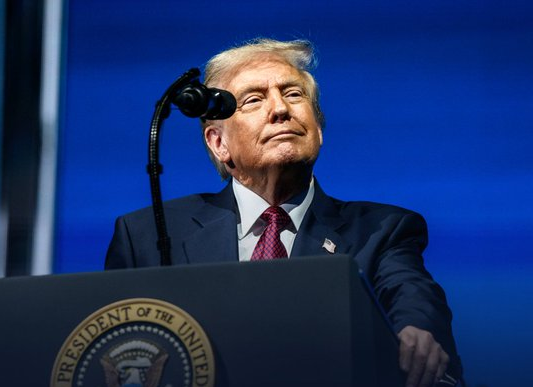
Domestic political considerations could further limit Washington’s willingness to expand the conflict. The war has become unpopular in the United States, while President Donald Trump faces congressional elections and political pressure after previously promising to avoid prolonged Middle Eastern wars.
Trump said Saturday that Iran was “probably” behind the Saudi pipeline attack. Asked about a recent conversation with Crown Prince Mohammed bin Salman, Trump described him as a good friend and expressed confidence that the situation would ultimately be resolved.
The White House has not indicated whether it intends to intervene directly in Yemen.
Trump also appeared reluctant Thursday to increase military pressure on Iran, acknowledging in a television interview that electoral considerations could influence his decisions.
For Saudi Arabia, the uncertainty surrounding US policy could prove as important as the military developments themselves.
Ratney said Riyadh would find it difficult to achieve its objectives without consistent American support, particularly given Washington’s previous role during Saudi Arabia’s confrontation with the Houthis.
“My understanding at this point is the White House is not enthusiastic about getting involved,” he said.
With threats emerging around the Red Sea, Iraq, Yemen and the Strait of Hormuz simultaneously, Saudi Arabia is now being forced to balance military security, energy exports, diplomacy and its ambitious economic transformation agenda in an increasingly unstable region.
Disclaimer: This article is sourced from a news agency and has not been independently edited by the MaverickNews30 team. The copy has been slightly edited with AI assistance for language and presentation, without altering the original facts.