By Joining the Dairy Entrepreneurship Scheme, Jurda’s Rakesh Patel Builds a Successful Dairy Farm
- Collects 300 litres of milk daily from 42 farmer families
- Provides direct employment to 16 people
- Government schemes, departmental guidance and hard work provide a new foundation for the rural economy
Raipur, September 2026: Government schemes are creating new livelihood opportunities in rural areas of Chhattisgarh. The dairy entrepreneurship journey of Rakesh Patel, a resident of Jurda village in Raigarh district, is a real-life example of this transformation.
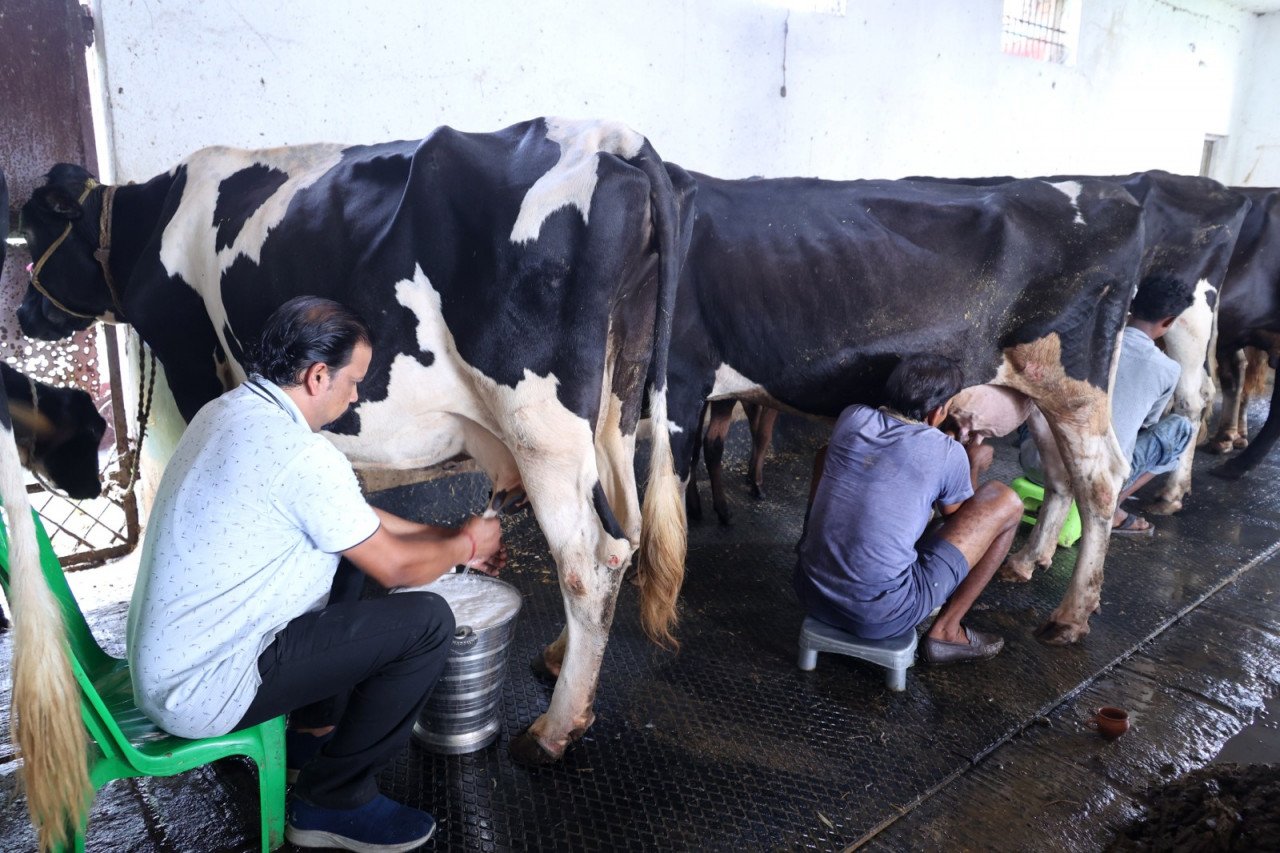
Rakesh Patel, who once started selling milk with just Rs 1,200 in capital and a single cow, is today running a dairy farm with 117 animals. His dairy has not only expanded his own business but has also provided 42 nearby farmer families with a regular avenue to sell their milk and created direct employment for 16 people in the village.
From Delivering Milk Door-to-Door on a Bicycle
Rakesh Patel said he initially started milk production with a single animal. He used to deliver around four litres of milk every day from house to house on a bicycle to earn his livelihood.
Despite limited resources, he continued to work hard and make sustained efforts to expand his activities. Support received through government schemes, along with guidance from the Animal Husbandry Department, played an important role in expanding his dairy business.
He received a loan of Rs 5 lakh for expanding the dairy, along with a subsidy of Rs 2.50 lakh. Subsequently, under the Dairy Entrepreneurship Scheme, he availed a loan of Rs 12 lakh and purchased 16 cows to expand his dairy farm. Today, his farm has 117 animals.
Collects 300 Litres of Milk Daily from 42 Farmer Families
Rakesh Patel has not restricted his dairy to being a personal business but has also connected nearby farming families with the enterprise. At present, around 300 litres of milk is collected every day from 42 farmer families.
This has provided farmers with a regular channel to sell their milk and created an additional source of income for them.
Under the guidance of the Animal Husbandry Department, the dairy has adopted artificial insemination, sorted semen, regular vaccination and animal healthcare services. Guidance from departmental veterinarians and staff has also helped improve animal health and dairy management practices.
Dairy Creates Employment Opportunities in the Village
The expansion of the dairy has also increased employment opportunities at the local level. At present, 16 people — 10 women and six young people — are directly associated with the dairy. This has created employment and income opportunities within the rural area itself.
Rakesh Patel has also linked his dairy activities with environmental conservation. Crop residue, or para, is collected from farmers in nearby villages and used as fodder for the animals. In return, the farmers are provided with cow dung, which can be used to prepare organic manure.
This arrangement helps reduce the need for burning crop residue while also lowering the cost of fodder for the dairy.
In this way, Rakesh Patel’s dairy has brought together milk production, farmers’ income, local employment and environmental conservation, presenting an example of efforts to strengthen the rural economy.
Government Schemes Help Transform the Picture
Rakesh Patel expressed gratitude to Prime Minister Narendra Modi, Chhattisgarh Chief Minister Vishnu Deo Sai and the district administration. He said that government schemes for farmers and rural communities, along with guidance from the Animal Husbandry Department, had provided him with an opportunity to expand his business.
He said his journey, which began with just Rs 1,200, has now reached a dairy farm with 117 animals.
During the Seva Sankalp Abhiyan, Rakesh Patel’s story highlights how the impact of government schemes can extend beyond an individual beneficiary. With proper guidance and sustained hard work, such support can contribute to improvements in the incomes of farming families, rural employment and the broader local economy.