Seoul; September 2026: South Korean Industry Minister Kim Jung-Kwan has briefed the National Assembly’s Trade, Industry, Resources, SMEs, and Startups Committee today (Wednesday – 23rd September 2026; IST) on the administration’s negotiations over investment in the US, outlining one project that the government has decided to pursue and two others for which it has drawn up plans.
A gas-fired power plant project in Texas has been selected as the first project to be funded by South Korea’s US$200 billion strategic investment in the US. Korea is expected to remit about US$12.2 billion to the US this year, consisting of $2.19 billion for the Texas project and an additional US$10 billion related to nuclear power plant construction.
The Texas gas-fired combined-cycle power plant project has been designated as the first target for investment under the Korea-US Strategic Investment Management Special Act. The project calls for the construction of power plants with a combined capacity of about 6.5 gigawatts in Texas to supply electricity to data centres. The project is estimated to cost US$22.3 billion.
Because the project is still in the early stages of development, with permitting and power purchase agreements yet to be finalised, the Lee administration has focused its review on its commercial viability and market outlook. Based on that assessment, the government determined that the investment could be recovered over the life of the project. The amount expected to be recovered over 20 years is reportedly estimated at between US$43 billion and US$45.4 billion.
The administration also briefed lawmakers on two other potential projects: a nuclear power framework and a liquefied natural gas (LNG) project in Alaska. Decisions on whether to proceed with those projects will be made later.
The nuclear framework includes plans to use the Korea-US strategic investment fund to build 08 nuclear reactors in the US and acquire a stake in Westinghouse. The proposed reactor line-up consists of 02 Korean-designed APR1400 reactors and 06 Westinghouse AP1000 reactors. There are expectations that building Korean-designed reactors in the US could bolster the credibility of Korea’s nuclear technology in global markets. A government official said negotiations were underway to acquire a 5%-10% voting stake in Westinghouse at a 10% discount to its anticipated initial public offering price.
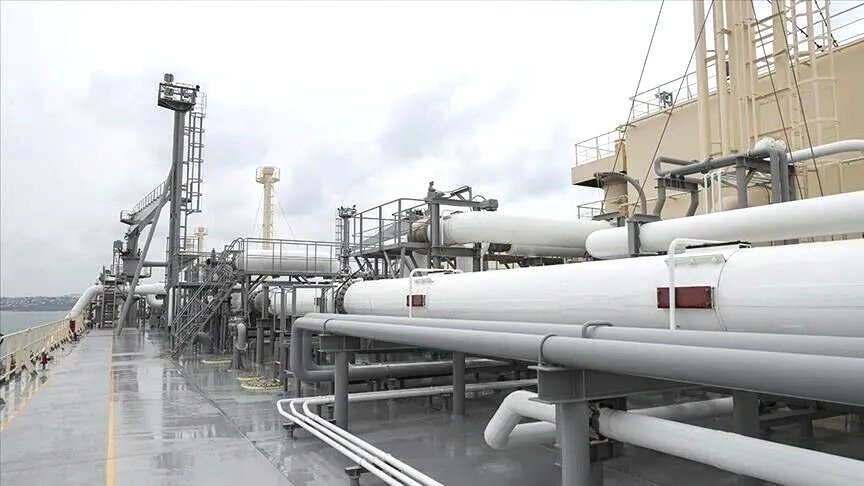
The Alaska LNG project was formally proposed by the US on August 23rd this year and involves building a pipeline from oil and gas fields in northern Alaska and an LNG terminal in the Nikiski area capable of processing and transporting 20 million tons of LNG annually. The project was reportedly included in the government’s announcement at the request of the US. A government official stressed that neither the nuclear framework nor the Alaska LNG project has been approved as an individual investment project.
Lawmakers also called for greater scrutiny of the commercial viability of the projects to be pursued in the future.
Representative Bae June-young of the top opposition People Power Party said in a procedural statement ahead of a closed-door briefing by the administration to the National Assembly’s Finance, Economy, Planning and Budget Committee that projects lacking sufficient commercial reasonableness should require the consent of the relevant parliamentary committee. “It is impossible to determine the commercial reasonableness of US$200 billion worth of US investment projects in just two hours after receiving the government’s briefing”, Bae said.
Representative Oh Gi-hyoung of the ruling Democratic Party also noted that some projects could require only a report to the National Assembly, while others could require parliamentary approval.
The investments in the US will be carried out through an umbrella investment vehicle and multiple individual project vehicles under a strategic investment memorandum of understanding between Korea and the US. The investment program has an annual limit of US$20 billion and a total cap of US$200 billion. Until the principal and investment returns are recovered, Korea and the US will split the proceeds equally. After the investment is recovered, the distribution will shift to 10% for South Korea and 90% for the US, although the change will be deferred until the principal and returns from all projects have been recovered.
Team Maverick.