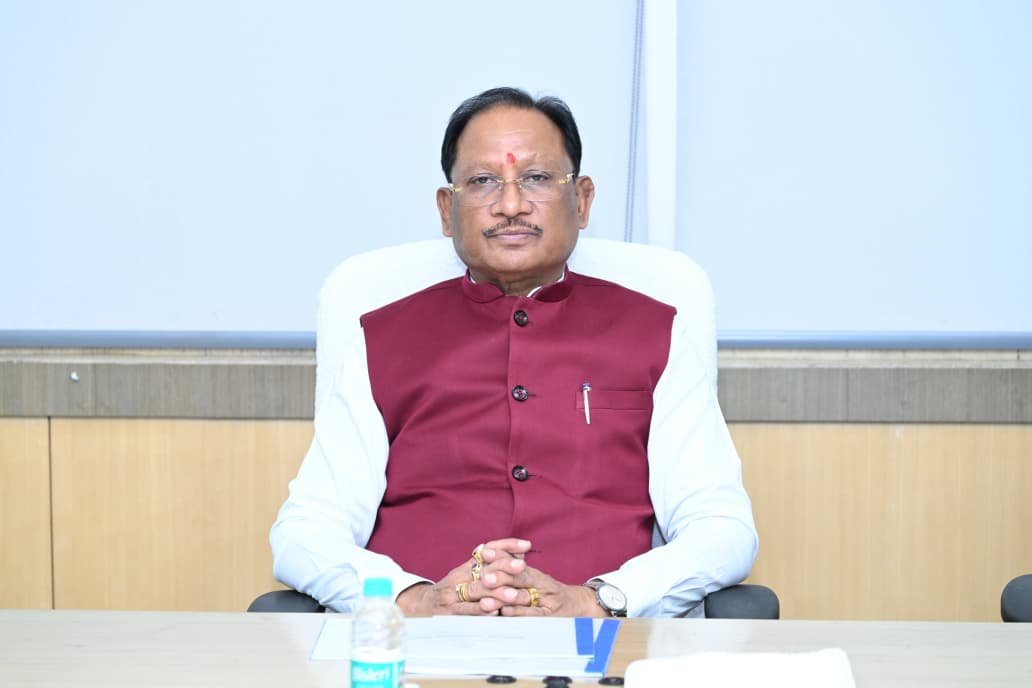
Raipur, October 2026: Chhattisgarh Chief Minister Vishnu Deo Sai on Tuesday directed officials to ensure that infrastructure development across the state is planned in line with future requirements, economic priorities and long-term public needs. He stressed that capital investment must accelerate the state’s economic growth while delivering better facilities to citizens.
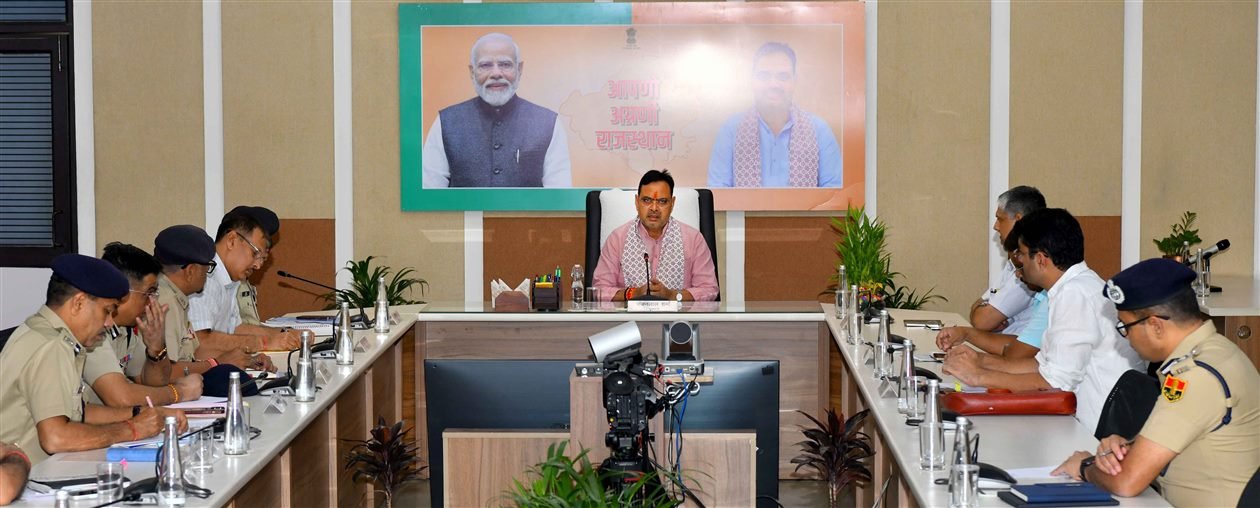
Chairing a high-level review meeting of the Chief Minister’s Infrastructure Mission at Mahanadi Bhawan in the Mantralaya, Sai called for time-bound implementation of projects, strict adherence to quality standards, improved coordination among departments and systematic maintenance of public assets.
He said infrastructure development should not be limited to meeting present-day requirements but must also account for population growth, industrial expansion, changing technology and the needs of future generations.
The Chief Minister said the state government was working towards building a developed Chhattisgarh in line with its long-term ‘Anjor Vision 2047’. Modern, robust and sustainable infrastructure, he said, would play a crucial role in achieving this objective.
He directed all departments responsible for capital expenditure to establish clear priorities and prepare coordinated, long-term development plans.
Economic and social benefits to determine project priorities
Sai said expenditure on infrastructure should be viewed as an investment in the state’s future rather than merely a construction cost. Project selection, he noted, should consider the potential impact on transportation, industry, trade, agriculture, tourism, employment and public amenities.
He instructed departments to prioritise projects capable of benefiting the maximum number of citizens, expanding economic activity and creating new development opportunities in different regions.
Project priorities, he said, should be determined not only by immediate requirements but also by their long-term economic and social benefits.
Clear timelines from budget approval to completion
Emphasising timely execution, the Chief Minister said allocating funds in the budget was not enough; projects must also be completed on the ground within the stipulated period.
Delays, he pointed out, increase project costs and postpone the benefits intended for citizens.
Sai directed officials to establish clear timelines for every stage, from project conceptualisation and planning to budget allocation, administrative and technical approvals, tendering, issuance of work orders and final completion.
He called for regular progress reviews and timely resolution of issues responsible for unnecessary delays. At the same time, he made it clear that speed must not come at the expense of quality, and all construction work must comply with prescribed technical and safety standards.
Road network master plan to address future requirements
The Chief Minister placed particular emphasis on the planned expansion of Chhattisgarh’s road network. He directed officials to conduct a detailed assessment of existing traffic conditions, population growth, industrial development, emerging economic centres and anticipated future traffic demand.
A comprehensive survey should identify which roads require expansion to two lanes and which need four lanes, he said. Based on the findings, the state should prepare a long-term road network master plan aligned with future requirements.
Sai noted that improved road connectivity facilitates access to markets, supports trade and industry, improves the transportation of agricultural produce and creates opportunities for investment and employment.
He called for seamless connectivity between rural areas, cities, industrial zones and major economic centres, with road development linked to the overall economic growth of the regions concerned.
Maintenance and future-ready public buildings
Sai said regular maintenance of roads, buildings and other public assets must receive as much attention as new construction. Without timely inspections and repairs, minor defects can develop into major problems, increasing maintenance costs and reducing the useful life of infrastructure.
He directed departments to incorporate long-term maintenance arrangements at the planning stage itself, supported by regular inspections and time-bound repairs.
The Chief Minister also stressed that schools, colleges and public buildings should be designed to accommodate future expansion. Planning should consider potential increases in the number of students and users, additional facilities, safety, accessibility, usability and maintenance requirements.
Taking future expansion into account at the initial design stage, he said, would help avoid unnecessary expenditure on additional construction later.
Modern technology and integrated digital monitoring
The Chief Minister called for greater adoption of modern construction technologies, quality materials and established safety standards. He asked officials to study successful infrastructure development and maintenance practices adopted by other states and adapt suitable innovations to Chhattisgarh’s geographical, economic and local conditions.
He also emphasised regular training and skill development for engineers and technical personnel to keep them abreast of technological advances.
The meeting discussed plans to improve infrastructure planning, financing, approvals, procurement, contracting, construction, monitoring and maintenance through the Chief Minister’s Infrastructure Mission.
An integrated digital system is proposed to track departmental projects, physical and financial progress, and implementation timelines. A comprehensive assessment of existing infrastructure will also help identify gaps between availability and actual requirements, enabling more effective prioritisation and utilisation of financial resources.
Interdepartmental coordination and sustainable development
Sai called for stronger coordination among departments, saying infrastructure projects should be planned around the state’s overall development needs rather than through isolated departmental approaches. Better coordination, he said, would prevent unnecessary duplication, improve resource utilisation and help projects complement one another.
He further stressed that infrastructure should be durable, safe and capable of addressing climate-related challenges.
The Chief Minister said development should not be measured merely by the kilometres of roads constructed or the number of buildings completed. Its real value should be assessed through improvements in citizens’ lives, growth in economic activity, creation of opportunities and the long-term development of regions.
“Our goal is to create infrastructure that meets today’s needs and remains useful for future generations,” was the thrust of his message.
Deputy Chief Minister Arun Sao, Finance Minister O.P. Choudhary, Chief Secretary Vikas Sheel, senior officials from the Chief Minister’s Office and secretaries from the Finance, Public Works, Urban Administration and Information Technology departments attended the meeting.
Sai also stressed the need to communicate information about public welfare initiatives and the benefits of new infrastructure projects more widely to citizens.