Agreement strengthens security cooperation in the Arctic and North Atlantic while affirming Denmark’s sovereignty and Greenlanders’ right to self-determination
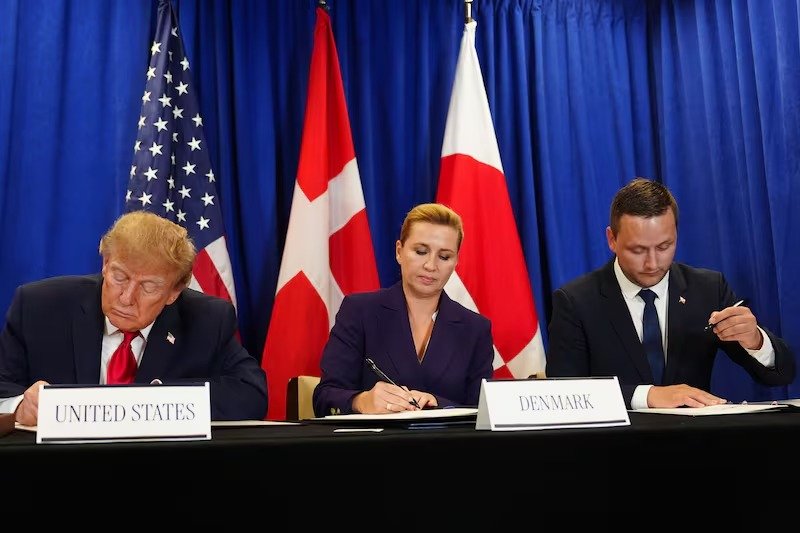
New York, September 2026 : US President Donald Trump, Danish Prime Minister Mette Frederiksen and Greenland Prime Minister Jens-Frederik Nielsen on Tuesday signed a trilateral agreement aimed at strengthening security cooperation in the Arctic and North Atlantic, marking a significant development in relations between Washington, Copenhagen and Nuuk.
The agreement was signed at United Nations headquarters in New York on the sidelines of the 81st UN General Assembly. It follows months of diplomatic tensions triggered by Trump’s repeated statements about the strategic importance of Greenland and his earlier calls for the United States to acquire the autonomous Danish territory.
The new arrangement provides a framework for expanding the US military and security presence in Greenland while maintaining the island’s existing constitutional status within the Kingdom of Denmark. Danish and Greenlandic authorities have stressed that the agreement recognises the sovereignty and territorial integrity of the Kingdom of Denmark as well as the Greenlandic people’s right to self-determination.
The agreement will come into force after the necessary national parliamentary procedures are completed. Denmark’s Prime Minister’s Office had earlier confirmed that the three leaders would formally sign the arrangement during the UN General Assembly in New York.
Focus on Arctic and North Atlantic Security
The agreement is primarily centred on strengthening collective security in one of the world’s increasingly important strategic regions. Greenland’s geographical position between North America and Europe makes it important for monitoring the North Atlantic, missile-warning systems, space surveillance and wider Arctic defence.
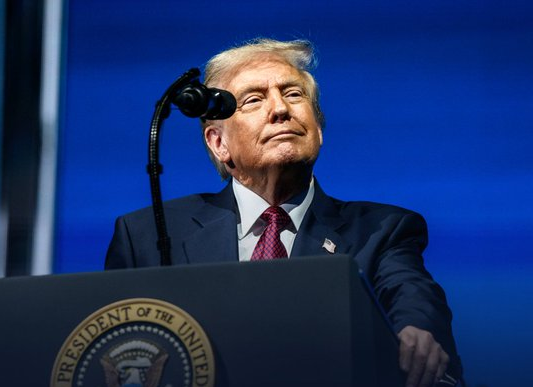
Trump, speaking at the signing, said he hoped the arrangement would lead to stronger and safer relations among the three parties. The agreement had been under discussion for an extended period as Washington, Copenhagen and Nuuk sought to reconcile US security concerns with Greenland’s political status.
Danish Prime Minister Mette Frederiksen described the agreement as beneficial for Greenland, the Kingdom of Denmark and the United States. She has previously said that the arrangement strengthens common security in the Arctic and North Atlantic and is therefore important for NATO and Europe.
Greenland Prime Minister Jens-Frederik Nielsen has also welcomed the agreement, saying it recognises Greenland’s interests and its role in international cooperation. He has presented the arrangement as a measure intended to strengthen security for Greenland, Denmark, the United States and the wider Western alliance.
Expanded US Military Presence
One of the most significant practical consequences of the agreement is the opening of a path for a larger US military presence in Greenland.
The United States already operates the Pituffik Space Base, formerly known as Thule Air Base. The installation is the northernmost US military facility and has important responsibilities related to missile warning, missile defence and space surveillance.
Reports on the agreement indicate that the United States could expand its military activities to additional locations on the island. Reuters reported that the arrangement could allow US forces to establish facilities at Narsarsuaq and Mestersvig, in addition to maintaining the existing presence at Pituffik.
Narsarsuaq was formerly home to a US military installation during the Cold War, while Mestersvig is currently associated with Denmark’s Sirius Dog Sled Patrol. Any expansion would therefore represent a notable change in the military footprint of the United States in Greenland.
The potential expansion is linked to broader US concerns about the security of the Arctic and North Atlantic. Washington has increasingly focused on Russian military activity in the Arctic and China’s growing economic and strategic interest in the region.
Trump’s ‘Permanent Control’ Statement
The agreement also represents a distinction between Trump’s earlier rhetoric and the formal position adopted by Denmark and Greenland.
Before the signing, Trump described the deal as giving the United States “permanent control” over security and other needs in Greenland. He also said that US adversaries should not be able to establish military bases or make sensitive investments on the island without US approval.
However, Danish and Greenlandic officials have consistently emphasised that the agreement does not transfer sovereignty over Greenland to the United States.
Frederiksen has specifically stated that the arrangement recognises the sovereignty and territorial integrity of the Kingdom of Denmark and the right of the Greenlandic people to self-determination. Nielsen has similarly framed the agreement as one that protects Greenland’s interests and strengthens its participation in international cooperation.
The distinction is important because Greenland remains a self-governing territory within the Kingdom of Denmark. The agreement therefore concerns security cooperation and military access rather than a transfer of territorial ownership.
Strategic Importance of Greenland
Greenland is the world’s largest island and occupies a strategically important position between North America and Europe. Its location gives it particular importance for surveillance of the North Atlantic and approaches to North America and Europe.
Its geography has also become increasingly significant as climate change reduces Arctic sea ice and potentially opens new maritime routes and improves access to natural resources.
The island is known to possess deposits of minerals that have attracted international interest. As competition over critical minerals and Arctic infrastructure grows, the region has assumed greater importance in the strategic calculations of the United States, Russia, China and European countries.
For Washington, preventing strategic rivals from obtaining a military foothold or acquiring sensitive infrastructure in Greenland has become an increasingly important security objective.
A New Approach After Months of Tension
The agreement follows months of strained relations between Washington and Copenhagen over Greenland.
During his second presidential term, Trump repeatedly argued that Greenland was important to US national security and suggested that Washington needed greater control over the island. His comments created tensions with Denmark and Greenland, whose leaders maintained that Greenland’s future must be determined by its own people.
The issue also generated wider concern among European allies because Denmark is a NATO member and Greenland forms part of the Kingdom of Denmark.
The new security arrangement is therefore significantly different from the earlier discussion about US acquisition of Greenland. Rather than changing the island’s sovereignty or constitutional status, it creates a framework for deeper US military and security involvement while leaving Greenland within the Kingdom of Denmark.
Implications for NATO
The agreement could also have implications for NATO’s approach to Arctic security.
The Arctic has become an increasingly important area for the alliance as Russia has expanded its military capabilities in the region. Greenland, together with Iceland and the North Atlantic, forms part of the strategic geography connecting North America and Europe.
Denmark has described the agreement as beneficial to NATO and European security. Greater US access to Greenland could improve surveillance, missile-warning capabilities and the alliance’s ability to respond to security developments in the Arctic and North Atlantic.
At the same time, the arrangement places greater emphasis on coordination among the United States, Denmark and Greenland, particularly on issues involving military infrastructure and strategic investment.
Foreign Investment and Strategic Infrastructure
Another reported element of the arrangement concerns sensitive foreign investment in Greenland.
The United States has expressed concern that strategic competitors could gain influence through investments in critical infrastructure, mineral resources or other sectors with security implications. Trump said before the signing that the agreement would prevent US adversaries from establishing military facilities or making sensitive investments without Washington’s approval.
The exact implementation of such provisions will depend on the final legal framework and national procedures required for the agreement to take effect.
What Happens Next
The signing marks the formal beginning of a new phase in US-Danish-Greenlandic security cooperation, but its practical impact will depend on how the agreement is implemented.
The immediate priority will be completion of the required parliamentary procedures. Subsequently, the three governments will need to determine the scale and location of any expanded US military presence and establish mechanisms for coordination over infrastructure, defence and strategic investments.
For Denmark and Greenland, the central issue will remain ensuring that expanded security cooperation does not alter the constitutional arrangements or Greenlanders’ right to determine their future.
For the United States, the agreement provides a framework for strengthening its strategic position in the Arctic without pursuing the territorial acquisition that had dominated the dispute earlier in Trump’s second term.
The signing in New York thus represents a shift from a prolonged political dispute over Greenland’s future towards a formalised security partnership. While the three parties have presented the agreement as a means of strengthening Arctic and North Atlantic security, its long-term significance will depend on the extent of US military expansion, the implementation of investment safeguards and the balance maintained between strategic security interests and Greenland’s sovereignty and right to self-determination.
(Disclaimer :The content of this article is sourced from a news agency and has not been edited by the Mavericknews30 team.)