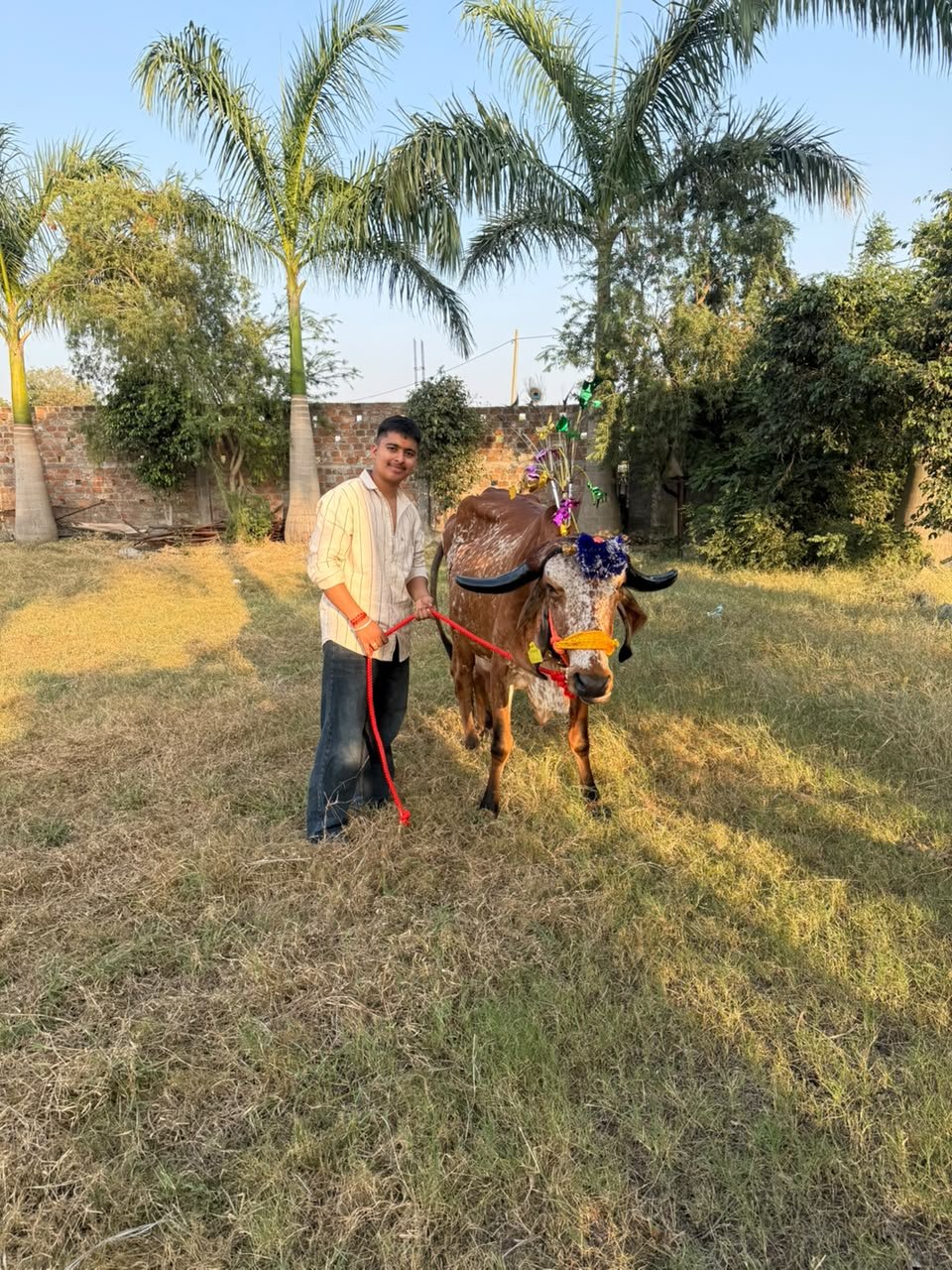
Rearing indigenous cow breeds can contribute significantly to rural livelihoods while preserving India's rich livestock heritage. With proper care, balanced nutrition and scientific management, these breeds can also achieve remarkable milk production. Demonstrating this potential, Gir cow ‘Radha’, owned by Shri Gaurav Raghuvanshi of Talod village, a designated Vrindavan Gram in Ujjain district, has topped the state's milk production competition with an average daily yield of 19.760 litres. The achievement highlights Shri Raghuvanshi's dedication to animal husbandry and the potential of indigenous cattle breeds to enhance farmers' income. He said, “Radha is not just a cow for me but an important member of my family.”
Shri Raghuvanshi said that after Chief Minister Dr. Mohan Yadav designated Talod as a Vrindavan Gram, efforts to conserve and promote indigenous cattle breeds received fresh impetus. The Animal Husbandry and Dairy Department is also encouraging livestock rearers to adopt improved breeds, enhance milk production and achieve economic self-reliance. Inspired by these initiatives, he purchased a Gir cow and ensured Radha received proper care, balanced nutrition and regular maintenance. As a result, she recorded an average daily milk yield of 19.760 litres, the highest in the state.
Top Five Highest Milk-Producing Cows in the State
The Animal Husbandry and Dairy Department organised the competition under the Gopal-Krishna Gram Award Scheme. Among the five highest milk-producing cows, Shri Gaurav Raghuvanshi's Gir cow from Talod village in Ujjain district topped the list with a daily milk yield of 19.760 litres.
The other four leading entries include Shri Mukesh Kumar Parmar's cow from Sukheda village in Ratlam district, with a daily milk yield of 17.230 litres; Smt. Sandhya Pandey's Gir cow from Dodka village in Umaria district, with 17.166 litres; Shri Gyaneshwar Patel's Gir cow from Mangrol-2 village in Raisen district, with 16.350 litres; and Shri Sumer Singh Panwar's Gir cow from Salehpur village in Rajgarh district, with 16.144 litres per day.
The achievements of these livestock rearers are inspiring examples of indigenous cattle conservation and improved animal husbandry practices. Madhya Pradesh currently ranks third in the country in milk production, with output registering consistent growth over the past few years. This progress has been supported by the State Government's focused policies and initiatives to promote animal husbandry and cattle development, which are also creating new economic opportunities for livestock rearers.
As part of these efforts, the Gopal-Krishna Gram Award Scheme competition was organised in designated Vrindavan Grams across the state from October 27 to 31 to encourage livestock rearers and promote the rearing of improved indigenous cow breeds.
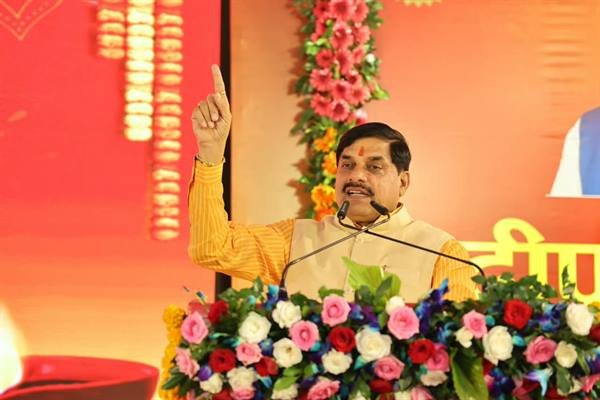
Chief Minister Dr. Mohan Yadav will honour the winners at a livestock rearers' felicitation ceremony in Bhopal on November 9, on the occasion of Govardhan Pooja. Ten livestock rearers will be felicitated symbolically at the state-level programme, while cow worship and felicitation ceremonies for livestock rearers will be organized at all district headquarters across the state.
Winners to Receive Cash Awards of Rs. 1 Lakh, Rs. 50,000 and Rs. 25,000
The Animal Husbandry and Dairy Department organised the competition under the Gopal-Krishna Gram Award Scheme across 208 selected Vrindavan Grams in the state.
To encourage livestock rearers, the owners of cows securing the first, second and third positions will receive cash awards of Rs. 1 lakh, Rs. 50,000 and Rs. 25,000, respectively, along with certificates of appreciation. The award money will be transferred directly to the bank accounts of all winning livestock rearers through Direct Benefit Transfer (DBT) in a single instalment.