Washington DC/Tel Aviv; September 2026: Vide an informal presentation to the congressional leadership today (Wednesday – 16th September 2026), the Donald Trump administration has reportedly moved forward with a $2.8 billion military sales package to Israel. The proposed transaction delivers tens of thousands of highly destructive, heavy-calibre munitions to the Israeli Air Force.
The deal is meant to augment Israel's heavy ordnance inventory amidst continuing multi-front regional operations. The package centres on 40,000 individual 2,000-pound class munitions, including standard general-purpose bombs, thermally protected variants, and specialised bunker-penetrating warheads, financed entirely through US government grant programmes.
The move marks a continuation of the administration's policy of expanding arms transfers to Israel, formally dismantling restrictions imposed during previous administrations and signalling sustained military support for Israeli strategic objectives across West Asia.
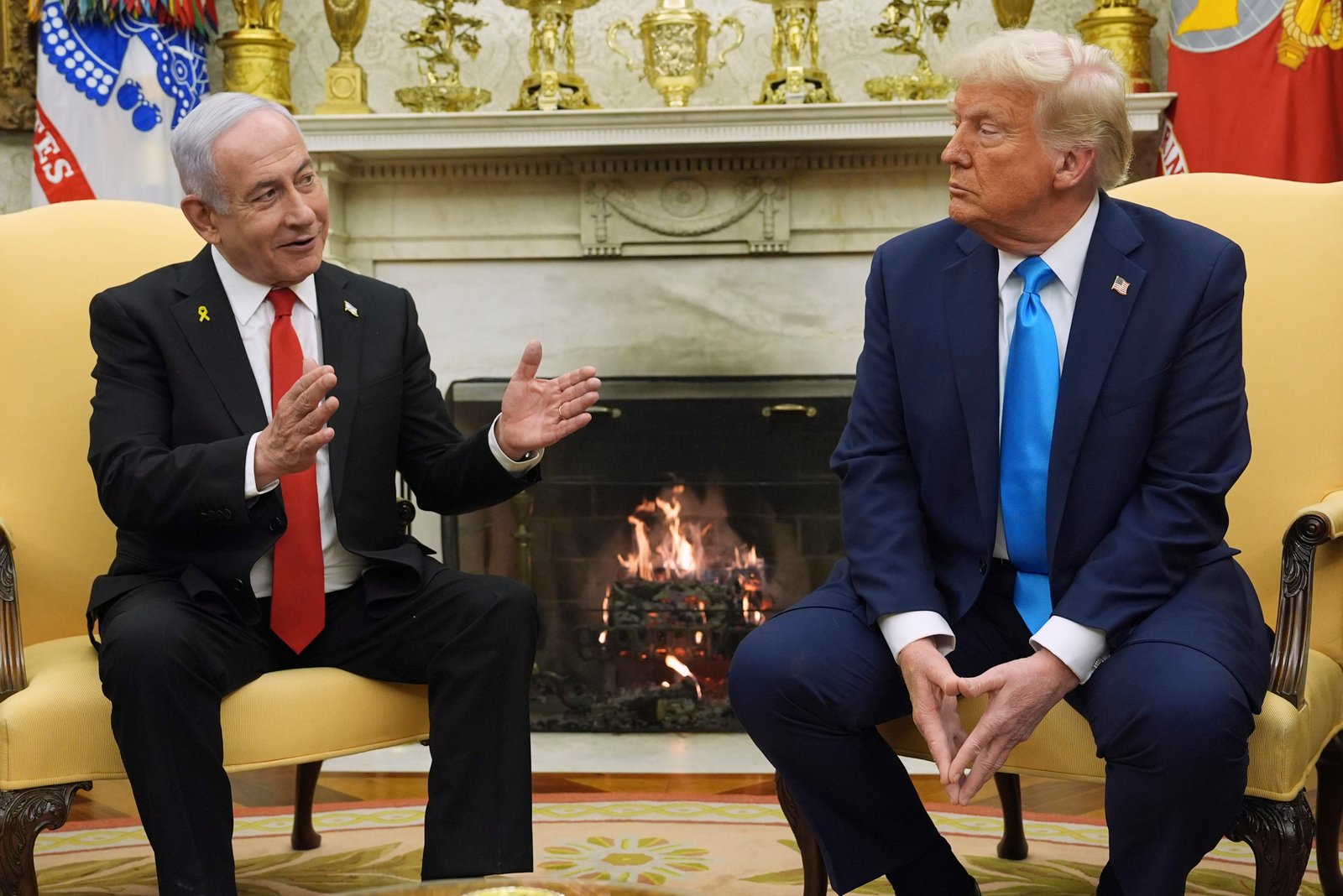
Donald Trump’s $2.8 billion arms deal to Israel –
The weapon systems included in the multi-billion-dollar notification represent some of the most potent non-nuclear explosive capabilities within the United States defence inventory. Divided into three distinct warhead configurations, the package equips Israeli aviation platforms with massive ground-destruction and bunker-busting capabilities.
· The MK-84 "Hammer" general-purpose bomb (20,000 units)
· The cornerstone of the transfer is the MK-84, a 2,000-pound general-purpose bomb affectionately dubbed "The Hammer" by American military aviators during the Gulf War.
· Containing approximately 945 pounds of Tritonal high explosives wrapped in a heavy steel casing, the MK-84 is designed to generate a combination of extreme blast overpressure, thermal effects, and lethal fragmentation.
Upon detonation, the MK-84 produces a blast wave capable of severing reinforced steel beams, shattering thick concrete structures, and carving craters exceeding 50 feet in width and 36 feet in depth. The weapon’s fragmentation envelope disperses high-velocity steel shrapnel over a radius exceeding several thousand feet, making it extraordinarily lethal in open terrain but exceptionally dangerous when deployed near civilian zones or dense urban infrastructure. The weapons are routinely fitted with Joint Direct Attack Munition (JDAM) GPS-guidance kits, transforming unguided gravity bombs into high-precision satellite-navigated ordnance.
The 20,000 Units of BLU-117 thermally protected warhead are functionally identical to the MK-84 in weight, dimensions, and total explosive yield, the BLU-117 distinguishes itself through an exterior coating designed for high-temperature resistance. Originally developed for naval aviation and shipboard magazine storage, the thermal protective layer prevents cook-off — premature detonation caused by external fuel fires or high-heat environments.
The inclusion of 20,000 BLU-117 warheads grants the Israeli Air Force greater operational flexibility for long-term ordnance storage, maritime operations, and hardened airbase logistics, ensuring that heavy bomb stockpiles remain resilient against accidental ignition or enemy strikes on supply depots.
The package of 20,000 units of I-2000 penetrator warhead - unlike general-purpose blast-fragmentation bombs that detonate on impact or slightly above ground level, the I-2000 is engineered specifically to defeat hardened, underground, or subterranean targets. Been constructed with a thick, dense steel casing and a reinforced nose cone, the I-2000 utilises delayed-action fusing to survive initial impact with reinforced concrete slabs, buried earth, or rock.
The warhead burrows deep into command bunkers, weapons storage tunnels, or fortified subterranean strongholds before detonating its high-explosive payload. In modern warfare, such munitions are crucial for destroying deeply buried command-and-control infrastructure that standard surface-burst bombs cannot neutralise.
Foreign Military Financing (FMF) programme is funding the deal –
While characterised in documents as a foreign military sale, the $2.8 billion transaction relies on the Foreign Military Financing (FMF) programme. Under this security assistance framework, the United States federal government provides grant funding directly to foreign partner nations, which is then re-circulated to American defence contractors to manufacture and deliver defence hardware.
Israel remains the largest cumulative recipient of US foreign assistance since World War II. Earlier, under the 10-year Memorandum of Understanding (MOU) covering fiscal years 2019 through 2028, the United States commits $3.8 billion annually in military funding, comprised of $3.3 billion in annual FMF grants alongside $500 million for joint missile defence programmes like Iron Dome, David's Sling, and Arrow.
Because the $2.8 billion purchase uses FMF grants, American taxpayers effectively cover the financial cost of the production lines, raw materials, explosive synthesis, and logistics transport required to supply these 40,000 heavy bombs. In turn, the capital flows directly to domestic defence manufacturers in the United States, sustaining aerospace manufacturing jobs across facilities in states like Texas, Missouri, and Pennsylvania.
US Does Decides For A U-Turn –
During the height of fighting in Gaza in May 2024, then-US President Joe Biden ordered a temporary hold on a single shipment containing 1,800 MK-84 2,000-pound bombs and 1,700 MK-82 500-pound bombs. The Joe Biden administration had cited severe humanitarian risks, arguing that dropping 2,000-pound munitions into densely populated urban zones like Rafah and Gaza City produced unacceptable civilian casualty rates and structural devastation.
Though other munitions continued flowing to Israel, the pause on 2,000-pound bombs remained a focal point of diplomatic friction between the US and Israeli Prime Minister Benjamin Netanyahu's cabinet.
Upon taking office for his second term in January 2025, US President Donald Trump immediately lifted the administrative hold on the suspended MK-84 shipments. Moving beyond simply clearing backlogged shipments, the Trump administration quickly authorised successive multi-billion-dollar emergency weapons packages. Accordingly, in 2025, a $3 billion munitions package consisting of over 35,500 heavy bombs was authorised, utilising emergency declaration provisions to streamline delivery.
In January earlier this year (2026), a separate $6.67 billion defence sales package was formally approved, granting access to expanded missile stockpiles, precision artillery, and maintenance support.
Administration officials have repeatedly framed these approvals as vital to fulfilling binding strategic commitments, asserting that Israel must maintain decisive air superiority and deep-strike deterrence against hostile state actors and non-state regional militias. Although the informal notification marks a critical policy milestone, the actual physical delivery of all 40,000 bombs will be spread over an extended multi-year timeframe.
The announcement of a massive 40,000-bomb transfer comes at a delicate period for United States defence logistics and global posture. Following extensive operations in West Asia, including US military expenditures totalling over $22 billion on naval, air defence, and strike munitions between February and June 2026, defence analysts have flagged domestic inventory drawdowns across multiple key categories.
Senior Pentagon planners have privately raised concerns regarding the speed with which defence industrial production lines can replenish depleted US national stockpiles while simultaneously fulfilling major foreign military commitments. But on the other hand, analysts observe that heavy air-dropped munitions remain essential to Israel's military doctrine.
Over the past three years, the Israeli Air Force has relied heavily on MK-84 class bombs to neutralise fortified underground tunnel networks, command nodes, and heavily barricaded positions across Gaza, southern Lebanon, and tactical targets in Syria.
While lower-collateral munitions like the 250-pound Small Diameter Bomb (SDB) are utilised for pinpoint urban targets, heavy 2,000-pound weapons are frequently deemed necessary by commanders when attacking deeply embedded subterranean infrastructure.
The Repercussions of the US Congress -
Under the Arms Export Control Act, major defence transactions must undergo informal review by the leaders of the Senate Foreign Relations Committee and the House Foreign Affairs Committee prior to formal statutory notification.
This "tiered review" period allows key lawmakers, specifically the Chairs and Ranking Members of both committees, to place holds on proposed sales, request policy clarifications, or negotiate conditionality with the State Department. While congressional leadership from both major political parties has historically backed major military aid to Israel, growing factional divisions within Congress have complicated the approval process.
Many congressmen argue that denying heavy munitions weakens Israel's military leverage, emboldens regional adversaries like Iran and its proxies, and compromises long-term regional stability. Conversely, a growing coalition of progressive and moderate lawmakers, along with international humanitarian organisations, has strongly condemned the proposed package. They opine that supplying 40,000 heavy bombs directly contradicts efforts to de-escalate regional hostilities and reduce civilian suffering.
Defence experts note that dropping heavy blast weapons into urban refugee camps or crowded city blocks inevitably leads to elevated civilian casualties and wide-scale urban destruction, regardless of precision-guidance attachments.
Lawmakers opposing the deal have signalled plans to introduce Joint Resolutions of Disapproval once the formal notification is submitted to Congress.
While passing such resolutions requires veto-proof majorities in both the House and Senate, a high legislative bar — the debate sets up a big public test regarding congressional oversight of foreign arms transfers.
Team Maverick.