US DC; September 2026: It was American presence in the Middle East which was a fixed component of the region’s security equation. US’s allies relied on US military power, while its rivals were compelled to factor this reality into their own calculations. But the recent confrontation with Iran exposed a gap that may prove more consequential than the battlefield itself: the gap between America’s military capability and political trust in that capability. US not only failed to achieve its previously declared objectives; over the course of the crisis, it also demonstrated that in critical moments, the security and interests of its regional partners are not necessarily US’s top priority.
For the Arab states of the Persian Gulf, this question is now more pressing than ever: if the United States is unwilling, in a real crisis, to bear the full cost of defending its allies, why should they tie their own security to US’s guarantees?
Perhaps the most significant consequence of this confrontation lies not in the number of missiles and drones fired, but in the new calculus now taking shape in the capitals of the Middle East. The question is no longer simply how powerful America is; it is how far that power can be trusted.
What happened to US in its confrontation with Iran was not merely an operational shortfall or a failure to achieve some of its stated objectives; the more significant issue is the political and strategic fallout of that failure. For decades, the United States sought to present itself as a power whose military presence in the Middle East could guarantee the security of its allies and the stability of the region. But the clash with Iran revealed a different picture of US’s intentions. US can strike Iran directly — yet Iran, in turn, is capable of shifting the cost of this confrontation onto US’s partners by targeting American interests, infrastructure, and allies across the Middle East.
For Middle Eastern states, this point carries particular weight. If the United States enters a military crisis but proves unable to effectively shield its partners from the resulting blowback, the question arises as to how credible US’s security guarantees actually are for its regional partners. Under such circumstances, the calculations of regional states could shift: America’s allies may still need its military capabilities, weapons, and defence technologies, but at the same time they may increasingly conclude that they should not rely solely on US’s support and promises for their own security. What is eroding, however, is not necessarily American military power itself, but confidence in the durability, predictability, and reliability of its security commitments. Even if the United States continues its strikes and retains considerable military superiority, doubts about the durability and predictability of its commitments could gradually erode US’s security credibility.
This shift in calculation is not confined to Arab states. Israel, one of US’s closest strategic partners for decades, also encountered limits to American support during this crisis. The divergence between the two sides stems from several factors: differing definitions of strategic objectives, differing assessments of economic and security costs, and differing time horizons for the war. Israel sees itself as facing a direct existential threat and is more prepared to sustain a prolonged war, while the United States is seeking a faster resolution and aims to prevent escalation and the broadening of the conflict.
Differences also exist in how objectives are defined. For US, eliminating the nuclear threat and changing Iran’s leadership were among the operation’s core goals; Israel, however, pursued a broader agenda. Israel’s objectives include dismantling Iran’s governing structure and weakening or destroying forces aligned with it — including Hezbollah, the Houthis, and Hamas — as well as the complete removal of the Islamic Revolutionary Guard Corps’ political and military leadership.
The issue, then, is not simply a tactical disagreement between two allies; it is a difference in how ‘victory‘ is defined, what level of cost is acceptable, and how much time is needed to achieve results. In a prolonged war, this same divergence could make the limits of American support for its closest regional ally more visible.
The dispute over strikes on Iran’s oil infrastructure offers a clear illustration of this rift. When Israel struck fuel-related facilities without coordinating with the United States, US openly voiced its displeasure and stressed the risk of triggering an energy crisis. For the United States, averting an energy crisis and its economic fallout is a matter of particular importance, whereas Israel appears willing, in its own calculations, to accept greater economic costs to achieve its objectives. As a result, even between America and its closest traditional ally, strategic objectives do not necessarily align. This same dynamic has heightened US’s concern over the continuation of Israeli operations even after the United States and Iran reached what has been called a ‘peace‘ agreement. Should Israel continue the war until its objectives are fully achieved while the United States seeks to end the crisis, the rift between the two allies could deepen further.
Moreover, US’s unsuccessful use of Kurdish forces to destabilise Iran carries a cautionary message for America’s allies and partners as well. When US employs a local actor to advance its strategic objectives and then changes course, it reinforces the perception that some partners matter to American calculations only for as long as they remain useful for a specific purpose. US’s decision to retreat from the ‘Kurdish project‘ in Syria, alongside the Iran experience, deepens the concern that American support for certain partners is not necessarily a durable, long-term commitment, and may instead be a function of US’s short-term needs and calculations.
For countries in the region, this experience serves as a warning sign: if US’s calculations and priorities shift, partners who were once important to advancing American policy may find themselves facing reduced support or a change in America’s position. For America’s allies, then, the issue is not simply the extent of US military power, but rather how far they can trust the durability of that support and the predictability of US’s decisions. Such concerns could push them toward developing alternative options, diversifying their foreign relations, and reducing dependence on a single power.
The consequences of this crisis are not purely political; heavy military and financial costs loom over it as well. According to Western media reports, the cost of the war in Iran is estimated at around $50 billion — roughly double the figure publicly presented to Congress by the Pentagon.
A significant part of the discrepancy between these estimates relates to equipment lost during the conflict. Among other losses, the United States lost 24 MQ-9 Reaper drones, each valued at roughly $30 million or more. Democratic Senator Richard Blumenthal of Connecticut has raised the question of whether the true cost of the operation was really just $25 billion; a similar position has been voiced by Democratic Senator Chris Coons of Delaware.
The significance of this issue extends beyond the price tag alone. Several high-value targets, including radar systems and reconnaissance aircraft, were struck by Iranian drones, even though the cost of producing those drones bears no comparison to the value of the destroyed equipment, or even to the cost of the air-defence interceptor missiles used against them.
This exposes another vulnerability: highly expensive equipment and advanced technology are not necessarily immune to cheaper, asymmetric tools.
For the Gulf states, this issue carries even greater weight. On one hand, these countries have experienced the limits of America’s ability to fully protect its regional partners during the crisis; on the other, they must defend their own critical infrastructure against the threat of Iranian drones and missiles.
Under these circumstances, Gulf states are increasingly concluding that they cannot base their security solely on US’s promises and guarantees. As a result, rather than relying exclusively on the United States, they are likely to move toward diversifying their foreign relations, strengthening regional cooperation, and expanding ties with other centres of power. Purchases of American weapons and defence systems within this framework do not necessarily signal a return of trust; they may instead reflect a pragmatic calculation aimed at meeting immediate defence needs.
In other words, regional states may continue to rely on American military power and technology, while at the same time working to create other options for themselves so that they are not left without recourse should US shift its position or scale back its commitments. Over time, this trend could reduce the region’s security dependence on a single power and lay the groundwork for more diverse, multilateral security arrangements.
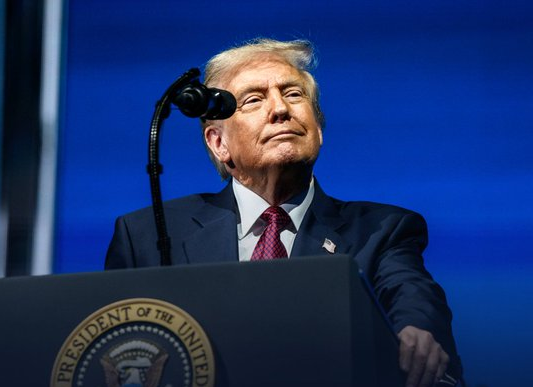
It is of immense importance – that President Donald Trump’s decision-making style also played a role in shaping this situation. US president operated under the assumption that decisive statements, threats, and shows of force could produce a quick result, but he miscalculated Iran’s response and capacity. As a result, US was forced to depart from its original plan and expend considerable resources correcting its political and military course under the banner of ‘crisis response‘. An operation intended to be a swift, decisive strike instead turned into a prolonged crisis, imposing political and credibility costs on the United States in addition to military ones.
The shift in Trump’s tone over the course of the crisis was also notable. Initially, his rhetoric was built around resolve, threats, and declarations of ‘total success‘; but as events unfolded, the operation’s conclusion became increasingly tied to Iran’s acceptance of certain terms and the achievement of a political agreement.
In this way, US’s tone shifted from a display of power toward bargaining aimed at locking in the gains already achieved. Greater emphasis was placed on political consolidation of the outcome, and attention shifted to protecting shipping in the Strait of Hormuz. This change in tone illustrates how wide a gap can open between initial objectives and what can actually be achieved on the ground.
Perhaps the most important point is that the real cost of this crisis for the United States will not end with the operation itself. US’s failure to achieve its stated objectives already constitutes a political and military setback; but its delayed consequences could prove even heavier for America.
First, negotiating with Middle Eastern countries to maintain or expand its military presence will become more difficult; Arab states and Israel will likely demand broader security guarantees and clearer commitments in any new agreements.
Second, America’s practical failure could lay the groundwork for strengthening formal cooperation among regional states, as well as for informal, behind-the-scenes arrangements among them, conducted without coordination with US.
Initiatives by the United Arab Emirates and Bahrain at the United Nations to propose measures for keeping the Strait of Hormuz open, without coordinating with US government, are one example of this shifting approach. If this trend continues, it could expand into additional domains and gradually weaken US’s authority in the Middle East.
Third, the Iran experience could make it harder for US administration to justify new military operations and an expanded American troop presence in the Middle East to voters. Reducing US military’s involvement in foreign conflicts could become a campaign talking point, and Trump’s rivals within the Democratic Party are likely to use the issue to attack his administration politically.
Finally, this setback carries costs not only abroad but potentially at home as well. Following the Iran experience, justifying new military operations and an expanded American presence in the Middle East will become harder for the Trump administration in the eyes of public opinion and voters. Trump’s Democratic rivals could turn a reduction in the scope of US military intervention abroad into a campaign platform. US’s regional allies will factor this reality into their own calculations too, since the scale and durability of America’s overseas commitments depend not only on strategic considerations, but can also be shaped by domestic political conditions and electoral shifts in US.
Team Maverick.