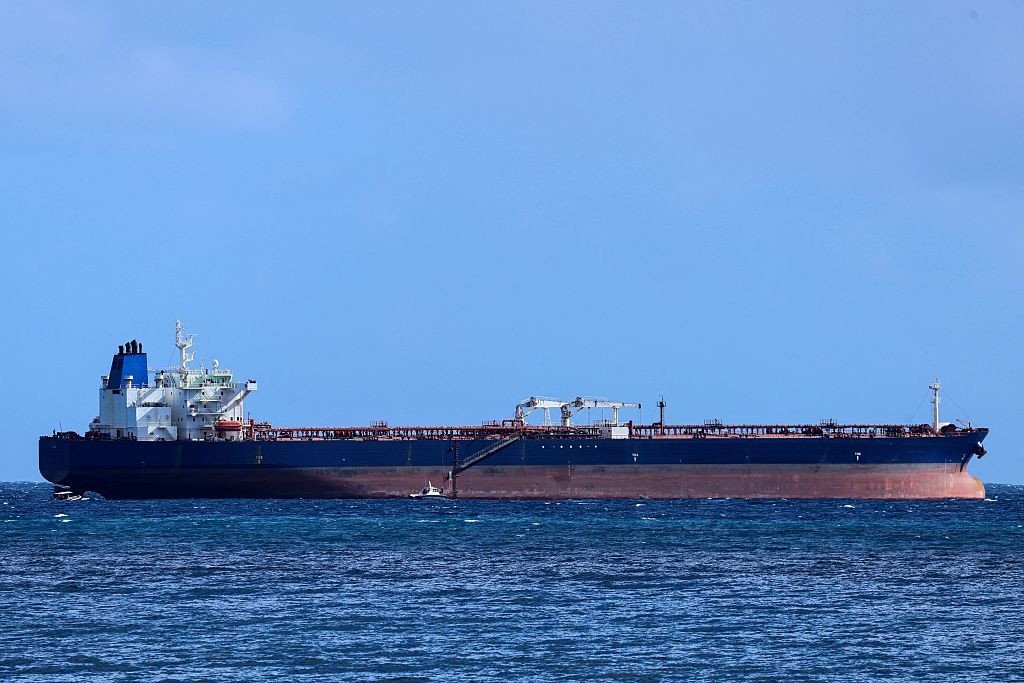
Washington DC; October 2026: US energy secretary Chris Wright while speaking at a Citadel Securities event in New York, has reiterated that President Donald Trump administration is authorising the sale of sanctioned oil tankers to approved investors who would refurbish the vessels and return them to legitimate crude trades, as the United States is steadfast committed in containing the soaring freight costs amid the Hormuz crisis.
Wright said the government was developing an approval process for formerly blacklisted vessels to trade under recognised owners, carrying only non-sanctioned oil. “We’re going to move some of the ships from what I call the ‘bad-guy fleet’ to the ‘good-guy fleet’” he said. Wright insisted that the move was not a blanket lifting of sanctions on Iranian or Russian oil, describing it instead as the conversion of ships into legitimate assets. He put the global dark fleet at around 1,600 tankers and suggested “dozens” or possibly “hundreds” might eventually re-enter compliant trading.
Tanker owners’ association INTERTANKO has pushed back hard, warning that legalising a vessel does not automatically address its condition, ownership or insurance. “If additional tanker capacity is required, policy should encourage cargoes towards the quality, compliant fleet”, the association said.
INTERTANKO warned that opaque insurance arrangements, weak oversight and missing inspection histories pose risks to crews, the environment and coastal states, while sending the wrong signal to owners that have invested heavily in safety and compliance.
Market analysts are equally skeptical about whether the initiative can meaningfully depress the surge in freight rates. Kpler estimates only 24 of roughly 160 OFAC-sanctioned VLCCs could realistically return to mainstream trading after ownership and age restrictions are considered. It has argued that war risk around the Middle East Gulf, rather than vessel numbers alone, is driving freight costs, and that loosening sanctions could weaken geopolitical leverage without delivering meaningful relief.\
Meanwhile, Braemar has put the potential increase even lower at just 19 VLCCs once vessels tied to Iran and European sanctions are excluded. Braemar stressed that any lasting impact depends on Hormuz flows and how long Washington’s approval arrangements remain in place.
Arrow Research’s filtering has produced a maximum of 22 eligible tankers across all sizes, including 14 VLCCs, and none in the Suezmax or Aframax segments. Arrow sees continued upside risk for freight, with the strong market potentially extending through the first quarter of 2027 as shuttle operations, ship-to-ship transfers and security risks keep tonnage tied up.
BRS, meanwhile, has identified 148 Deepsea tankers sanctioned by the US alone, representing just 2.5% of the global Deepsea fleet. Only 14 appear to have been idle for more than three months. Most of the remainder are already working in grey trades, while UK and EU restrictions could prevent them obtaining essential insurance and other maritime services. The company has further maintained that United States’s initiative is unlikely to have a significant immediate impact on freight rates, with the majority of potentially eligible tonnage already employed and the fundamental constraints on tanker movements through Hormuz remaining unresolved.
The shadow fleet move follows Washington’s decision earlier this month to temporarily authorise Russian diesel trade until April 7, 2027, drawing criticism from Kyiv and US lawmakers.
As a matter of this announcement by the US authorities, Asian shipping stocks have undergone a sharp decline which has sent investors scrambling, to reassess the extraordinary freight boom that has sent some spot segments into million-dollar territory for the first time in history.
COSCO Shipping Energy plunged more than 13% in Hong Kong, while China Merchants Energy Shipping, COSCO Shipping Energy’s Shanghai-listed shares and China Merchants Nanjing Tanker hit their 10% daily downward limits in mainland trading. The sell-off also spread to other shipping sectors.
A US official told media reporters that companies would need Treasury approval to employ the vessels, with the initiative designed to release additional tanker capacity and bring down record freight rates.
The scale of today’s tanker squeeze is unprecedented. Clarksons Research estimates that 1,010 oil tankers totalling 121m dwt are individually sanctioned, representing 17% of global tanker capacity.
Scandinavian bank SEB said in a note to clients this morning that any additional mainstream capacity would be limited, noting that most sanctioned tankers are elderly and already trading. “A small number of additional vessels for the Hormuz shuttle trade could help get more barrels to market, which would be positive”, SEB observed. The bank suggested the more significant development was Washington’s willingness to intervene in freight markets, with high fuel prices posing a political risk ahead of November’s midterm elections.
Becky Smart, a research analyst at Singapore’s Sentosa Shipbrokers, told media reporters that Russian-linked tonnage appeared a more plausible candidate for sanctions relief than Iranian-controlled ships, given Washington’s continuing pressure on Tehran. However, she questioned both the political wisdom and the likely commercial effectiveness of the proposal. “Removing sanctions from vessels previously targeted for involvement in Russian oil trades would unwind a significant amount of the work done to constrain Moscow’s energy revenues”, Smart said.
She also highlighted the practical difficulties of bringing ageing shadow fleet vessels back into mainstream employment. “Major oil companies and most EU or UK aligned entities are highly unlikely to rush towards vessels that were sanctioned until five minutes ago”, she said.
Many would also struggle to meet the vetting, maintenance and insurance requirements of mainstream charterers and terminals. European and British sanctions would remain in force regardless of Washington’s decision, further restricting any return to conventional trading. “On paper sanctions relief adds tonnage, however, in practice it is unlikely to add genuinely usable fleet capacity”, Smart concluded.
Team Maverick.