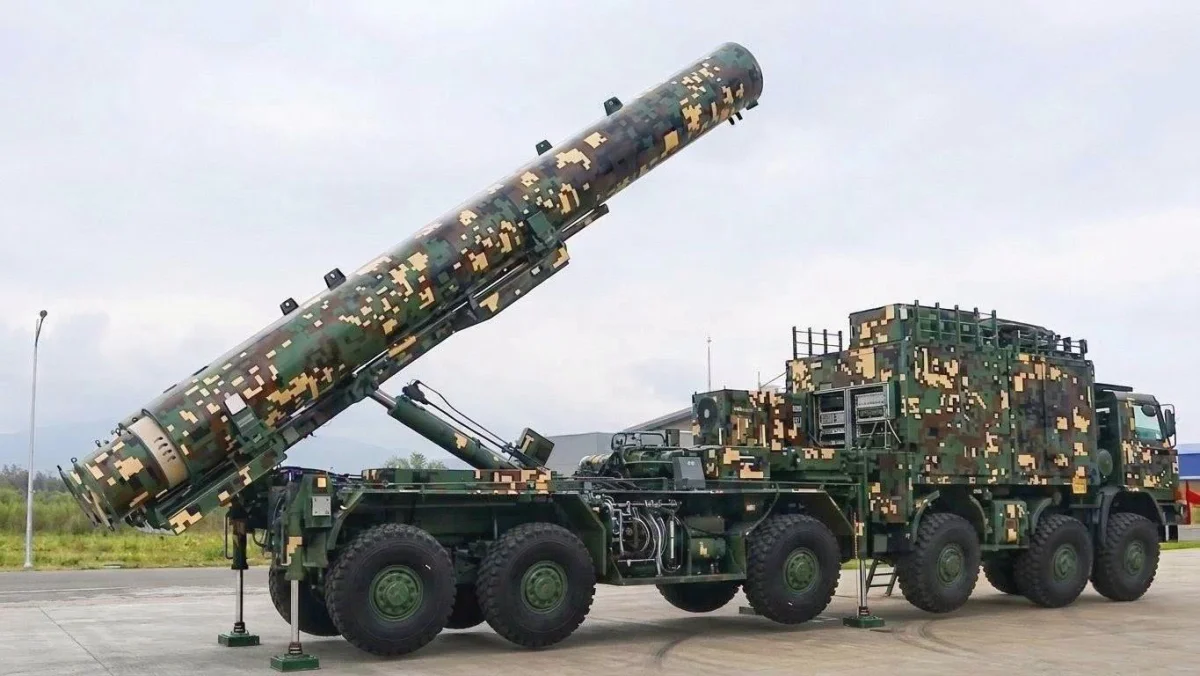
Manila, September 2026 : US and Philippine Marines have conducted a joint coastal defence exercise aimed at strengthening maritime security by demonstrating how unmanned aerial drones can be integrated with ground-launched BrahMos anti-ship missiles to counter hostile naval formations.
The exercise, conducted on August 25 at a Marine base in northern Luzon, formed part of the “Archipelagic Coastal Defence Continuum 26.4”. It focused on developing tactics to connect surveillance, targeting and missile systems into an integrated coastal defence network.
During the drill, the allied forces simulated an attack against a modern naval formation modelled on vessels currently operated by China’s People’s Liberation Army Navy (PLAN). The simulated surface action group comprised two Type 052D guided-missile destroyers, a Type 054A frigate and a Type 901 fast combat support ship.
Philippine and US military planners employed Hermes unmanned aerial systems operated by the Armed Forces of the Philippines to locate and continuously track the simulated hostile formation. Once the drones generated the required targeting information, it was passed through the operational chain to coordinate a simulated launch of an Indian-made BrahMos missile.
The exercise was designed to demonstrate a complete maritime “kill chain” — the sequence through which an adversary is detected, identified, tracked, targeted and ultimately engaged.
Military planners consider the availability of accurate and timely intelligence crucial to the effectiveness of long-range anti-ship missiles. Even highly capable missile systems can face limitations if they lack reliable information on the position and movement of maritime targets.
By integrating drones with BrahMos missile batteries, the Philippines is seeking to demonstrate how relatively compact coastal defence units can pose a significant threat to larger naval formations without relying exclusively on a large fleet of heavily armed surface combatants.
Strategic Importance of BrahMos
The Philippines acquired the BrahMos coastal defence system from India under a landmark $375 million deal signed in 2022. The supersonic cruise missile is capable of travelling at around three times the speed of sound and carries a warhead weighing approximately 400 pounds.
The acquisition has significantly enhanced Manila’s coastal defence capabilities amid continuing tensions in the South China Sea.
The Philippine Marine Corps’ first BrahMos facility has been established in western Luzon, a strategically important area facing the disputed Scarborough Shoal. The maritime feature has been the site of repeated confrontations and incidents involving Chinese and Philippine vessels.
The Philippines is also planning to establish additional BrahMos missile detachments in northern Luzon and Palawan, expanding the geographic coverage of its coastal defence network.
The latest exercise demonstrates the Philippines’ broader effort to develop a network-centric maritime defence capability. By combining long-range, high-speed BrahMos missiles with drone-based surveillance, mobile launchers and real-time targeting information, Manila aims to strengthen its ability to monitor and respond to potential maritime threats.
The integration also underscores the growing defence partnership between India and the Philippines, with the BrahMos system becoming an important element of Manila’s strategy to strengthen deterrence and protect its extensive archipelagic waters.