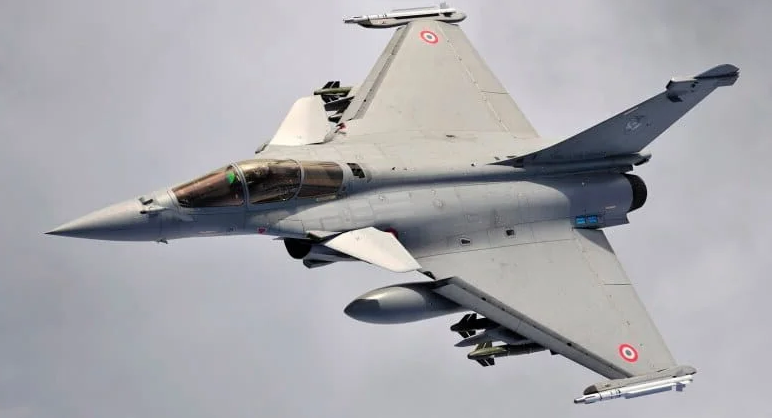
Hanoi, Sept 2026 : Vietnam is evaluating France’s Dassault Rafale fighter as a potential addition to its combat aviation fleet, as Hanoi seeks to modernise its ageing aircraft inventory amid growing security challenges in the South China Sea.
The reported assessment marks a potential shift in Vietnam’s long-standing dependence on Russian military hardware. The country has traditionally relied heavily on Soviet- and Russian-origin aircraft, but maintaining an ageing fleet and dependence on a single supplier have increased the need to explore alternative platforms and supply chains.
Recent reports indicate that discussions between Vietnam and France have progressed beyond preliminary diplomatic contacts. Vietnamese People’s Air Force pilots have reportedly test-flown the Rafale, suggesting that Hanoi’s evaluation of the French fighter has reached a more advanced stage.
One of the immediate requirements is expected to be the replacement of Vietnam’s fleet of around 30 Su-22 strike aircraft. Hanoi could subsequently look at gradually replacing older Su-27 aircraft as part of a broader effort to modernise its fighter fleet.
France has been actively promoting the Rafale across Southeast Asia as it seeks to expand its defence partnerships in the region. Russia, meanwhile, continues to promote its advanced Su-57 fighter as it seeks to maintain its position in traditional defence markets.
Chinese Air Power Drives Modernisation
Vietnam’s efforts to strengthen its air capabilities are taking place against the backdrop of China’s expanding military aviation capabilities. The People’s Liberation Army Air Force operates advanced platforms including the J-16 multirole fighter and J-20 stealth fighter, supported by modern sensors, electronic warfare systems and long-range air-to-air missiles.
Vietnam currently depends significantly on Russian aircraft, with the Su-30MK2 forming an important component of its combat fleet. While the platform continues to provide a capable air combat and strike capability, continued reliance on a Russian supply chain presents longer-term technological, logistical and geopolitical considerations for Hanoi.
The Rafale would offer Vietnam access to a Western combat aviation ecosystem. The French fighter is equipped with the SPECTRA electronic warfare system and is compatible with advanced weapons such as the Meteor beyond-visual-range air-to-air missile.
The combination of electronic warfare, sensors, weapons integration and multirole capabilities is among the factors that could make the Rafale attractive to Vietnam as it seeks to enhance the qualitative capabilities of its air force.
India’s Rafale Experience
India’s experience with the Rafale is also relevant to Vietnam’s assessment. The Indian Air Force currently operates 36 Rafale fighters, which form part of its modern combat aircraft fleet.
The Indian Navy has also moved ahead with the acquisition of 26 Rafale Marine fighters for carrier-based operations. In addition, India is pursuing a major programme for 114 multirole fighter aircraft for the Indian Air Force, with Dassault Aviation among the companies involved in the competition.
For Vietnam, India’s experience provides an example of how a country in the wider Asian security environment has integrated a Western fighter into an existing fleet dominated by Russian-origin aircraft.
The Indian experience covers not only the operation of the Rafale but also the integration of Western avionics, weapons, training and maintenance arrangements alongside established defence infrastructure.
For Hanoi, a potential Rafale acquisition would therefore represent more than simply replacing ageing aircraft. It could mark a gradual diversification of Vietnam’s defence procurement and combat aviation ecosystem.
However, any major fighter acquisition would involve substantial considerations involving cost, weapons, training, maintenance, infrastructure and long-term logistics. Vietnam’s final decision is therefore likely to depend on its broader defence requirements and strategic relationship with potential suppliers.
The reported Rafale evaluation nevertheless highlights Hanoi’s efforts to build a more modern and diversified air force capable of responding to the evolving security environment in the region.
(Disclaimer :The content of this article is sourced from a news agency and has not been edited by the Mavericknews30 team.)