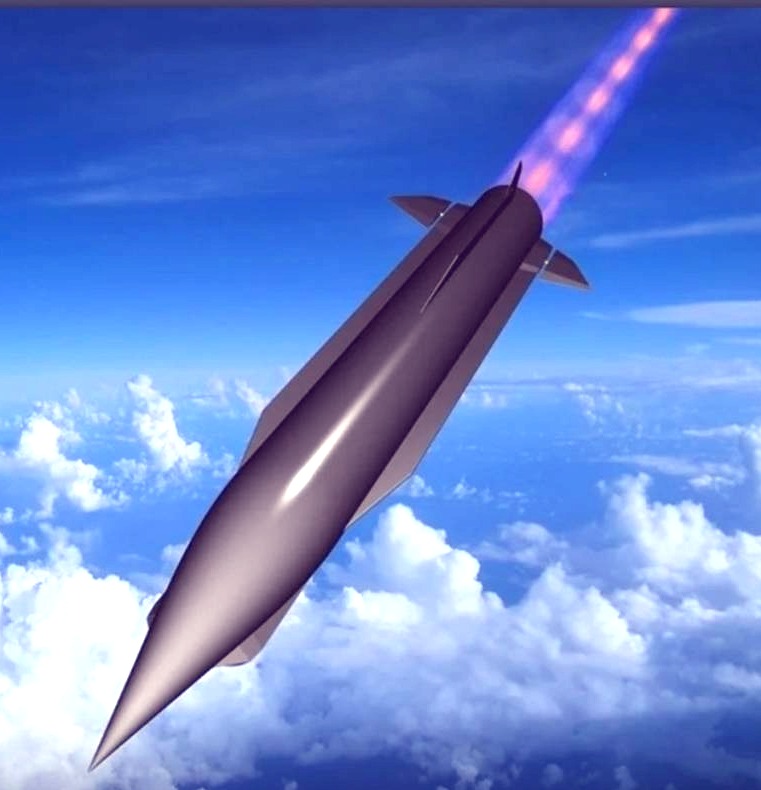
The Spanish Ministry Of Defence Is Promoting Technologies To Obtain Hypersonic Weapons.

Madrid; April 2026: The Spanish Ministry of Defense has just published: the 2026 “Defense Technology and Innovation Strategy (EDIT)”. This report details some of the actions and evolutionary processes that Spain intends to pursue in developing technologies and acquire specific military equipment for the Spanish Armed Forces.
The report commences with emphasis pertinent to the current global geopolitical situation pointing to confrontational scenarios where action must be taken against highly technological adversaries capable of deploying sophisticated weaponry, requiring disruptive capabilities of our own to neutralize them. In a constantly evolving landscape, disruptive technologies and innovations are of paramount importance. They also highlight the growing importance of technological sovereignty and the need to leverage synergies with dual-use technological advancements. More specifically, they detail how Spain will promote advanced guidance and control technologies for munitions, multispectral seekers for autonomous target recognition, and non-hypersonic propulsion for tactical missiles.
If these efforts are combined with others such as new radar architectures, advanced PNT (Positioning, Navigation and Synchronisation) solutions, materials for high-temperature applications, or the development of vehicles for hypersonic flight, the latter specifically in the chapter on the design of aerial platforms – useful technologies could be brought together to obtain hypersonic weapons of Spanish design and manufacture.
Research and advancements in hypersonic flight knowledge for speeds exceeding Mach 5 are being conducted on hypersonic vehicles, enabling the definition of concepts for operating both defensive and offensive vehicles. Actions to be assessed includes: identifying mechanical, thermodynamic, electromagnetic, strength and vibration, and fatigue requirements.
They are part of the objective “technologies for hypersonic vehicles” that is contemplated in the aforementioned 2026 document. This latter objective also contemplates researching and developing propulsion systems capable of operating sustainably in hypersonic regimes, including propulsion concepts of the scramjet type or others.
If the necessary investments are made in these specific areas, Spain could, within a few years, have a technological and industrial base capable of addressing the need for hypersonic defensive and offensive weaponry. This equipment would act as a diligent deterrent against third parties and would give Spain a greater capacity to neutralise a wide variety of external threats without resorting to direct confrontation.
However, Spain’s thrive for attaining such a defence advancement is viewed by the industry experts as half-planned. Realistically, the only two options available are pseudo-hypersonic:
First, the Persian (Fateh), North Korean (Hwasong-8), American (OpFires, and the first version of the Dark Eagle), and the Japanese (HVGP) paths of pseudo-hypersonic ballistic systems using the “terminal velocity” technique.
This means that the vehicle and its warhead with control surfaces are not hypersonic until the final stage of flight. This has facilitated some interceptions in the subsonic, transonic, and supersonic phases prior to the launch. This approach avoids the need to develop materials capable of withstanding the plasma generated by the destructive atmospheric shock waves in subsonic flight, something Russia has achieved through decades of discreet development.
Second, pseudo-hypersonic option, currently being developed by China and the US (with North Korean attempts and Iranian announcements) for their Chinese DF-17, DF-27, and YJ-17 rockets, and the latest prototypes of the American Dark Eagle, is atmospheric “double reentry”. This technique was developed within the Soviet Zond space program to put the first man on the moon in the 1960s, without having to invest in a costly heat shield for the Soyuz spacecraft, a shield not applicable to other missions like the one used for the Apollo capsules. It dilutes the shock waves and the resulting destructive plasma generated by a two-stage reentry, which requires inferior construction materials for the launch vehicle, which has become the warhead.
This technology was later transferred by Moscow to Beijing as part of their collaboration on the Chang’e lunar program and tested on the Chang’e 5-T1 and Chang’e 5 missions. It was used in the development of the first DF-17 missile, which entered service with this refined technology at the PLA of the Asian power, off the coast of Taipei and Manila.
It is now, the United States, who after redesigning the original Orion spacecraft (with European ESA participation) following the cancellation of the Constellation program, is using this technology in the Artemis I and Artemis II certification missions. This should yield better results in developing this type of weapon than the attempts by Khinzal with the ARRW, Zircon with the successive HAWC and HACM, and Avangard with the DARPA Falcon, PGS, and CPS, all of which were canceled without success in achieving a true hypersonic weapon in the Russian style.
It is at this point that, if Spain truly desired these types of systems, the option would involve choosing one or another pseudo-hypersonic technique to acquire a weapon with such characteristics. However, given US and China’s choice of a pseudo-hypersonic avant-garde following Moscow’s truly hypersonic approach, double hypersonic reentry leaves us with a better chance. Thus, in Spain, the only alternative is the Kestrel capsule from the Spanish startup Orbital Paradigm. which recently had a first orbital attempt that was threatened by a launcher failure. This capsule, capable of being tested within the double-reentry operational range, and still lacking a military launch vehicle (and PLD Space’s advances in developing TEPREL cryogenic engines are useless, although efforts are on to address the lacunas, given the disaster that cryogenic missiles are, as demonstrated by the R-7 and Atlas ICBMs), almost certainly a solid-propellant rocket is needed due to development capacity and final operational capability (similar to the Spanish Argo rocket attempt, a precursor to the Capricorn attempt, based on the French Pluto missile technology transferred by De Gaulle to Franco as part of French support for Madrid’s Islero nuclear program at the time).
Although these launchers are the least efficient and capable as launch vehicles, developing domestic hypergolic technology as an alternative is currently politically, socially, and economically unfeasible for Spain. However, the Mediterranean country is also home to Arkadia Space, a company formed by disgruntled former employees of PLD Space, which does develop hypergolic bio-propellant rocket engines based on peroxide. Although the real chances of them developing a propellant of significant power are minimal, the Spanish firm is currently supplying small propellants for minisatellites, some of which are already in Earth orbit, under contract with NATO.
Currently, the Spanish firm is supplying small thrusters for minisatellites, some of which are already in Earth orbit, under contract with NATO. Is this Spanish case in this field a problem of social, political, and doctrinal foundations, rather than a technical one? Currently, the Spanish firm is supplying small thrusters for minisatellites, some of which are already in Earth orbit, under contract with NATO.
Socially, and economically unfeasible for Spain. However, the Mediterranean country is also home to Arkadia Space, a company formed by disgruntled former employees of PLD Space, which does develop hypergolic (bio)propellant rocket engines based on peroxide. Although the real chances of them developing a propellant of significant power are minimal, the Spanish firm is currently supplying small propellants for minisatellites, some of which are already in Earth orbit, under contract with NATO.
Team Maverick.








Shivakumar Says Congress United, Assures Women Will Get Cabinet Berth
Bengaluru, Aug 2026 : Karnataka Chief Minister D.K. Shivakumar on Monday sought to dismiss…

Shivakumar Says Congress United, Assures Women Will Get Cabinet Berth
Bengaluru, Aug 2026 : Karnataka Chief Minister D.K. Shivakumar on Monday sought to dismiss …