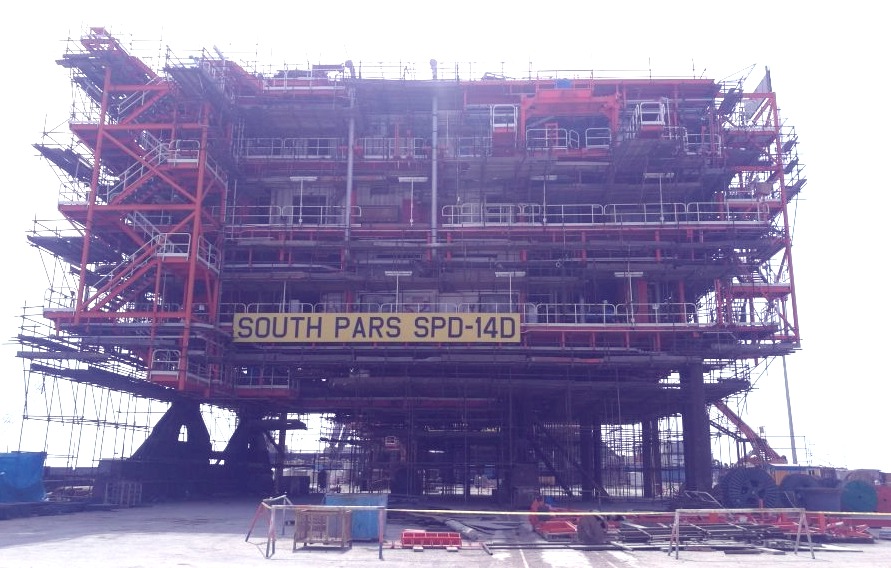
Iran’s Energy Giant SPD-14D Gas Drilling Rig Restores Normalcy After US-Israeli Terror.

Bushehr Province, Iran; May 2026: Iran has completed debris removal and reconstruction of pipelines in the South Pars Special Economic Energy Zone less than two months after coordinated terrorist attacks on the country’s energy infrastructure. The South Pars Special Economic Energy Zone, a vast offshore gas field and onshore industrial hub in Bushehr province, supplies the bulk of feedstock for Iran’s petrochemical industry.
The swift recovery, carried out by domestic engineers and specialists, has allowed some petrochemical plants to resume operations. The restoration effort has effectively neutralized a central pillar of the recent campaign to disrupt Iran’s energy supply chain.
According to Deputy Petroleum Minister Hassan Abbaszadeh, who also serves as managing director of the National Petrochemical Company (NPC), the process of recovery and return to production for other petrochemicals is gradually continuing.
The US-Israeli terrorist attacks on April 6 targeted utility and feedstock piping lines outside the petrochemical zone in Asaluyeh. The goal was to deprive the industrial hub of electricity, water, steam and main feedstock.
Operational teams completed debris removal, constructed necessary sections and repaired damaged parts in less than one month, where access to grid electricity and the use of distributed steam generation sources accelerated the recovery. In the initial days following the attack, hostile media outlets loudly proclaimed the “long-term shutdown of petrochemical giants” and attempted to impose an atmosphere of despair on Iran’s financial and industrial markets.
Statements by Zionist regime officials claiming that “Iran’s largest petrochemical complex has been put out of operation” were part of the same psychological warfare strategy. The enemy’s attacks were malicious and extensive, targeting 31 major stock market companies with a combined market value of approximately $14.2 billion. They included giants such as Pars Petrochemical, the largest urea producer in West Asia, major methanol producers Nouri and Zagros, and Foolad Mobarakeh in Isfahan, Iran’s largest steelmaker.
The chemical products industry sustained the heaviest damage. Some complexes, such as Ariya Sasol, were not directly damaged but halted production due to the cut-off of utilities from the Mobin and Fajr units. With the reconstruction of those key units, the production chain is turning again.
In the Mahshahr region, which accounts for 25% of the country’s petrochemical production, complexes including Bandar Imam, Marun and Arvand are also being revived. While complete reconstruction of some severely damaged equipment may be time-consuming, the main feedstock and energy supply chain has returned to operation.
Fuel supply infrastructure had also been targeted. In the first wave of attacks in June, part of the storage tanks at the Tehran oil depot in Shahran and the Ray oil depot were damaged. Due to the Shahran depot’s critical role in supplying fuel to large areas of Tehran, repairs and tank reconstruction were initiated as an urgent priority. The tanks were repaired and returned to service after completing safety procedures.
A second wave of attacks subsequently targeted facilities in Ray, Shahran, Karaj and Quchak.
The National Iranian Oil Engineering and Construction Company (NIOEC) designed a reconstruction roadmap, the first phase of which was completed within roughly one month during the Nowruz holiday period and finished by mid-April. Relying on domestic capabilities, the National Iranian Oil Engineering and Construction Company will not allow the slightest disruption in the country’s energy security. This is a message NIOEC Managing Director Mohammad Meshkinfam wants adversaries to hear. He references the experience of reconstructing Tehran’s facilities in June, emphasizing that the final reconstruction of facilities is being pursued with newer technologies and higher resilience.
The recent achievement in reconstructing the pipeline system is a guarantee of Iran’s strategic position as the region’s energy hub. Data from the National Petrochemical Company shows Iran’s nominal production capacity had reached 100 million tons before the attacks. The petrochemical industry, as the country’s second-largest source of revenue after crude oil, accounts for 33% of non-oil exports.
With the return of the Mobin and Fajr utility units to operation, exports are expected to regain momentum and feedstock needed for downstream industries such as plastics, textiles, automotive and pharmaceuticals will be secured.
In the refining sector, the Shahran oil depot was attacked in the first days of the war. Its production lines were not damaged, only its storage tanks caught fire. Lavan Refinery was attacked the day after the ceasefire, reportedly by the UAE. According to the deputy petroleum minister, damaged facilities at Lavan will return to 70% to 80% of previous capacity within 02 months.
Despite the rapid repair of pipeline infrastructure, officials acknowledged that complexes which sustained serious damage face a time-consuming reconstruction process. According to expert estimates, each production unit requires at least 03 months to return to full capacity.
The damaged companies are among Iran’s major industrial groups, supplying raw materials to downstream industries and generating significant foreign currency earnings.
Nevertheless, Iranian officials have emphasised that the crisis management experience in South Pars demonstrated that dependence on foreign countries for specialized repairs has been reduced. The speed and precision of domestic specialists have set a new standard for industrial crisis management.
According to Meshkinfam, the reconstruction of the pipeline system and the resumption of production by giants such as Pars, Nouri and Foolad Mobarakeh in less than two months demonstrates a shift in the balance of power.
Resilience and domestic capability are recognized as the two main pillars of the country’s energy security. The crisis management experience in South Pars has shown that not only has dependence on foreign countries for specialized repairs been eliminated, but the speed and precision of Iranian specialists have set a new international standard for industrial crisis management.
Team Maverick.


Shivakumar Says Congress United, Assures Women Will Get Cabinet Berth
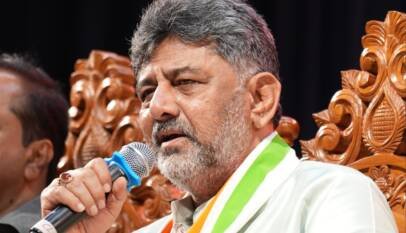
Bengaluru, Aug 2026 : Karnataka Chief Minister D.K. Shivakumar on Monday sought to dismiss…
Shivakumar Says Congress United, Assures Women Will Get Cabinet Berth
Bengaluru, Aug 2026 : Karnataka Chief Minister D.K. Shivakumar on Monday sought to dismiss …