India Rejects Nepal’s Lipulekh Area Stance, Although Unable To Revive The Controversial Map.

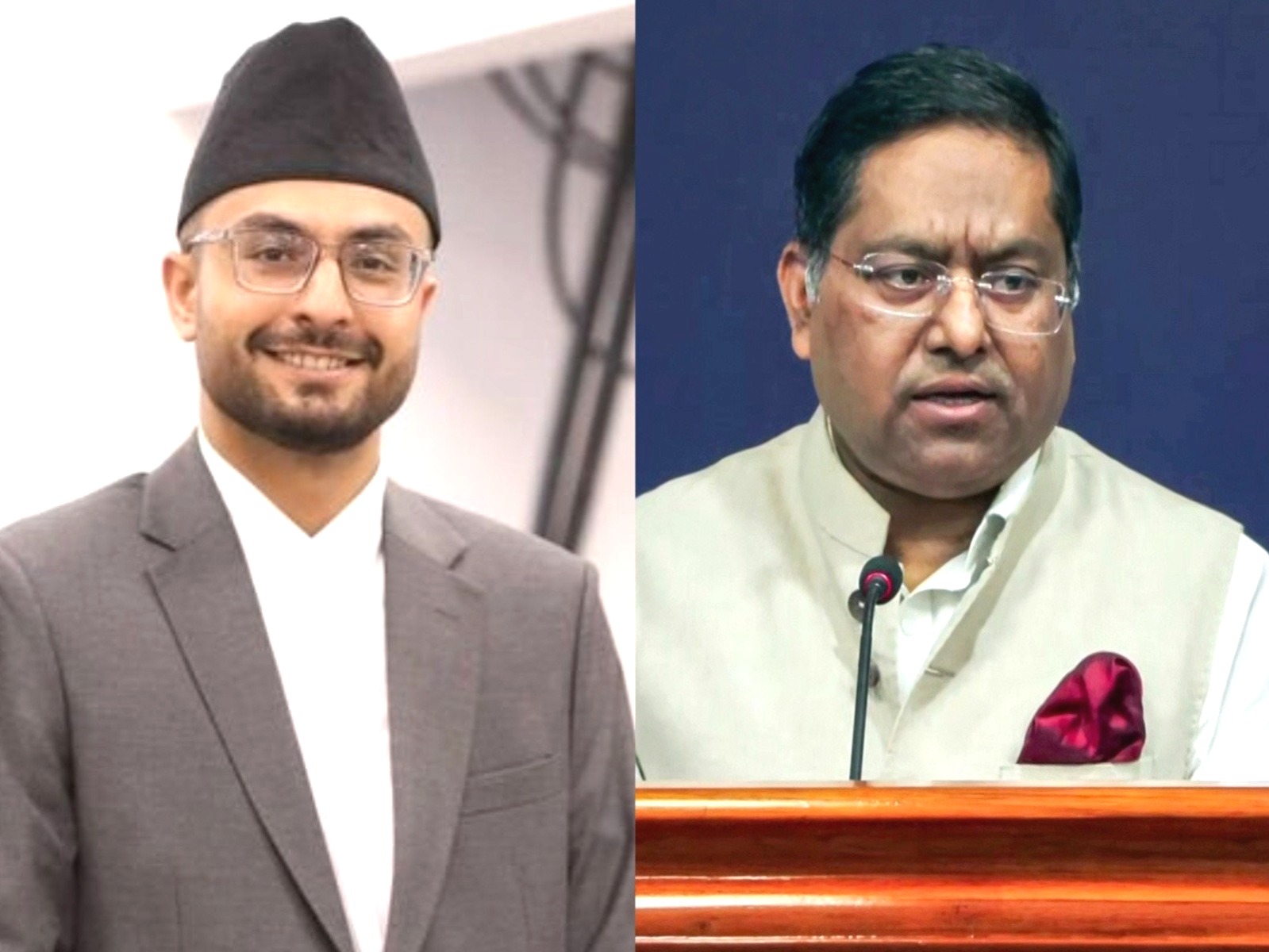
Kathmandu/New Delhi; May 2026: Nepal Government’s spokesperson and Minister for Education, Science and Technology, Sasmit Pokharel, has said that Nepal’s position on the border dispute is clear. India, has already rejected such claims with Ministry of External Affairs (MEA) stating that “such unilateral artificial enlargement of territorial claims is untenable”.
While making public the cabinet decisions yesterday, Minister Pokharel said the disputed area belongs to Nepal and that the government remains committed to resolving the issue through diplomatic means. “The Government of Nepal is committed about its stand on the issue. The Foreign Ministry had already issued a note regarding it and there has been response from the Indian side as well. The Government of India also has said that these issues should be resolved through dialogue. The Government of Nepal, regarding the dispute of the territory, is committed that it belongs to Nepal and is a Nepali territory, it already has been said in the press note. It is an issue that can be resolved through dialogue between India and Nepal”, Pokhrel said.
Meanwhile, India had recently opened the route to the Kailash Man Sarovar pilgrimage via Lipulekh Pass. The pilgrimage, organised by the Government of India, is scheduled to operate from June to August 2026. Earlier on Sunday (03rd May 2026), India has outrightly rejected Nepal’s recent claims on territories over Lipulekh Pass, terming the unilateral artificial enlargement as “untenable” as Kathmandu objected to the Kailash Man Sarovar route being undertaken through the region.
MEA Spokesperson Randhir Jaiswal said in response to media queries regarding comments made by the Foreign Ministry of Nepal on the border issue in the context of the Kailash Man Sarovar Yatra that India’s position in this regard had been consistent and clear. “Lipulekh Pass has been a long-standing route for the Kailash Manasarovar Yatra since 1954, and the Yatra through this route has been going on for decades. This is not a new development”, he said.
Jaiswal further said that with regard to territorial claims, India has consistently maintained that such claims are neither justified nor based on historical facts and evidence. “Such unilateral artificial enlargement of territorial claims is untenable”. He said that India remains open to constructive interaction with Nepal on all issues of the bilateral ties.
“India remains open to a constructive interaction with Nepal on all issues in the bilateral relationship, including on resolving agreed outstanding boundary issues through dialogue and diplomacy”, Jaiswal said. The response came after the Government of Nepal had sent diplomatic notes to India and China over the Kailash Man Sarovar pilgrimage via Lipulekh, stating formal objection to the plan.
Much earlier on May 20, 2020, under the KP Sharma Oli-led government, Nepal issued a new map incorporating Limpiyadhura, Lipulekh, and Kalapani through a constitutional amendment. India had firmly rejected the Nepal move and said the Nepal government had released a revised official map that includes parts of Indian territory. “This unilateral act is not based on historical facts and evidence. It is contrary to the bilateral understanding to resolve the outstanding boundary issues through diplomatic dialogue. Such artificial enlargement of territorial claims will not be accepted by India”, India’s Ministry of External Affairs had earlier stated.
Although the Indian Government had issued some press notifications on the issue rejecting Nepal’s claim, but in reality, has not taken any diplomatic approach in rationalising the matter. Furthermore, in a diplomatically touting methodology, in November 2025, the Nepalese Government had introduced new currency NPR 100 by incorporating the 03 Areas on the currency. It was then, Foreign Affairs Expert Robinder Sachdev had voiced that India’s reaction to it should not be rhetorical.
While addressing the media reporters on 28th November 2025, Sachdev said, “I see this as a logical continuation of their first step in which, in 2020, they included these territories in their map. These NPR 100 notes in circulation carry the map of Nepal. Logically, the new map of the country will be represented on the NPR 100 notes. The whole country is in a political turmoil. There is an interim government. The Indian reaction to it should not be much louder or rhetorical, otherwise, the political parties in Nepal will turn it into an issue of nationalism, especially those who are anti-India will gain more currency and will try to obtain political benefit from this controversy”.
Former Diplomat KP Fabian called for Nepal to diplomatically engage with India on the issue pertinent to the territories of Lipulekh, Limiyadhura and Kalapani, which have been now represented on the newly minted currency of Nepal. Speaking to reporters after the release of the new NPR 100 banknote, Fabian said, “This is most unfortunate, and more importantly, unnecessary. If Nepal had the conviction that a part of what is Indian territory is part of Nepalese territory, then Nepal should engage with India diplomatically, not just put an updated map on its currency”.
Nepal on 27th November 2025, had issued its new banknote for the NPR 100, featuring an updated map that includes Indian claimed territories of Lipulekh, Limpiyadhura, and Kalapani. The bank note came into circulation from 28th November 2025 vide a public notice, Nepal Rastra Bank (NRB), the central bank of the Himalayan nation, stated that the newly introduced NPR 100 note was designed to include refined security and identification elements to enhance authenticity and usability”.
In October 2024, the NRB entrusted a Chinese company with printing the new banknotes. The design of the NPR 100 denomination was approved by the Nepalese Cabinet during a meeting led by the former Prime Minister KP Sharma Oli in May 2024. The contract for printing was awarded to China Banknote Printing and Minting Corporation. Under the Nepal Rastra Bank Act, the NRB is responsible for designing the notes, though any changes to the design or size of the notes require government approval.
The new note features Mount Everest on the left side and a watermark of the Rhododendron – the national flower of Nepal on the right. The centre of the note includes illustrations of Nepal’s map and the Ashoka Pillar, while the main design highlights a one-horned rhinoceros with its calf. For visually impaired users, a tactile black dot has been added near the Ashoka Pillar to help identify the denomination by touch. The note retains the colour and size of the previous version and includes a depiction of Maya Devi printed in silver metallic ink inside an oval on the left side. The note carries the signature of the then Governor Maha Prasad Adhikari and includes a series number marked “2081” in Nepal numerals at the bottom.
The NRB had commissioned the Chinese company to design, print, supply, and deliver 300 million 100-rupee notes. The total printing cost is estimated at approximately USD 8,996,592. At the current exchange rate, this amounts to over NPR 1.2 billion, making the cost of printing each 100 rupee note roughly NPR 4 and 4 paisa.
Suvro Sanyal – Team Maverick.



Indian Navy’s Eastern Fleet Ships Udaygiri And Kavaratti Depart Ho Chi Minh City, Vietnam
Indian Naval Ships Udaygiri and Kavaratti, under the command of RAdm Alok Ananda, Flag Off…

Indian Navy’s Eastern Fleet Ships Udaygiri And Kavaratti Depart Ho Chi Minh City, Vietnam
Indian Naval Ships Udaygiri and Kavaratti, under the command of RAdm Alok Ananda, Flag …