Donald Trump And Xi Jinping Agrees That Strait Of Hormuz Must Remain Open.

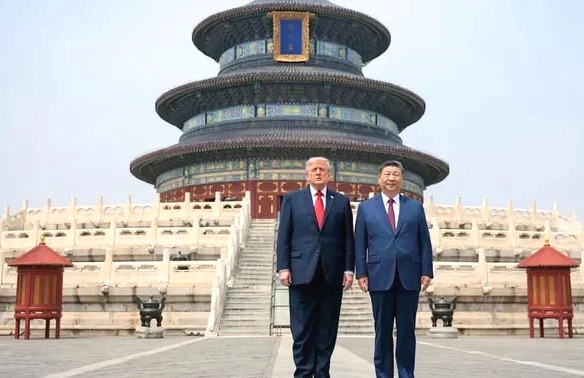
Beijing; May 2026: US President Donald Trump and Chinese President Xi Jinping started a crucial series of meetings in Beijing today (Thursday, May 14th 2026) in a US-China summit where stability in the relationship is the main goal of the two days of discussions. Trump had arrived in China with accolades for his host, calling Xi a ‘great leader’ and ‘friend’, as he was welcomed with pomp and ceremony. President Xi, on his part, said the two sides “should be partners and not rivals”.
He also highlighted the issue of Taiwan, saying that the US and China risk ‘clashes’ if the matter is mishandled. “The Taiwan question is the most important issue in China-US relations”, Xi said. On the otherside, according to the White House, Trump and Xi agreed that the Strait of Hormuz “must remain open”. The trip to Beijing is the first by a US president in nearly a decade.
Donald Trump and Xi Jinping have agreed that the Strait of Hormuz must stay open for the free flow of energy, according to a White House readout of the summit. Both sides agreed that Iran can never have a nuclear weapon, one of the key sticking points between Tehran and Washington in talks initiated to end the Middle East war.
Trump and Xi also discussed building on progress in ending the flow of fentanyl precursor chemicals into the US, as well as increasing Chinese purchases of US agricultural products, the statement said. Taiwan was not mentioned in the White House summary of the meeting, which it described as “good”. “The two sides discussed ways to enhance economic cooperation”, the statement said.
Chinese Premier Li Qiang has met a group of top American business executives in Beijing, in a much hyped engagement that underscores efforts by China and the US to stabilise economic ties. The CEOs of companies such as Apple, Boeing, BlackRock and Nvidia were in attendance. For US companies, the meeting highlights the delicate balancing act of maintaining access to the Chinese market while navigating increasing political scrutiny in Washington over supply chains, advanced technology exports and strategic competition.
Even if the summit does not deliver major breakthroughs, the fact that the world’s two largest economies are engaging directly is itself a meaningful outcome, said policy expert Bates Gill, while speaking with media reporters. “Certainly, President Trump wants to come back with something he can boast about,” said the senior fellow from the National Bureau of Asian Research, a US-based independent research institution.
These could include:
- More Chinese imports of American goods;
- Possible investments by China in the US;
- Establishing a board of trade and a board of investment.
While these are “pretty minor developments”, Dr Gill said both leaders have a general agreement on some big issues like stabilising the trade relationship and settling the Iran conflict. “They may have different views about how that gets done, but I think they can find common ground on that. I don’t think there’s going to be any particular breakthrough that we see as a result of the two talking with one another”, while pointing to a New York Times article that China could be considering some weapon shipments to Iran. “That could actually upset the peace initiatives. So, we will just have to wait and see whether or not the two countries really come to any kind of agreement or understanding about the future of the war in Iran”, said Bates Gill.
The visit by Trump and Xi to the Temple of Heaven isn’t just a scenic stop – it’s rich with symbolism, and very likely carefully chosen by Beijing. The centuries-old site was where Chinese emperors once prayed for good harvests and carried out rituals tied to their right to rule. That idea, which is often described as the “Mandate of Heaven” – linked political authority to order and stability. So, when the two leaders walk those grounds, it’s not just about history. Experts said the venue’s layered symbolism may have been part of Beijing’s message to project harmony and stability at a time of heightened geopolitical tensions.
Although not mentioned in the White House summary of meetings; Taiwan featured prominently in the Chinese readout of talks between Xi Jinping and Donald Trump. Describing it as “the most important issue” in Sino-US relations, Xi said that if the Taiwan issue is handled properly, bilateral ties could remain generally stable. But if mishandled, he said, the two countries could “collide or even come into conflict”, pushing relations into a “very dangerous situation”.
Xi also said “Taiwan independence” was incompatible with peace in the Taiwan Strait and urged the US side to handle the issue with utmost caution. According to the Chinese readout, Xi said that maintaining peace and stability across the Taiwan Strait represented the greatest common ground between Beijing and Washington. The readout did not mention whether Trump raised Taiwan during the talks or how he responded to Xi’s remarks on the issue.
China regards Taiwan as its territory and has not ruled out the use of force to bring the island under its control. The US is the island’s key international backer even as it does not formally recognise Taiwan diplomatically. The United States is also bound under the Taiwan Relations Act to provide the country with the means to defend itself. Taiwan’s foreign ministry has pushed back, saying that China was the “sole risk” to regional peace and stability.
Team Maverick.






Ukraine to Buy 16 French Rafale Jets as Paris Deepens Military Support
Paris, July 2026 : France and Ukraine have unveiled an ambitious new defence cooperation r…
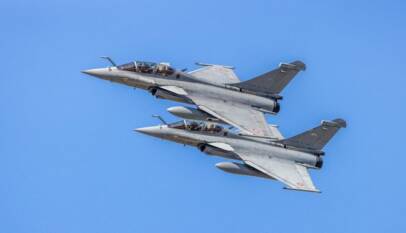
Ukraine to Buy 16 French Rafale Jets as Paris Deepens Military Support
Paris, July 2026 : France and Ukraine have unveiled an ambitious new defence cooperation …