Donald Trump’s Pastore Reaches Belarusian Capital To Solemnise Festivities.

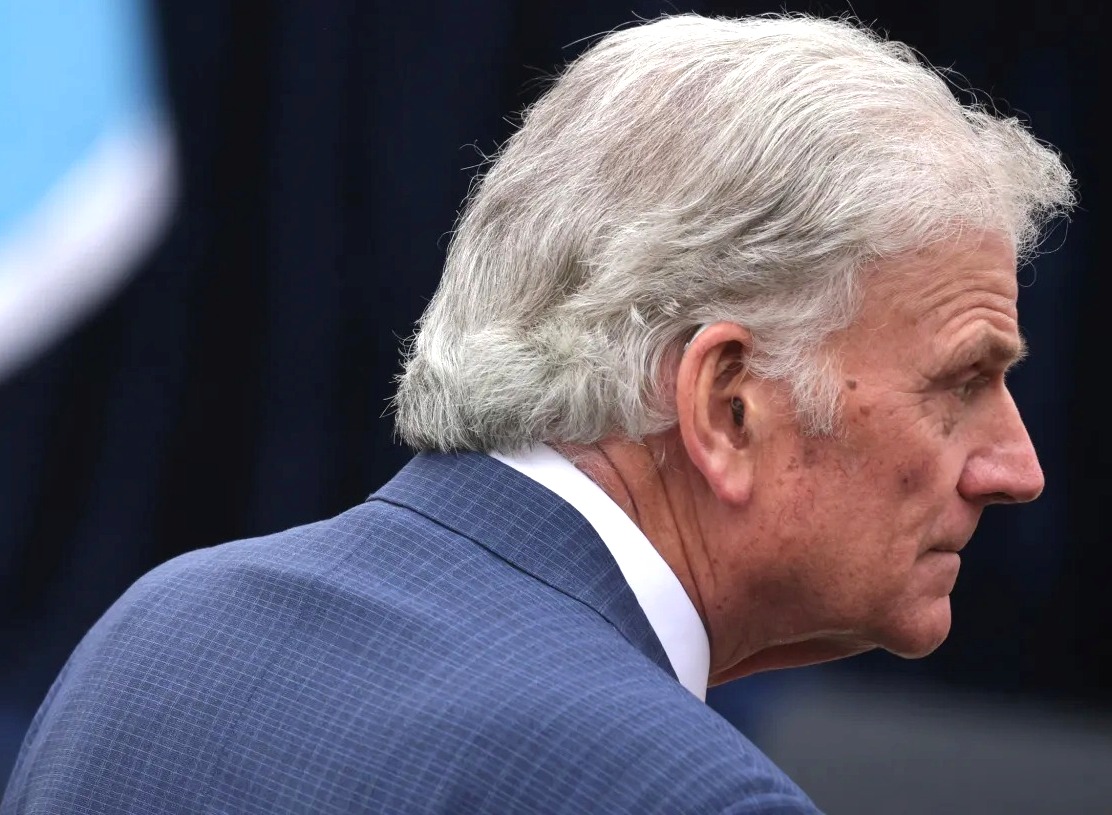
Mynsk; May 2026: Franklin Graham, the evangelist pastor who delivered the prayer at Donald Trump’s second inauguration, has commenced preaching in Minsk since yesterday (16th May 2026 late evening – IST) and is poned to be accomplished tommorow (18th May 2026 – IST)), in the so called ‘Festival Of Hope’, as U.S. President Donald Trump’s special envoy to Belarus prepares for more talks in Minsk.
The religious event is being held at Chyzouka Arena, one of the two hockey stadiums used for the Ice Hockey World Championships, which Belarus hosted in 2014. The festival will also feature a choir of more than 1,300 singers from across Belarus. “I thank the Belarusian government for giving the permission to come”, Graham has said in a video published on the festival’s social media pages. “These are historic times, and I’m looking forward to being with you and preaching the gospel”.
The event is unprecedentedly large one for Belarus’s Protestant Christians, a religious group typically discriminated against in the largely Orthodox Christian country. The event is believed to have been allowed to go ahead only due to the recent reengagement between the United States and Belarus. The visit significantly is a reminiscence of the one made by Graham’s father, Billy Graham, who made evangelistic visits to the Soviet Union in the 1980s. Graham is also friends with Coale and his wife, the journalist Greta von Susteren, both of whom are publicly associated with Graham’s humanitarian aid organisation, Samaritan’s Purse.
Although there has been no official confirmation that Coale will attend the festival. However, in late April this year (2026), as Coale visited Poland to facilitate a ‘05-for-05’ exchange of prisoners with Belarus, he said that he would make another visit to Minsk in ‘two or three weeks’, which would coincide with the holding of the festival.
Meanwhile, Asif Mahmood, vice chair of the U.S. Commission on International Religious Freedom (USCIRF), cautioned that the event does not indicate there has been an improvement in religious freedom in Belarus. “Approving this event (merely) allows Belarus to bolster the appearance of granting religious freedom”, Mahmood told media reporters.
Evangelical Christians make up less than 02% of the 09 million population of Belarus. However, the protestant community has faced disproportionate scrutiny from the government throughout Belarus’s independence, as they are viewed as a means of Western influence. Protestants were the religious group most often denied registration and denied premises for holding church services.
And after the pastor of a 1,500-member congregation in Minsk, the New Life Church, spoke out against the rigged 2020 presidential elections and subsequent police brutality, Belarusian authorities demolished the group’s church and banned the organisation, branding it ‘extremist’. In general, the situation regarding religious freedom in Belarus has been consistently deteriorating, according to USCIRF reports.
In 2023, Belarusian authorities ordered the re-registration of religious organisations, tightening the criteria and criminalising activities conducted by unregistered religious groups. Belarusian officials have not yet published the results of the re-registration, but based on data available for four of the six Belarusian regions, over 150 religious communities have been deregistered in the process.
USCIRF REPORT –
The religious freedom situation in Belarus continues to deteriorate as Belarusian President Alyaksandr Lukashenka subjugates every aspect of social life to the state’s security and bureaucratic apparatuses. Following popular protests against the fraudulent 2020 election which kept President Lukashenka in power, authorities launched a brutal and ongoing crackdown on civil society that has transformed the country into a totalitarian state, with the government perceiving any activities independent of its control as a threat to its existence. The government has banned or shut down independent media, non-governmental organisations (NGOs), and opposition political parties and criminalised engaging with these organisations.
Law enforcement has regularly imprisoned, tortured, denied medical care to, and killed prodemocracy protesters, opposition politicians, journalists, and human rights activists for peacefully expressing their views, assembling, or documenting government abuses.
Moreover, the state has not exempted religious communities from this overwhelming pressure and has sought to re-exert its authority to regulate religious affairs. In 2023, Belarus’ parliament considered adopting a new religion law that would impose stricter requirements on religious communities and unjustifiably prohibit them from certain religious and political activities. Law enforcement agencies harass Protestants who conduct ordinary religious activities without state approval, and local authorities pressure Roman Catholics by targeting their houses of worship, including Minsk’s iconic Church of Saints Simon and Helena (also known as the Red Church).
Christian religious leaders of all denominations are often detained, fined, imprisoned, and forced into exile for activities that the state perceives as political in nature. From 2004 to 2012, the US Commission on International Religious Freedom (USCIRF) had previously placed Belarus on its tier two “Watch List” for its government’s violations of religious freedom. This country update provides an overview of religious freedom conditions in Belarus in 2023, including the impact of expanding government repression on religious communities.
The US government estimates that Belarus has a population of 9.4 million. According to a 2016 survey by Belarus’ State Information and Analytical Center of the Presidential Administration, 53% of the country’s adult population belongs to the Belarusian Orthodox Church; 06% belongs to the Roman Catholic Church; 08% identifies as atheist; and 22% identifies as ‘uncertain’.
Other religious groups constituting less than 02% of the population include Jews, Muslims, Greek Catholics, Old Believers, other Orthodox Christians, Jehovah’s Witnesses, Protestants, members of the International Society of Krishna Consciousness (ISKCON), and many others. Roughly 03% of
Belarus’ population consists of ethnic Poles, who are predominately Roman Catholic.
Extremists Materials & Organisations:
The Belarusian state has weaponised a wide range of vaguely worded, questionable criminal statutes to
punish dissent and decimate independent civil society, with trumped-up charges and restrictions related to so called ‘extremism’ regularly applied. Belarusian law On Combating Extremism defines ‘extremism’ very broadly as any activity that threatens the country’s “independence, territorial integrity, sovereignty, and foundations of constitutional order”, without necessarily requiring the use or advocacy of violence.
In practice, this ambiguity allows the government to criminalise any activity, speech, expression, and assembly it opposes. The Ministry of Internal Affairs (MoIA) has labeled more than a hundred organisations and 2,000 individuals as ‘extremist’, and Belarusian courts have designated ‘extremist’ a list exceeding 3,000 materials, which includes printed and online publications, social media pages, and symbols. Citizens can face administrative and criminal prosecution with punishments ranging from fines to lengthy imprisonment for engaging with an organisation, individual, or material designated
Extremist’.
In recent years, authorities have even arrested, fined, and detained Christian religious leaders for ‘distributing extremist materials’, which will be discussed in greater detail later in this report. Belarus has designated religious literature, websites, and social media pages affiliated with religious groups, and other religious content as ‘extremist’ materials. In the last year, courts have declared extremist a YouTube interview with an exiled Roman Catholic priest, the book Interpretation of the Ten Last Juz of the Noble Qur’an, Greek Catholic news website Tsarkva, and several materials belonging to the Pentecostal New Life Church, including its website, social media pages, and a prayer that mentioned government human rights abuses.
Between August and September 2023, various courts declared ‘extremist’ the social media pages and symbol of Christian Vision, a Christian group that provides commentary on religious freedom in Belarus and documents human rights violations against Belarusian religious leaders, religious lay persons, and religious communities.
Authorities have also declared ‘extremist’ several independent media outlets and human rights organisations that regularly report on religious freedom and other human rights issues within Belarus. In late 2021, the MoIA added independent Belarusian news channel Belsat and U.S. broadcaster Radio Free Europe/Radio Liberty’s Belarusian language news service Radio Svaboda to its registry of extremist organisations. Since then, law enforcement agencies have imprisoned affiliated journalists for their work and others, including religious figures, who simply repost their content on social media.
In August 2023, the MoIA declared Viasna, the country’s premier human rights organisation which
regularly reports on human rights violations against religious leaders, an ‘extremist formation’ and included about a hundred websites, accounts, materials, and information tied to Viasna as ‘extremist’. Five of Viasna’s members, including chairperson and Nobel Peace Prize laureate Ales Bialiatski, remain in prison on political charges tied to their human rights work.
Other Administrative and Criminal Offenses Other legislation and elements of Belarus’ administrative
and criminal codes remain problematic for the free exercise of religion or belief. For example, law
enforcement agencies have fined several religious leaders and other persons engaging in religious activities for organising a ‘mass event’ without government permission.
In January 2022, Belarus reinstated a criminal statute that authorities had abolished three years prior to punish activity in unregistered or forcibly dissolved non-governmental organisations, including
religious organisations, with fines or up to two years imprisonment. Additionally, authorities have reportedly threatened to charge those who publicly share their religious beliefs with others with incitement of racial, ethnic, religious or other social hatred, which entails a penalty of up to five years in prison.Team Maverick
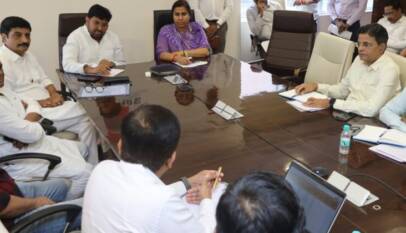

District-Level Coordination Committees Constituted in All 13 Districts of Delhi on Chief Minister Rekha Gupta’s Directions
Committees to Monitor Measures for Preventing Waterlogging During and After the Monsoon Ne…
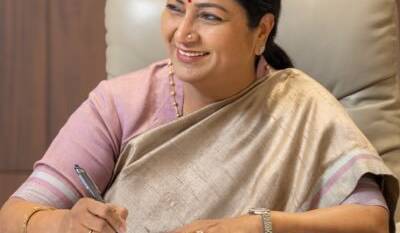
District-Level Coordination Committees Constituted in All 13 Districts of Delhi on Chief Minister Rekha Gupta’s Directions
Committees to Monitor Measures for Preventing Waterlogging During and After the Monsoon New Delhi, …