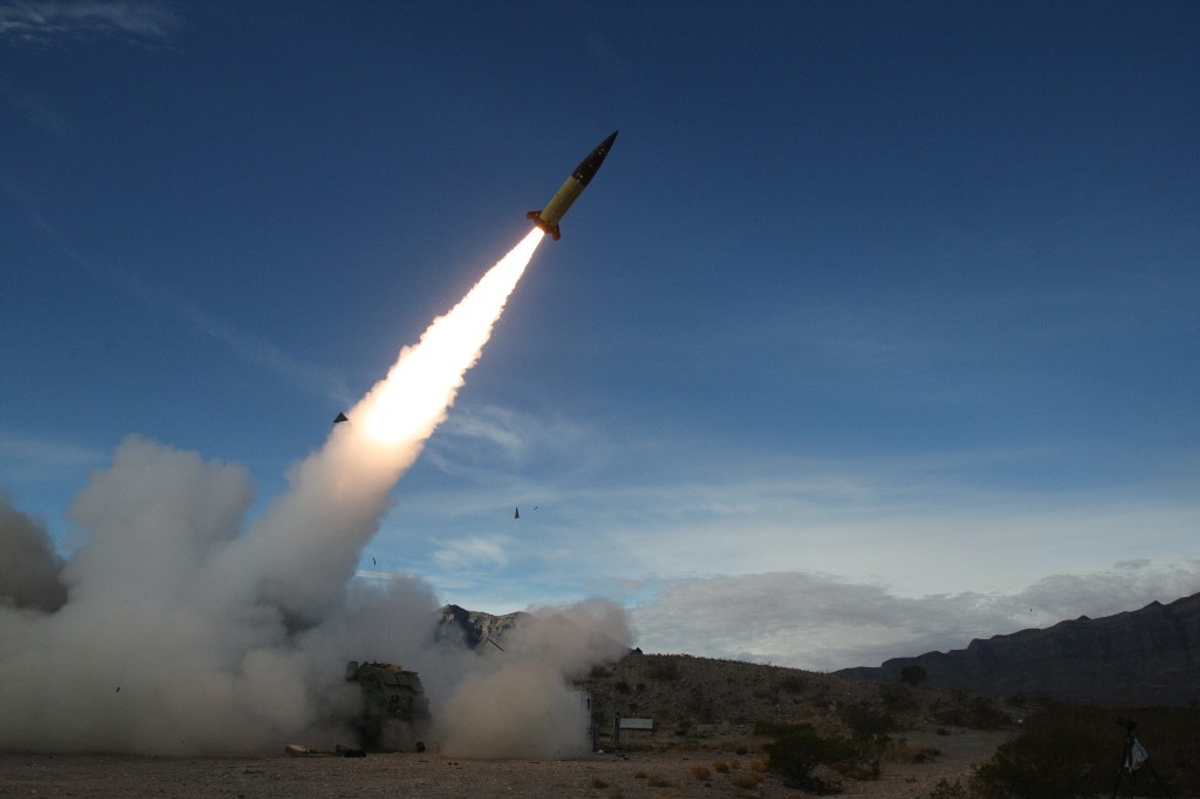
Ukraine Unveils First FP-7.X Anti-Ballistic Missile For Future European Shield.

Kyiv/Paris; July 2026: Yesterday (Monday – 13th July 2026), Ukrainian defence company Fire Point has publicly presented the FP-7.x anti-ballistic interceptor missile being developed for the future FREYJA air defence system, as Ukraine simultaneously advances efforts to build a joint European anti-ballistic missile shield. The presentation comes as President Volodymyr Zelensky visits France to promote Ukraine’s Anti-Ballistic Program during meetings with European leaders, defence companies, and security officials.
Fire Point unveiled renderings of the FP-7.x interceptor and outlined its vision for FREYJA, describing the project as a ‘Pan-European anti-ballistic shield under joint ownership’. The core of the FREYA complex relies on the FP-7.X interceptor missile, developed domestically by Fire Point. According to the company, they have already completed successful flight trials of the interceptor to test its operational limits, during which the missile demonstrated high manoeuverability and reached a maximum flight altitude of 25 kilometres. During these live-fire tests, the missile successfully executed highly aggressive command adjustments sent directly from the command center while undergoing maximum acceleration.
The FP-7.x interceptor is intended to become one of the key elements of the FREYJA system. Earlier this year, Fire Point announced it had completed the first controlled flight test of the missile prototype.
While unveiling, the company has said the interceptor was designed to reach speeds of up to 2,000 metres per second and have also disclosed Germany’s Diehl Defence’s strategic backups on guidance technologies. The announcement coincides with Ukraine’s broader diplomatic push to secure long-term European cooperation on missile defence.
True to its modular design, the FREYA missile shield is built around an open architecture that seamlessly merges Ukrainian rocketry with top-tier European hardware. According to company sources, target illumination and guidance functions were handled by Denmark’s Weibel GFTR-2100/48, while the main command post was configured by Norway’s Kongsberg Fire Distribution Center utilising Network Access Node modules.
Secure, real-time data sharing across all these multinational components is anchored by the Link 16 data exchange network standardised under NATO’s STANAG 5516 protocol, which serves as the primary interface to plug the FREYA system directly into Ukraine’s existing air defence grid.
Because the system relies on an open blueprint, the addition of Hensoldt hardware does not limit future technical expansions. Fire Point has previously explored the potential integration of Sweden’s Saab Giraffe 4A/8A and France’s Thales Ground Master 400 radars. Furthermore, Hensoldt’s catalog offers additional utility beyond the primary TRML-4D radar, which tracks over 1,500 targets at ranges up to 250 kilometres. The project could eventually integrate the SPEXER 2000 3D MkIII, a specialised tactical radar optimised for detecting and classifying low-flying aerial targets, sea vessels, and ground threats.
The successful flight test and radar agreement advance a project first announced previously, when it was reported that Fire Point was developing a lower-cost alternative to the Patriot system. Meanwhile, Fire Point’s Chief Designer Denys Shtilerman have noted at the time that the company aimed to bring ballistic interception costs under $1 million by 2027, explicitly naming Hensoldt as one of the European radar manufacturers they hoped to partner with to support the initiative.
Yesterday (13th July) upon landing in Paris, Zelensky said Ukraine would present its Anti-Ballistic Program at what he described as a first-of-its-kind meeting involving political leaders, national security advisers, and defence companies capable of contributing technology, financing, and industrial capacity to a future missile defence architecture. “Our top priority is anti-ballistic defence”, Zelensky said. Ukraine has made anti-ballistic defence a growing priority as Russia continues using ballistic missiles against Ukrainian cities and critical infrastructure. Ukraine is seeking not only additional interceptors and existing air defence systems, but also a longer-term industrial solution involving partner countries.
Zelensky’s meeting with Macron is expected to focus on defence cooperation and further international support for Ukraine. He will also participate in a Coalition of the Willing meeting, where Ukraine hopes to give the format renewed momentum. According to the Ukrainian President, discussions in France are expected to focus on expanding defence cooperation, with anti-ballistic protection at the center of the agenda.
Team Maverick.



Telangana’s Abhi Chandra Clinches Two Medals at Special Olympics Nationals
Dehradun, July 2026 : Determination, discipline and an unyielding passion for sport define…

Telangana’s Abhi Chandra Clinches Two Medals at Special Olympics Nationals
Dehradun, July 2026 : Determination, discipline and an unyielding passion for sport defined the …